Published : 21 Nov 2025, 09:01 AM
Updated : 21 Aug 2026, 02:46 PM


Gunmen are arriving at specific locations and targeting specific individuals with precision, in attacks that investigators say clearly bear the marks of planning. The shooters are paying no heed to their surroundings, firing multiple rounds to ensure death.
A string of brazen killings in the capital, carried out in full public view, has fuelled alarm and a swirl of questions. Speculation is rife over what lies behind these murders and who is involved.
Within days of two such killings in the space of a week, police have announced arrests, saying they have traced not only the gunmen but others involved. Yet a persistent question hangs over law enforcement: if police can track down suspects within days, why are they unable to stop the murders before they happen?
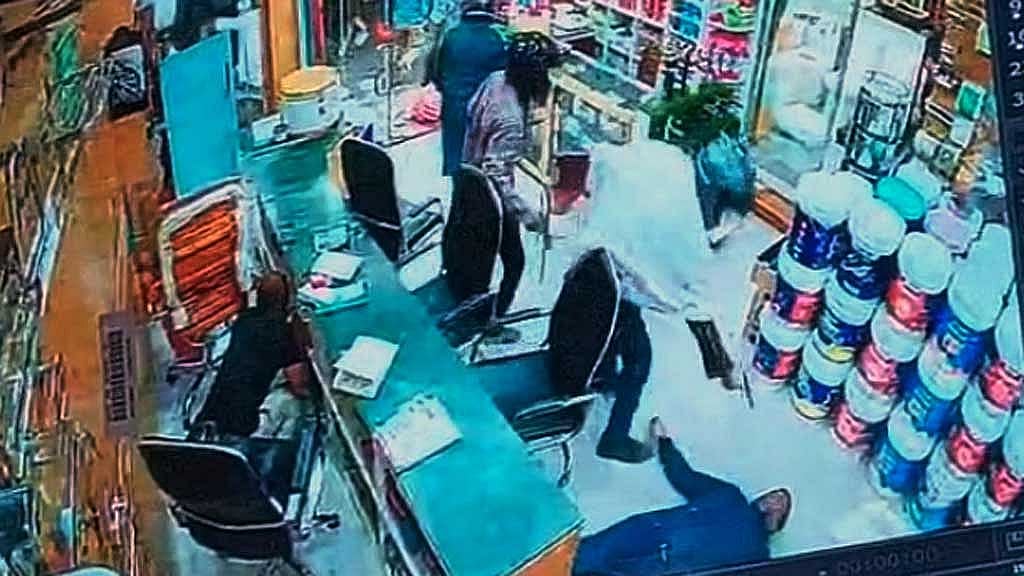
In the latest attack, on Monday evening, Golam Kibria, member secretary of the Jatiyatabadi Jubo Dal’s Pallabi unit, was at his “Bikrampur Hardware & Sanitary” shop as usual when three armed men entered and opened fire -- a fresh reminder of Dhaka’s worsening crime picture. Bullets tore through his chest, back, face, and neck. He collapsed on the floor and was pronounced dead at hospital.
Just a week earlier, in Old Dhaka’s court district, two gunmen shot and killed “top criminal” Tariq Saif Mamun in broad daylight.
After these two public executions in the space of a week, law-enforcing agencies themselves have started using the term “target killing”.
Beyond these, a succession of high-profile killings across the capital -- from the March shooting of cable network businessman Suman Mia in Gulshan to the murder of BNP leader and internet operator Kamrul Ahsan Sadhan in Badda, and a drumbeat of similar attacks across the city -- has led investigators to point to “party feuds” and “disputes over sharing the spoils” as recurring themes.
Police data show 198 murders took place in Dhaka in the first 10 months of this year. That's an average of nearly 20 a month.
WHY SO MANY KILLINGS
Behind most of these cases, investigators see "mainly" turf wars. The names of established “top criminals” keep coming up, alongside talk of freshly minted gangs looking to carve out territory.
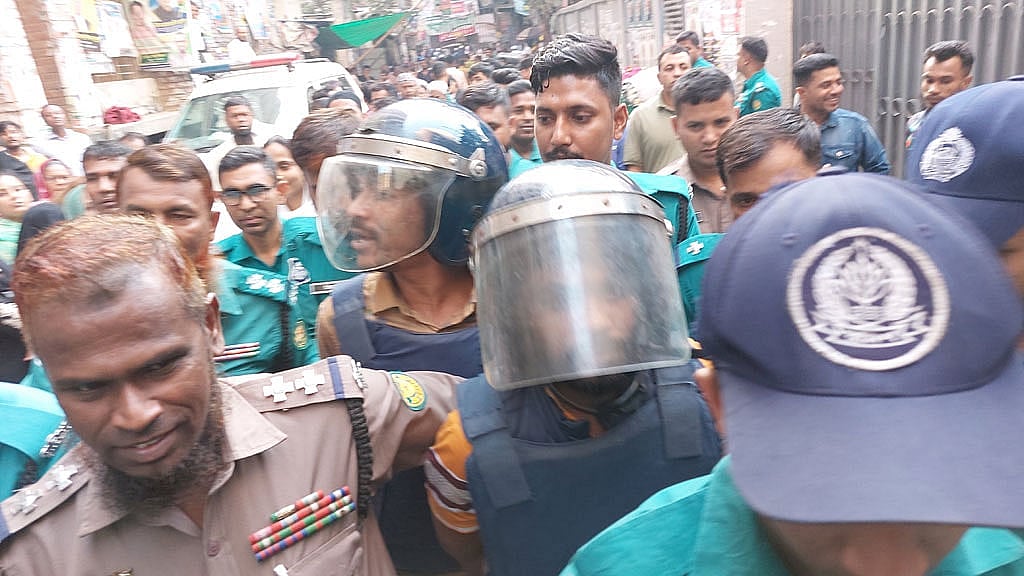
Many of the suspects now being arrested were already accused in multiple cases. Experts say the failure to detain such men in advance raises serious doubts about police capacity.
The DMP insists it is acting whenever it receives intelligence.
“In many cases, when we get reports of involvement in crime, we act,” said Deputy Commissioner Muhammad Talebur Rahman of the DMP’s media wing. “We have arrested many people. When we receive information about someone, we arrest them.”
He says detectives have solved “most” murders and made arrests quickly.
Others are less sanguine.
Dr Md Tawohidul Haque of Dhaka University’s Institute of Social Welfare and Research believes the wave of targeted killings shows law-enforcing agencies no longer have a firm grip.
The masterminds, he suggests, sense “a favourable time” for such crimes. Even where cases are filed, he argues, legal action is sometimes “ambiguous”, creating space for more murders.

Tawohidul points to the role of political muscle in turf battles for extortion rights and “grab trade”.
“Conflicts with rival parties are one thing,” he said. “But there are countless factions within parties as well. These killings are happening because political power is being used to generate money, and disputes are erupting over how that money is shared.”
Detectives counter that the numbers are not spiralling out of control.
“Some killings… that will happen, that is how society is,” said DMP's Detective Branch chief Additional Commissioner Md Shafiqul Islam. “We are keeping it at a certain standard. Our operations may be the reason. Of course we want it to come down to zero.
“Our statistics show improvement compared with three years ago. Killings have not increased, they have decreased. You can’t call that a failure.”
FORMER ALLY MURDER SUSPECT
In the Pallabi case, investigators say roughly 18 rounds were fired at Kibria. Behind the killing, they have picked up the name of “top criminal” Mofizur Rahman Mamun, once a close associate of the victim.
Three men have been arrested. Two -- Monir Hossain, known as Sohel or "Pata" Sohel, and Md Sujon, nicknamed "Bukpora" Sujon -- are in RAB custody on remand. Police say a third, Joni Bhuiyan, 25, was pinned down by locals as the gunmen tried to flee and has since given a confessional statement in court.
The case file describes Monir as the “instigator and planner”. Sujon, who has 18 cases against him, is listed as a suspect.
RAB-4 Commanding Officer Lt Col Md Mahbub Alam says politics and turf rivalries lie behind the crime.
“Kibria once had close ties with certain people,” he said. “After political polarisation, he began to work against them. In particular, he did not support extortion and drug dealing in the area. The murder may have happened for that reason.”
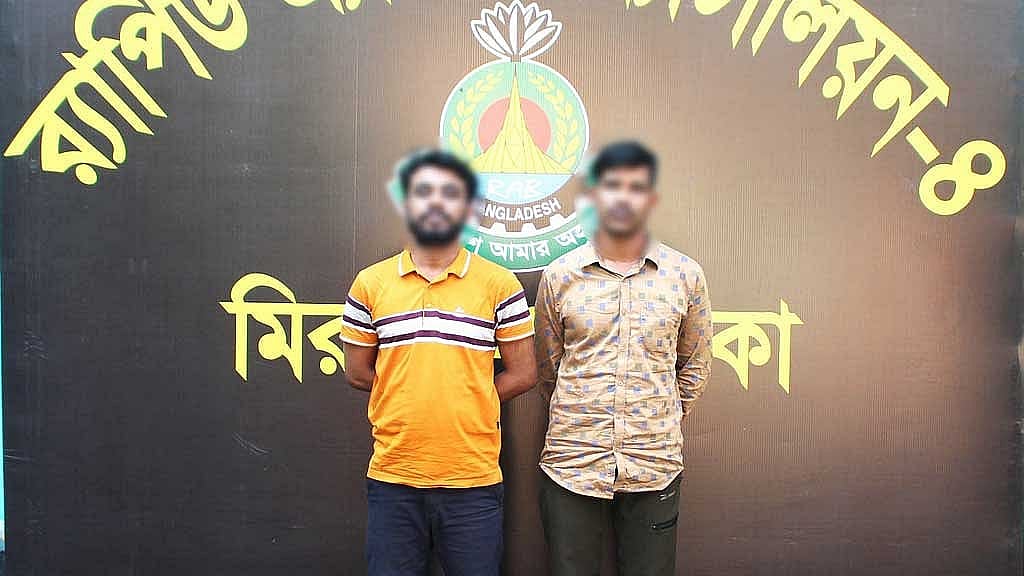
Mamun’s own role is still being probed. “At the moment we have no direct information,” Mahbub said. “But we can assume there may have been encouragement from higher up.”
On Tuesday, Kibria’s wife Sabiha Akhter Dina filed a case naming five men. Police and locals describe them all as known drug dealers, extortionists, and contract killers in Pallabi.
NAMES OF ‘TOP GANGSTERS’ KEEP COMING UP
The fall of the Awami League government last August has had an unintended consequence: a wave of bail orders for men long listed by police as “top criminals”.
Some of these figures, freed after years in prison, quickly disappeared from view. Others, according to police, slipped abroad. Their names, however, rarely stayed out of police files for long.
In January, in Pallabi, Manjurul Islam alias Babu, himself nicknamed “Blade Babu”, was hacked to death. Police linked the murder to “top criminal” Sumon Shikdar alias Musa, previously accused of masterminding the assassination of Awami League leader Zahidul Islam Tipu in Motijheel.
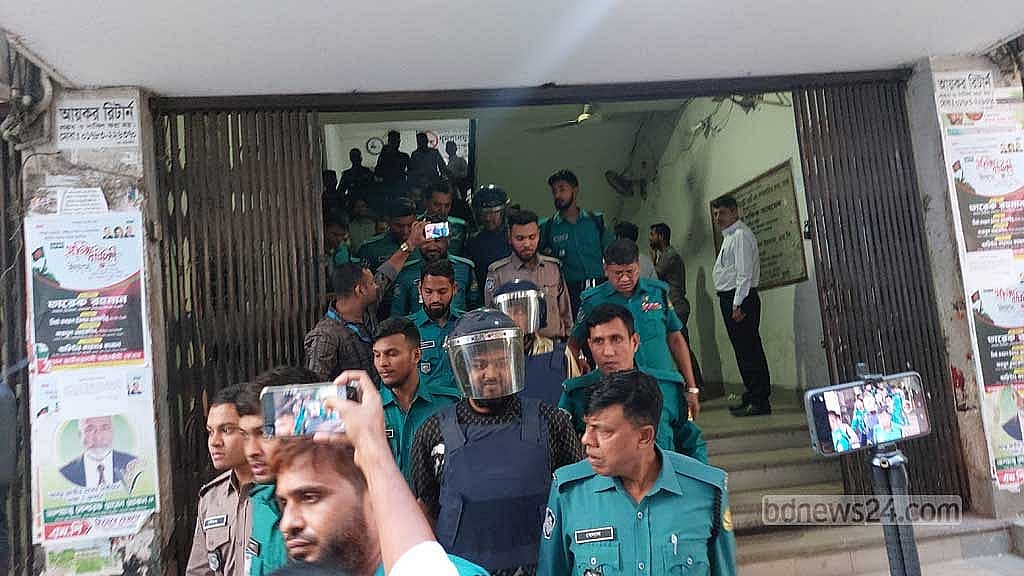
Musa was brought back from Oman by detectives, but was out on bail again by Jan 3. Within weeks, his name resurfaced in connection with Babu’s killing.
Police said Babu died in a turf battle between Mamun’s group and Musa’s group. Now, in the Kibria case, Mamun’s name has again emerged.
On Elephant Road in January, a mob of 10 to 12 men attacked IT traders Ehtesamul Haque and Dipu in front of Multiplan Centre. Dipu later named “top criminal” Sanjidul Islam alias Imon and 10 others in an attempted murder case, accusing them of trying to squeeze extortion from computer shop owners.
Imon walked out of jail on bail on Aug 16 last year. A day earlier, his long-time rival and fellow “top criminal” Imamoul Hasan Helal, better known as Picchi (little) Helal, had been freed after two decades.
The Elephant Road attack, police say, reflected a simmering conflict between the Helal and Imon camps over control of Dhanmondi and nearby areas.
In November, when “top criminal” Tariq Saif Mamun was shot dead near the Old Dhaka court area, Imon’s name reappeared yet again. Two years earlier, detectives had accused him of involvement in an attempt on Mamun’s life in Tejgaon. Mamun’s wife told reporters she believed “Imon’s hand” was behind the final attack as well.
Police have since arrested five suspects in the Mamun case. DB chief Shafiqul Islam says the mastermind was a man named "Roni", once a grocer and now, in police records, a “top criminal” in Kafrul.
Shafiqul says Roni fell out with Mamun and planned the murder, having previously worked alongside both Imon and Mamun in controlling parts of Dhaka. Roni is still on the run.
Investigators say they will only know how far, if at all, Imon was involved once Roni is caught.
Other old names have also re-emerged: Sweden Aslam, freed on bail in September after 19 years; Mirpur’s Abbas Ali; Khondakar Naim Ahmed alias Titon; and Khorshed Alam alias Rasu or Freedom Rasu.
Police say many who used to run rackets from behind bars now feel emboldened to reclaim full control on the streets.
EMERGING GANGS DRIVE TURF WARS
Detectives say older names are now being joined by new brands.
In the Kibria case, RAB says two of the suspects belong to the “Four Star Group”, a Mirpur-based outfit that has carved the area into four zones under four “stars”: Mamun, “killer” Ibrahim, Shahadat and Mukhtar.
“We have learned that behind much of what is happening in Mirpur lies the Four Star Group,” said RAB-4’s Mahbub. “They are backed by criminal Mamun, killer Ibrahim, criminal Shahadat and criminal Mukhtar.”
Further east, Gulshan’s murder of cable operator Suman Mia in March illustrated how lethal turf disputes have become. Investigators say Suman was a key member of the Robin-Dalim group, which sought to dominate extortion, wholesale fish markets, cable and internet services, and land grabs in Gulshan, Badda and Mohakhali.
The Robin-Dalim group is not alone. Police say the Zisan group and the Mehedi group also operate in the area. All three have clashed repeatedly over control of extortion.
RAB officers say after the fall of the Awami League government, a gangster called "Mehedi" formed a team through his lieutenant "Saeed" and continued to extort money in Gulshan and Badda even after Mehedi fled abroad. When Suman resisted, Mehedi allegedly ordered Saeed to form a hit squad and have him killed.
Two months later, Badda BNP Joint Convener Kamrul Ahsan Sadhan was shot dead while drinking tea. Police say the same trio of gangs -- Robin-Dalim, Zisan and Mehedi -- were again at each other’s throats, this time over control of cable and internet businesses and extortion from shopfronts and footpath traders.
Investigators claim Mehedi, now believed to be in the United States, ordered Sadhan’s murder from abroad.
POLITICAL KILLINGS IN THE FRAME
DMP figures show 198 murders in Dhaka in the first 10 months of the year and 371 murder cases filed, including cases registered this year for killings in earlier periods.
Nationwide, 339 murder cases were filed in 2024. In the first 10 months of this year alone, 302 have already been lodged, with 119 in August, after the government fell. In 2023, there were 165 murder cases, 144 of them in the first 10 months.
Human Rights Culture Foundation data suggest 68 murders across the country in the first 10 months of this year had “political reasons” behind them.
Police, however, insist no murder in Dhaka this year has been political. “In criminal science, there is no such thing as a ‘political murder’,” said DMP Deputy Commissioner Talebur Rahman. “Among the killings that have taken place, I can’t recall one that fits that label.”
UNLICENSED WEAPONS AT LARGE
One of the most worrying legacies of last year’s uprising is the sheer volume of weapons still missing.
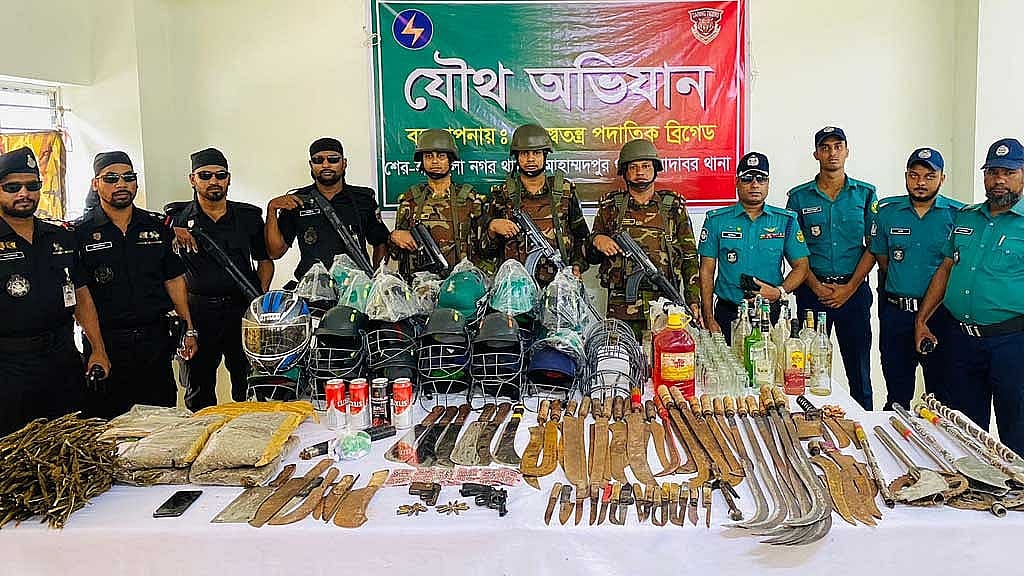
Police say 1,363 firearms and 257,720 rounds of ammunition looted from police arsenals remain unaccounted for. The government has offered rewards for their recovery.
RAB-4’s Mahbub says the presence of so many illegal guns on the streets makes prevention extremely difficult.
“With the amount of illegal weaponry outside, it is hard for the law enforcement alone to neutralise this kind of killing in a densely populated city like Dhaka,” he said. “We are working on the basis of intelligence.”
THE ARREST–BAIL LOOP
Mahbub notes that "Pata" Sohel, also accused as a planner of Kibria’s murder, had been arrested before, only to be released on bail.
“After coming out on bail, he planned this killing and financed the shooters,” the RAB officer said.
He added that while law enforcement can arrest, “we have no hand in the legal process” that follows.
The issue of mass bail has now reached the home ministry. A core committee meeting this week discussed whether blanket bail orders were undermining efforts to stabilise law and order.
WHAT CAN LAW ENFORCEMENT DO?
Crime specialist Dr Tawohidul Haque says the first step is to drop all hesitation about prosecuting suspects with political ties.
“Token action is not enough,” he said. “We need what we actually mean by exemplary action. We have seen that when an accused person has political connections, there is a lot of hesitation about taking action. That has to change.
“Once a crime has been committed and someone is accused, the law must treat them in terms of that accusation, not their other identities.”
Detectives say they are now closely monitoring the movements of recently freed “top criminals”.
“After the 5th of August, some well-known top criminals and many notorious accused who were inside are now outside,” said DB chief Shafiqul Islam. “We are working to see whether their activities are becoming organised again and whether they are returning to their old ways.
“We will do whatever is necessary to give the public some relief.”