Published : 16 Jul 2025, 10:47 AM
Updated : 28 Aug 2026, 01:23 AM


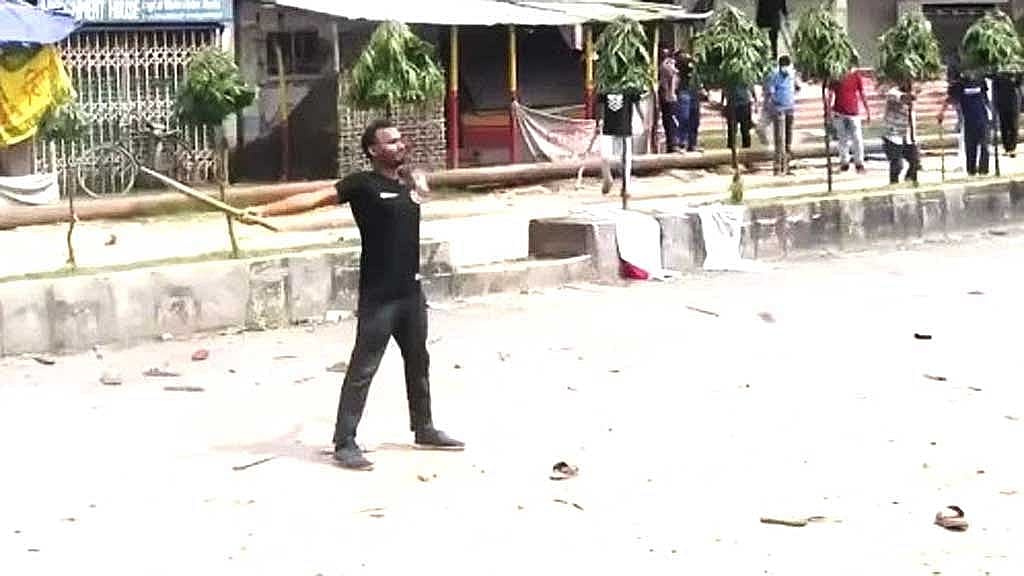
He stood tall, arms spread wide, staring down the barrel of a gun. A moment later, he was shot dead. The image of his final stand -- defiant and unflinching -- spread like wildfire.
Abu Sayed, a student of English at Begum Rokeya University in Rangpur, would go on to become the first martyr of the July Uprising.
His death turned the student-led quota reform protests into a mass rebellion that brought down Sheikh Hasina’s longstanding rule.
One year on, his teachers and fellow protesters say Sayed’s courage lit the fire of resistance.
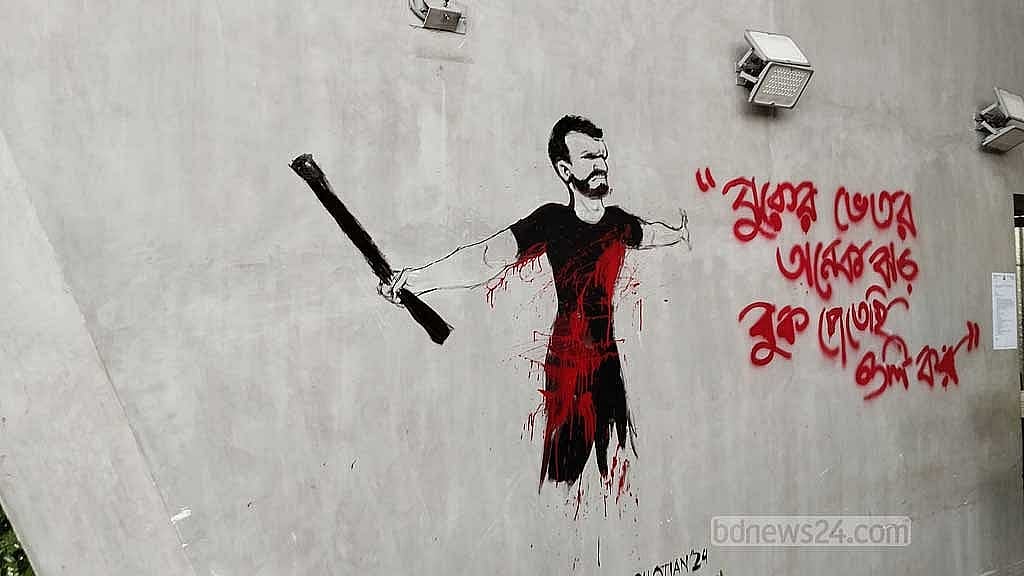
His final image became a lasting symbol, plastered across social media, painted in graffiti, and printed on official materials of the post-Uprising government.
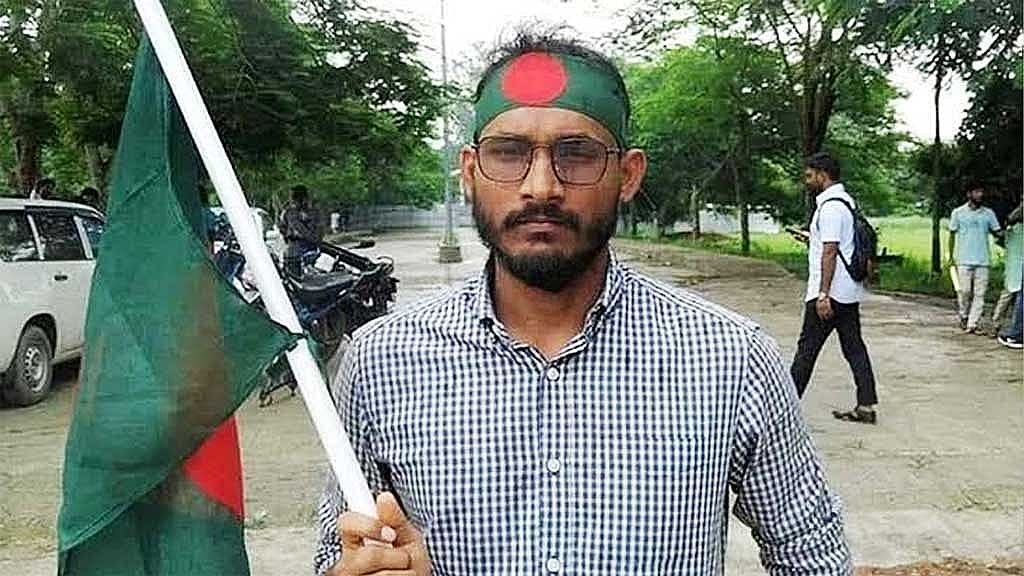
Sayed had been an active organiser of the Anti-discrimination Student Movement and was a leading voice in the quota reform campaign.
On Jul 16, 2024, police shot him during a protest, triggering a chain reaction across the country.
Sabina Yasmin, his classmate and fellow organiser, recalled: “He would often say, we won’t stop until our demands are met. His resolve kept us all going.”
YEARS IN MAKING
Until 2018, Bangladesh reserved 56 percent of public jobs under quotas: 30 percent for descendants of freedom fighters, 10 percent for women, 10 percent by districts based on population, five percent for ethnic minorities, and one percent for the disabled.
Facing mass protests ahead of the 2018 election, the Awami League government scrapped quotas in first and second-class jobs.
In 2021, seven petitioners including a freedom fighter’s son, challenged that move in court.
After the Awami League secured a fourth straight term in 2024, the case resumed.
On Jun 5, the High Court struck down the 2018 order, declaring the quota abolition illegal.
That ruling sparked fresh protests and the formation of the Anti-Discrimination Student Movement. What began at Dhaka University soon spread to Jahangirnagar, Jagannath, Rajshahi, and Chattogram universities.
By Jul 1, rallies had erupted nationwide, with students demanding quotas be abolished once again.
On Jul 14, the full High Court verdict was published, ordering quota reinstatement. That same day, now-deposed prime minister Hasina added fuel to the fire with a pointed remark.
Responding to a question at a press conference, she asked: “If the grandchildren of freedom fighters don’t get jobs, will the grandchildren of Razakars get them?”
She insisted the court would decide on quotas, and warned that if protests turned violent, the law would take its course.
That night, student processions filled the halls of Dhaka University. Chorus rang through the streets -- “Tumi Ke, Ami Ke – Razakar, Razakar”, meaning “Who are you, Who am I - Razakar, Razakar”, escalating tensions.
FLASHPOINT
On Jul 15, members of the then ruling Awami League’s student wing, the Bangladesh Chhatra League, attacked protesters on campus, including female students. Video clips and images of the assaults went viral, triggering outrage.
Anti-regime graffiti began appearing across walls in the capital.
The following day, protesters across the country marched in defiance. But Chhatra League members and police confronted them at many locations.
In Rangpur, police opened fire on a demonstration near Begum Rokeya University, killing Sayed. That day, six protesters were killed nationwide.
According to witnesses, as students scattered in the face of tear gas and police batons, Sayed stood alone, arms outstretched in front of advancing officers. From just 15m away, two policemen fired their shotguns.
The image of his death sent shockwaves around the nation.
In Dhaka, students shut down roads and blockaded rail lines. Rail links with the rest of the country were suspended. Highways including Dhaka to Chattogram, Sylhet, Tangail, and Mymensingh were cut off. Protesters also blocked the Chattogram-Cox’s Bazar Highway.
Battles broke out across the capital. Near Dhaka College and Science Lab, violent clashes left two more dead. In Chattogram, three others died in similar confrontations.
The next day, the movement announced symbolic funeral marches and absentee prayers at Dhaka University’s Raju Memorial Sculpture. Meanwhile, the Awami League and its affiliated organisations ordered party workers to gather at their unit offices.
CRISIS DEEPENS
On the night of Jul 16, the Border Guard Bangladesh (BGB) troops were deployed to six cities -- Dhaka, Chattogram, Rajshahi, Bogura, Rangpur, and Gazipur, pushing the situation at a knife’s edge.
All public and private universities and affiliated colleges were ordered shut. Students were told to vacate halls.
The government also closed all secondary schools and colleges indefinitely and postponed the Higher Secondary Certificate (HSC) exam scheduled for Jul 18.
Despite these drastic moves, the situation spiralled out of control. Fires were set, public property attacked, and lives lost.
By Jul 19, even a nationwide curfew failed to restore order.
On Aug 5, after more than two weeks of upheaval, the Awami League’s record 15-and-a-half-year rule finally ended as Hasina fled to India with her sister Sheikh Rehana.
‘ABU SAYED STOOD FIRM AS OTHERS BACKED AWAY’
Born in 2001 in Babanpur village of Rangpur’s Pirgonj Upazila, Sayed was the youngest of nine children of Mokbul Hossain and Monowara Begum.
He earned a talent-pool scholarship in fifth grade from Jafor Para Government Primary School and went on to score GPA-5 in his Secondary School Certificate (SSC) exams from Khalashpir Dimukhi High School.
At university, he ranked 14th in his department with a CGPA of 3.30 out of 4.
Tawhidul Haque Siam, a fellow student from the management information systems department and also a campus reporter, was near him during the shooting. Siam was also injured that day.
“Rangpur’s students were on the frontlines from the start. We faced attacks from Chhatra League, Awami League activists and police -- on the streets and on campus.
“Many were injured. But no one backed down,” Siam recalled.
Describing the moment of the shooting, he said: “Police fired rubber bullets, tear gas shells, then live rounds. Sayed had only a stick in his hand.
“Everyone was pulling back, but he stood his ground. He was shot at close range and collapsed instantly.”
Siam and others rushed to help. “As we tried to move him, police fired again. I was hit with 60 pellets across my body,” he said.
Fatally wounded, Sayed was taken to Rangpur Medical College Hospital, while Siam, too, was brought there by another student, Ahmadul Haque Alvi.
“By around 3:30pm, I saw the body of my brother Abu Sayed and 15–16 other injured students. I received initial treatment but left the hospital for safety reasons,” Siam added.
To Siam, Sayed’s death was a turning point. “His sacrifice worked like a spark. It gave us all courage. It gave the movement new momentum.”
After the incident, attempts were made to obscure how Sayed had died.
During the final days of the Awami League government, it was suggested he died from a head injury rather than gunshot wounds.
The day after the killing, Tajhat police filed a case.
The complaint was lodged by Bibhuti Bhushan Roy, in-charge of the university police outpost.
The case accused 2,000 to 3,000 unnamed protesters -- described as unruly demonstrators and student impostors linked to the BNP, Jamaat-e-Islami and its student wing, Islami Chhatra Shibir -- of obstructing government duty, causing grievous injury, vandalism, theft, arson, and the murder of an “innocent student”.
The first mention of Sayed in the case document comes midway through the text.
It says during the clash, a student was seen collapsing on the road. He was taken to Rangpur Medical College Hospital at 3:05pm by fellow students, where doctors declared him dead.
The student was identified as Abu Sayed, it added.
The post-mortem report was made public 2 months and 8 days later.
It confirmed pellet injuries from face to thigh.
Dr Razibul Islam, assistant professor of forensic medicine at Rangpur Medical College, confirmed: “Abu Sayed was killed by gunfire.”
‘POLICE EVEN TOOK AWAY MY SON’S BODY’
Sayed’s home lies about 40km from Rangpur city and can be reached either through Darshana, Vendabari and Khalashpir, or via the Modern intersection, Pirgonj Upazila Sadar and then on to Bamanpara.
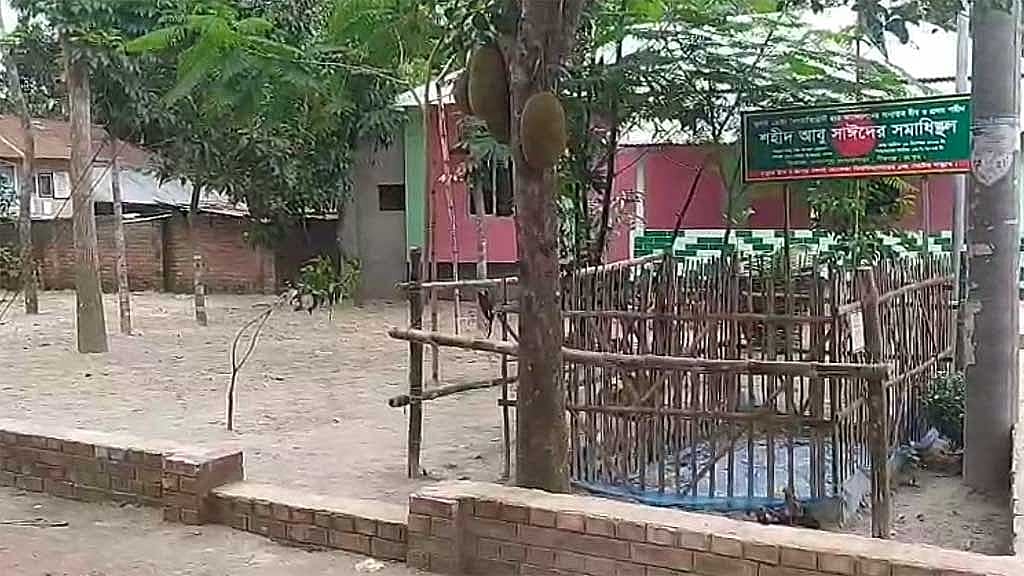
While the house used to be made of mud, the government recently provided a semi-concrete tin-shed house.
Alongside his parents, Sayed’s elder brother Ramzan Ali -- also the plaintiff in the murder case -- still lives there.
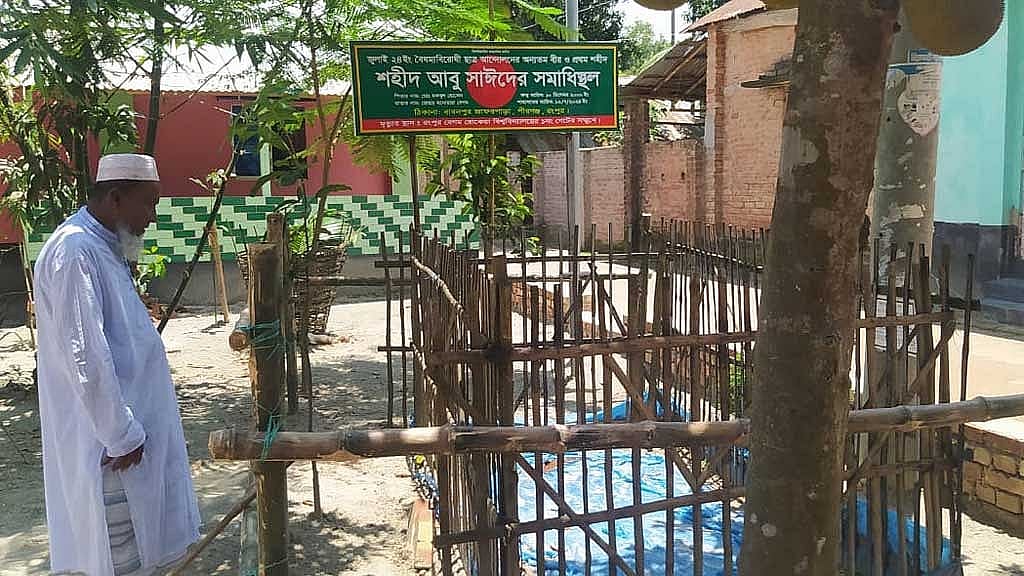
According to the family, people from different areas often come to visit Sayed’s grave.
“My son struggled through life, tutoring others to fund his studies. But he never got to enjoy any happiness,” said his father Mokbul.
He recalled the day of the shooting – Jul 16 – when word reached them that Sayed had been killed.
His eldest son and son-in-law rushed to Rangpur by autorickshaw but could not find the body.
“We were told it had been hidden. Students had taken him to Rangpur medical, where doctors declared him dead.”
When the family finally located the body and tried to bring it home, police intercepted it. “We heard around 2am that the body was in the morgue. But when my son went to see his brother, they refused at first.
“When he insisted ‘My brother has died, can’t I even see him?’. Only then did they allow it.”
They were not allowed to take the body immediately. “Police asked if the grave was ready. When we said yes, they said the body would be released at 3am,” Mokbul said.
“Even then, the body was stopped multiple times on the way while they collected information. Eventually, it reached home.”
He said authorities insisted the burial take place the same night. “I asked, who will dig the grave? They said they would do it with an excavator and bury him right away.
“I refused -- I wanted to lay my son to rest with my own hands. They then agreed to a morning burial.”
Mokbul added, “I told them 8am was too early, that people would still be asleep and our relatives hadn’t arrived yet. So we announced the burial for 9am.
“Even then, they kept questioning us over and over. We had to endure all of this just to bury our own son.”
Nearly a year has passed since the killing, Sayed’s father said, but only four suspects have been brought to justice.
“The rest are still free. I plead with the government -- bring all those involved to justice.”
NO SIGN OF JUSTICE
Ramzan, Sayed’s elder brother and plaintiff in the murder case, said: “My brother was gentle from childhood. He was never involved in any political party. His life was cut short for no reason.
“One year has passed but there has been no progress in the case. We urge the government to bring those responsible to justice without delay.”
Ramzan, recalling childhood memories, added: “When I think of him, I can’t hold back tears. I remember him saying ‘Brother, let’s go to the fields and work’. We have no words to describe the loss.”
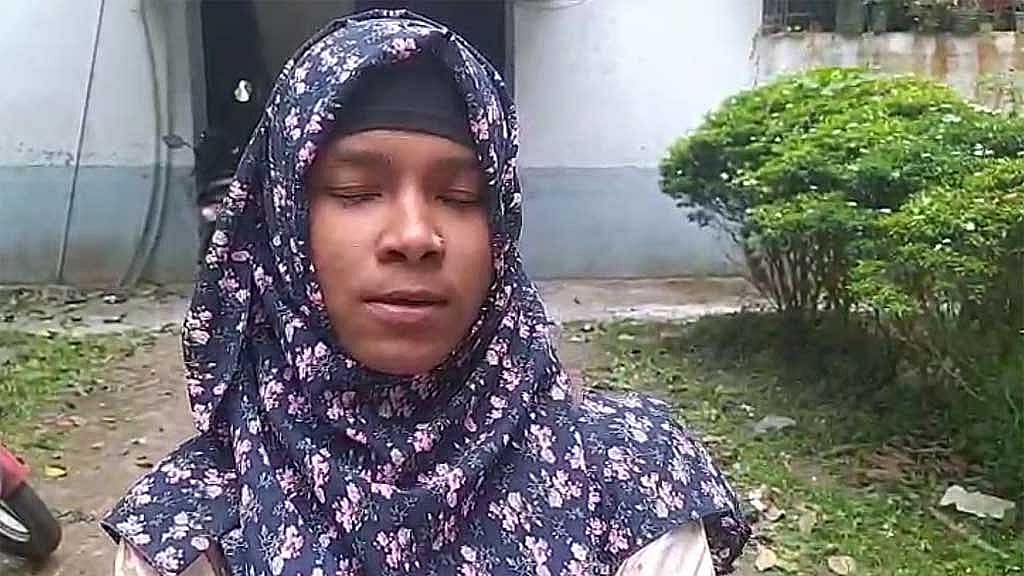
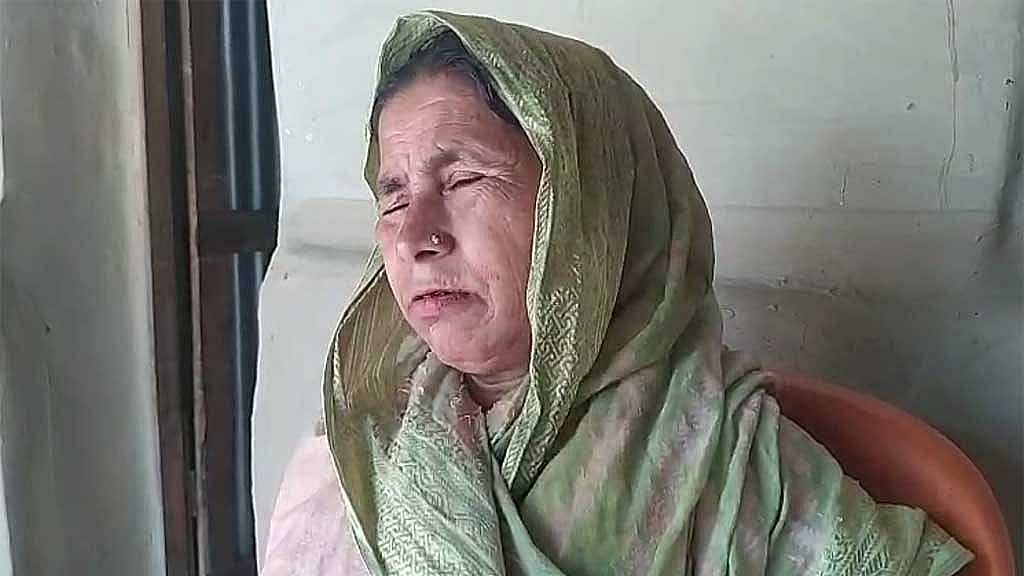
Sayed’s mother Monowara, sitting beside Ramzan, said: “I’ve lost my son. We still have land, home, money -- but not him. I can’t sleep at night thinking about him. The world feels upside down.”
“I want justice. My son did no wrong. His only fault was asking for a job from Hasina. He didn’t even get it, yet they killed him. I want justice, I want justice,” she added.
TRIAL SEES DELAYS
On Aug 18 last year, Ramzan started a murder case naming 17 people and 30–35 unknown suspects.
Later, on Jan 13, the family submitted complaints against 25 people to the International Crimes Tribunal (ICT).
On Feb 23, Chief Prosecutor Tajul Islam filed a case (ICT BD Case No: 12/2025), where investigators linked 30 individuals to the killing.
Four accused are in jail: former police sub-inspector Amir Hossain, constable Sujon Chandra Roy, Begum Rokeya University proctor Shariful Islam, and Chhatra League activist Imran Chowdhury Akash.
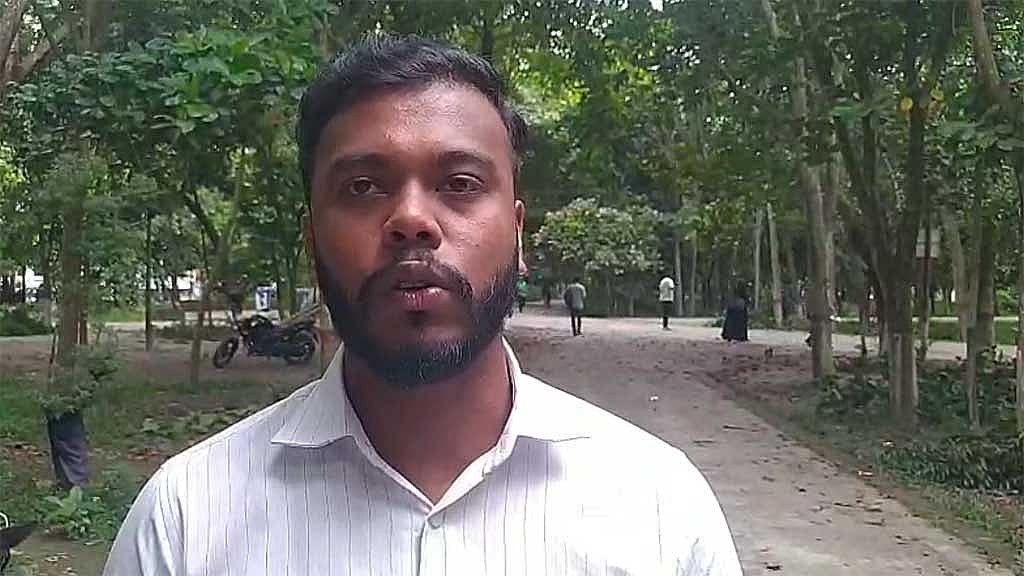
For the other 24 absconding, the court ordered notices in newspapers asking them to appear. The next hearing is scheduled for Jul 22.
The tribunal issued arrest warrants for the remaining 26. Among them, Rafiul Hasan and Anwar Parvez are in custody in separate cases. Production warrants were issued to bring them before the tribunal.
For the other 24 absconding, the court ordered notices in newspapers asking them to appear. The next hearing is scheduled for Jul 22.
The list of fugitives includes Begum Rokeya University Vice-Chancellor Md Hasibur Rashid, former Rangpur Metropolitan Police commissioner Md Moniruzzaman, and former deputy commissioner (Crime) Md Abu Maruf Hossain.
REMEMBERING SAYED
To honour Sayed’s sacrifice, Jul 16 will be observed as July Martyrs’ Day.
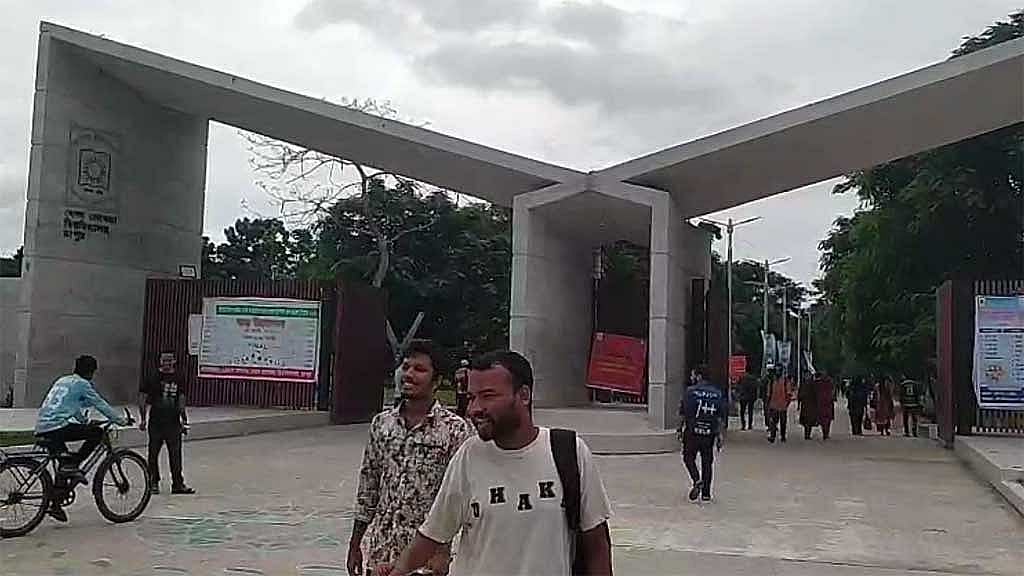
Begum Rokeya University has planned a series of events to mark the occasion.
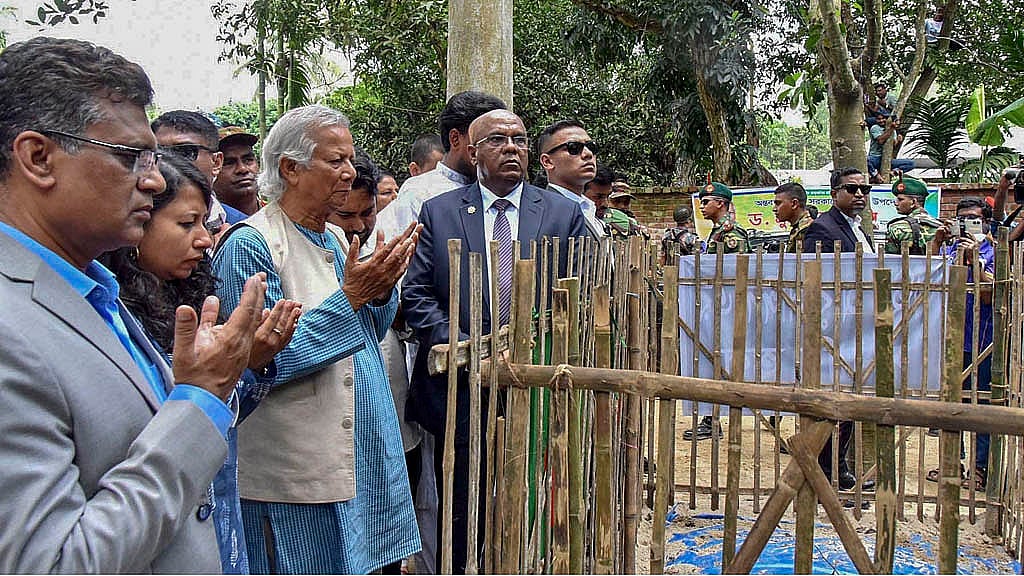
His father Mokbul will attend as the chief guest. Also present will be Law Advisor Asif Nazrul, Education Advisor CR Abrar, Environment Advisor Syeda Rizwana Hasan, and Liberation War Affairs Advisor Faruk E Azam.
Rakib Ahmed, a fellow English department student, said: “Academic activities have resumed at the university. We, the students of the English department, have returned to classes and exams. But our brother Abu Sayed will never return.
“The absence we feel in class without him is indescribable. When I remember how he spread his arms and stood tall before being shot at close range, I fall silent.”
Asif Al Matin, associate professor and head of the English department, said: “Abu Sayed was humble and polite. He hid his struggles, attended class diligently and completed his degree well.
“Had he lived, he would have had a very different life. He gave his life for something greater. We must ensure his sacrifice is honoured with meaning,” he added.
[Writing in English by Syed Mahmud Onindo and Sheikh Fariha Bristy]