Home
+
Published : 30 Sep 2024, 01:35 AM
Continuous rainfall has caused flooding across the Bhabodah waterlogged region, submerging hundreds of villages, markets, and fields, and forcing more than 1.5 million people to live in close quarters with livestock, snakes, and frogs for nearly a month. Their livelihoods are at risk, with an increase in waterborne diseases and a looming food crisis.
The situation has worsened in parts of Jashore’s Abhaynagar, Manirampur, and Keshabpur, along with parts of Khulna’s Dumuria and Phultala Upazilas, which have been grappling with waterlogging for years.
Repeatedly failed projects have not only wasted hundreds of crores of the state's funds but also deepened the suffering of the affected population.
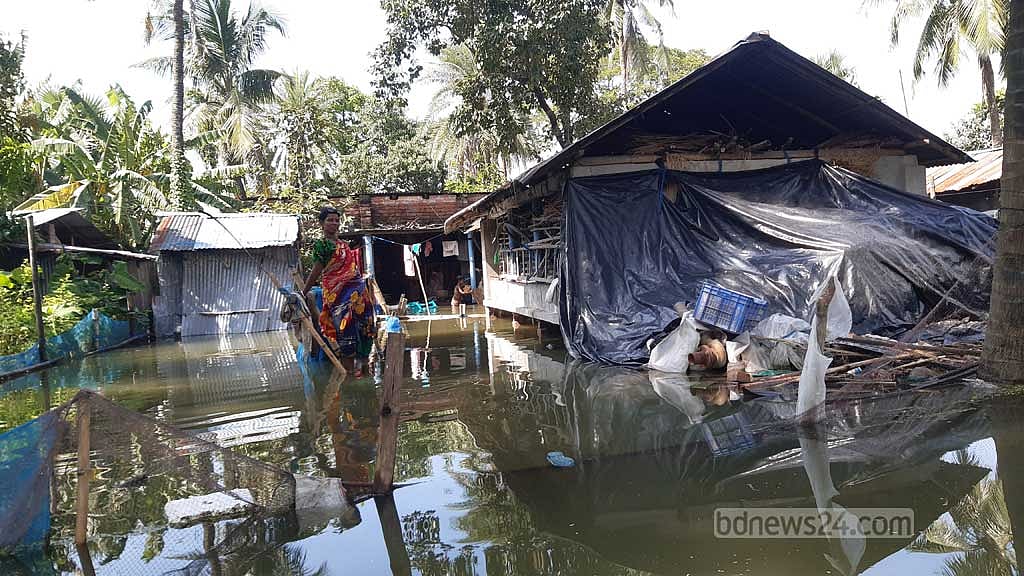
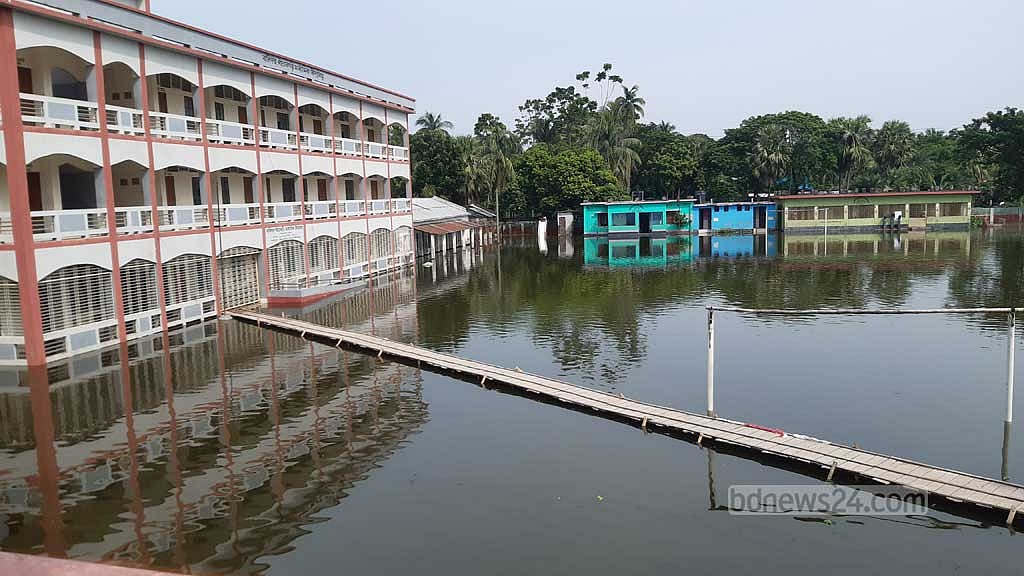
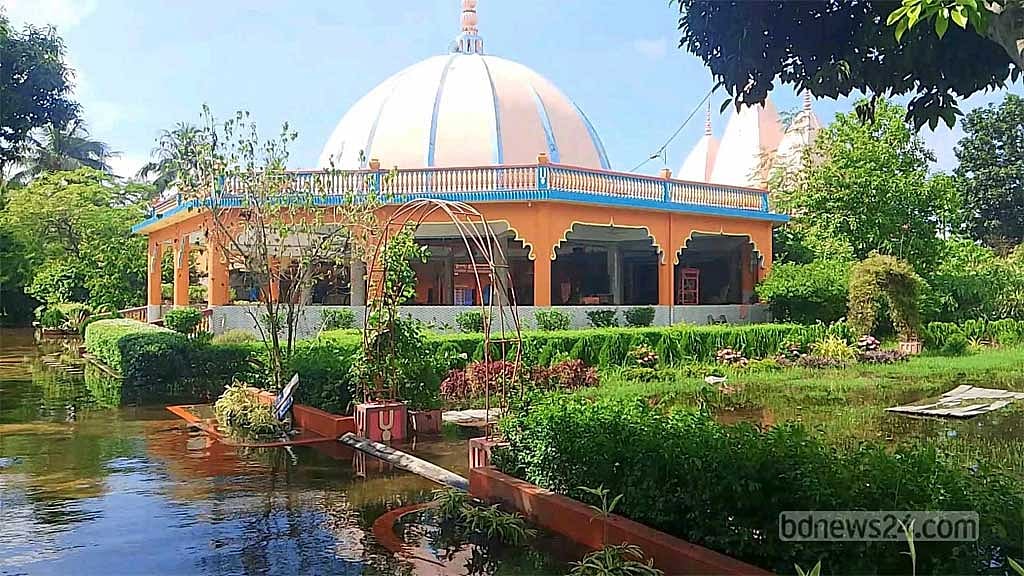
Heavy rains now flood fields, ponds, canals, and rivers, causing water to spill into yards, homes, mosques, temples, schools, and colleges.
Environment, Forest and Climate Change Advisor Syeda Rizwana Hasan told bdnews24.com that immediate steps have been taken to reduce the suffering of those affected by Bhabodah’s waterlogging.
She added that a permanent solution is a priority, with proper planning underway.
A visit to Bhabodah revealed the ongoing struggles of residents living amidst the water.
The crisis has intensified, with shortages of baby food and no means of burial or cremation.
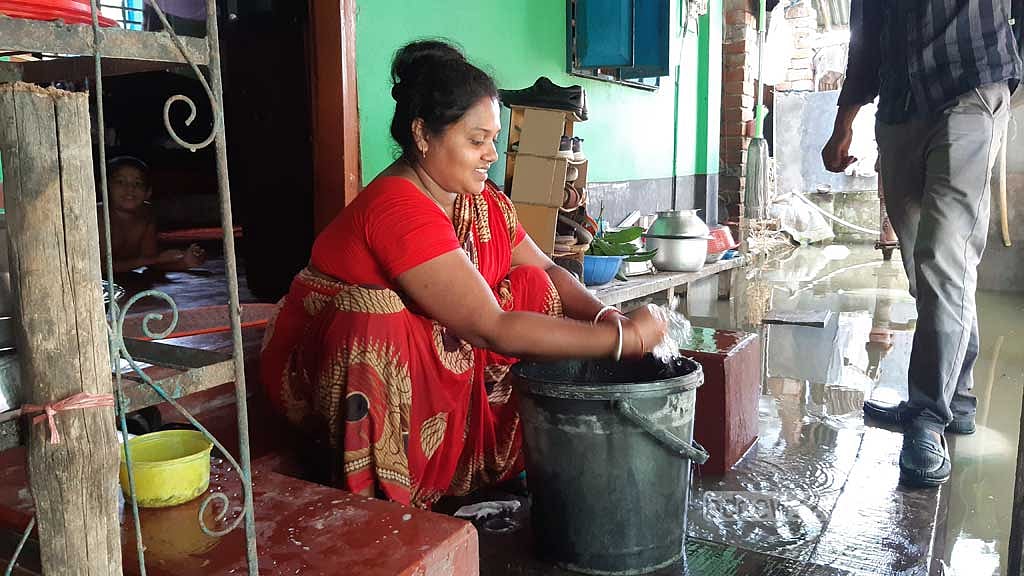
Pregnant women, nursing mothers, children, and the elderly are enduring these miserable conditions together.
Despite the severe situation, no effective action has been taken yet, with the only current relief measure being drainage by pumps – a method in which Bhabodah’s waterlogged residents have little faith.
The longstanding demand for the implementation of Tidal River Management, or TRM, has been ignored.
Instead, the authorities have erected dams, sluice gates, bridges, culverts, and unnecessary irrigation pumps that have worsened the situation.
River excavation projects have only pushed more silt back into the rivers.
This series of poor projects, including the damming of canals and the disruption of river connections, has again led to devastating consequences in Bhabodah.
People in the region are now calling for Bhabodah to be declared a disaster zone, and they are demanding a permanent solution after decades of suffering.
WHAT IS BHABODAH?
Anupam Hera Mondal, a professor in the folklore department at Rajshahi University and a native of the Bhabodah waterlogged region, said a sluice gate was constructed in Bhabodah's Bhabanipur village in 1961.
Following this, farmers in Manirampur, Keshabpur, Abhaynagar, Phultala, Dumuria, and later, Satkhira’s Tala Upazila began to experience waterlogging.
Permanent waterlogging took hold in 1986, caused primarily by siltation in the rivers downstream from Bhabodah.
To address this, the government has undertaken various projects over the years. From 1990 to the present, 21 projects aimed at solving Bhabodah's waterlogging have been implemented at a cost of Tk 6 billion. Yet, the waterlogging remains unresolved.
The water in this region drains through the Mukteshwari, Teka, and Hari rivers.
However, due to sediment build-up, these rivers have lost their depth and can no longer carry the excess water from heavy rains. Obstacles like dams further prevent water from flowing southwards to the Bay of Bengal.
Geographically, Bhabodah is surrounded by higher land: the northern part of Jashore is elevated, and sedimentation has raised Khulna’s southern region as well.
The eastern Bhairab River basin has always been high, while the western Kapotakkho River basin is also comparatively elevated. Bhabodah has thus become a 'basin,' trapping water with no outlet.
Gazi Abdul Hamid, joint convener of the Bhabodah Water Drainage Struggle Committee, told bdnews24.com that continuous rain has caused waterlogging in hundreds of villages in Keshabpur, Manirampur, and Abhaynagar Upazilas. The water in 27 local wetlands cannot drain. Overflowing water has submerged homes, schools, and roads. The situation, particularly since Sept 13, has spiralled out of control.
On the ground in the affected areas, waterlogged unions include Mongolkot, Bidyanandakati, Keshabpur, Panjia, Sufalakati, Gaurighona, Haridaskati, Sundoli, Chalshia, Payra, Kultia, Monoharpur, Durbadanga, and Shyamkur.
Locals said the water from these 27 wetlands drains through the 21, nine, and three-vent sluice gates of Bhabodah into the Hori River.
However, these gates have become inoperable due to siltation, leaving the water stagnant.
Speaking to bdnews24.com about the waterlogging in Bhabodah, Rizwana said the crisis reached its peak between 2006 and 2007.
She has been involved with the issue since then, leading public hearings, roundtable discussions, and legal battles over the TRM.
The Bangladesh Environmental Lawyers Association, or BELA, has also filed a case to overcome the complexities surrounding the implementation of the TRM project, she said.
LIVING AMONG SNAKES, FROGS, AND INSECTS
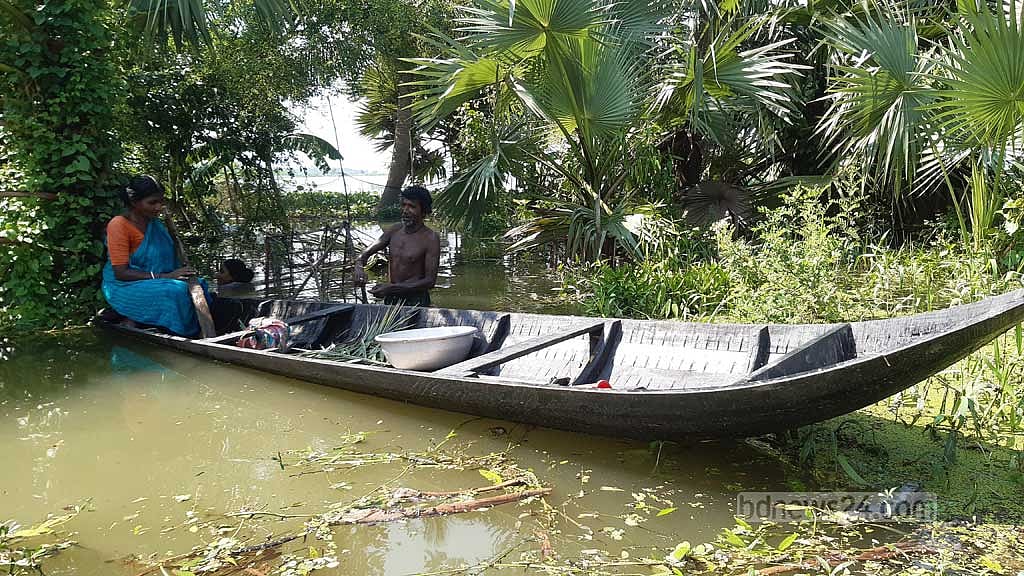
The residents of Kulutia village in Monirampur Upazila are still battling severe waterlogging.
Rita Mondal was sitting on a boat, while her husband, Ananda Mondal, and their 13-year-old daughter were fishing.
Seeing a boat carrying city visitors, Rita asked: “Did you bring anything for us?”
Upon learning that the visitors were journalists, she said: “Please let someone know to arrange help for us. Look at my hands and feet – they’re rotting from the water.”
Swapna Shikdar was sitting with her paralysed husband in a waterlogged home, raising their bed to escape the rising waters.
“Our house is collapsing. We’re cooking with great difficulty. We don’t want anything, just make this water dry up,” she said.
Hamid, the joint convener of the Bhabodah Water Discharge Struggle Committee, blamed the area's dire situation on former lawmaker Swapan Bhattacharjee and the Water Development Board, or WDB.
He said, “Instead of following the Tidal River Management project, the irrigation project started in 2022 under Swapan Bhattacharjee's influence has led to this crisis.”
In January and November 2022, the committee submitted a memorandum to the then prime minister Sheikh Hasina through the Jashore deputy commissioner, demanding the cancellation of a Tk 38 million irrigation project and the Tk 450 million proposal to address waterlogging in Bhabodah.
The struggle committee also met the executive engineer of the Jashore Water Development Board on Thursday to discuss the situation, who told them he was monitoring the situation 24/7.
Local resident Sekhar Biswas shared his frustration, saying that the WDB ignored local opinions and implemented the irrigation project, despite warnings that it would not solve the waterlogging issue.
In Abhaynagar’s Kota West Para area, Yasir Sheikh said water flooding into his sleeping area.
“We are in great distress. There’s no place to cook, we can’t even use the toilet. At night, we sleep on the bed, with water underneath and fearing snakes, frogs, and insects,” he said, lamenting the lack of government assistance.
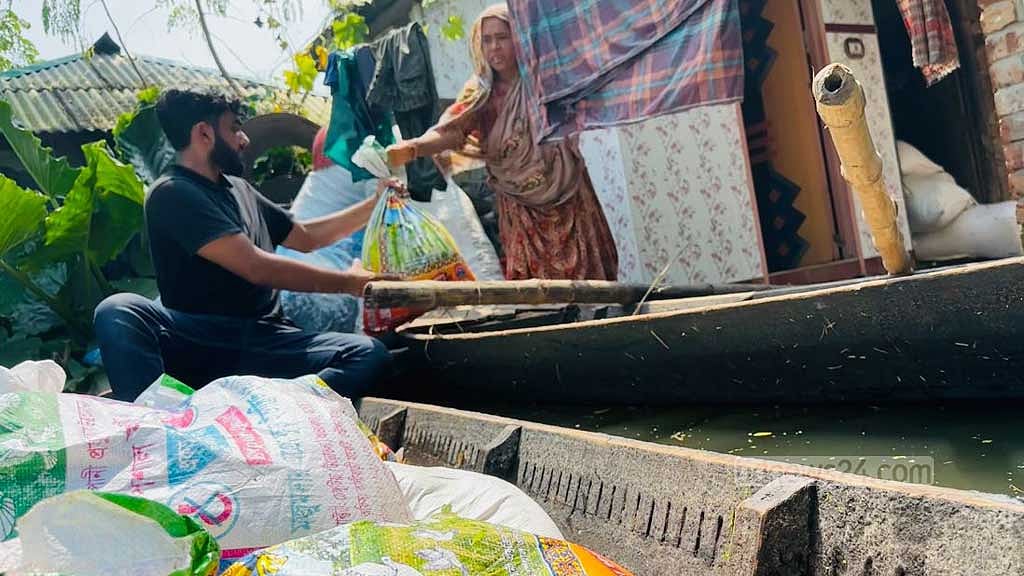
A group of youths from Abhaynagar is actively working in the waterlogged area, distributing food aid.
Syed Swaib Imtiaz, one of the organisers, said: “We are providing food aid under the banner ‘We, the people of Abhaynagar’ and are preparing to set up medical camps. We urge the government to declare Bhabodah a disaster zone and extend comprehensive support.”
Md Robiul Alam, president of the Abhaynagar Upazila Fish Enclosure Owners' Association, shared concerns about the fish farms being submerged, leaving owners bankrupt and in need of rehabilitation.
Expressing frustration over the ineffective irrigation project, Harun-ur-Rashid, an assistant teacher at Balidah Panchakari High School, pointed out that the water from 27 marshlands across three Upazilas is supposed to drain through the sluice gates at Bhabodah.
However, silt has clogged the gates, leading to prolonged waterlogging, he said.
Teacher Abdus Sabur agreed, adding that without dredging the rivers first, the TRM project would not work, as the silt accumulation has rendered the waterways ineffective.
Prof Anupam said the TRM concept, derived from traditional farmer practices, involved lifting river water into marshlands to deposit silt, gradually elevating the marshlands while deepening the river channels, thus easing water flow downstream.
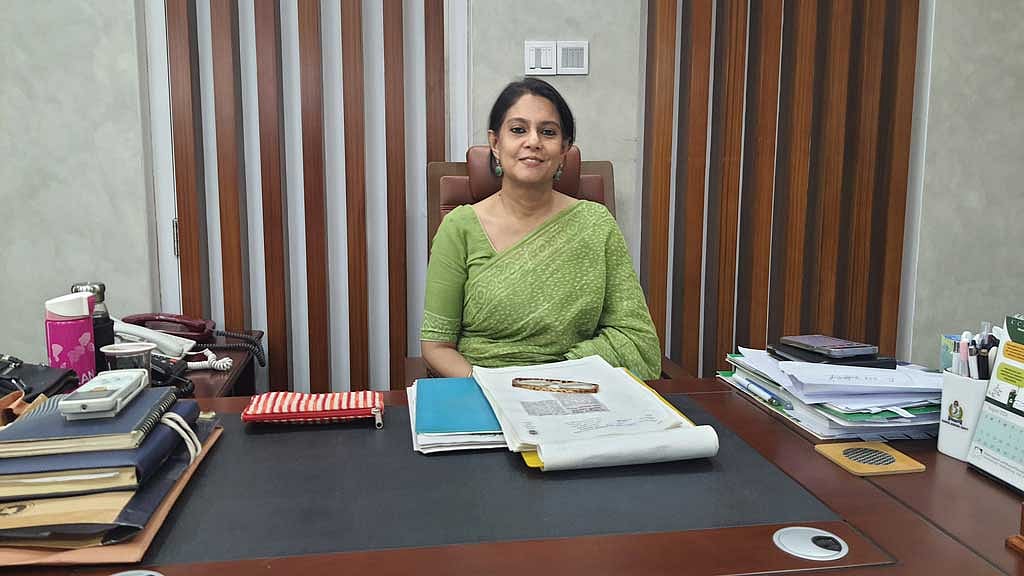
When asked about the government's steps to resolve the waterlogging issue, Advisor Rizwana said after reviewing the situation, the ministry secretary held a meeting with locals and decided that using 14 floating dredgers to pump out water would offer a temporary solution.
The locals have also demanded the dredging of rivers beyond the Bhabodah area, as silt deposits have narrowed several canal mouths.
"I am going abroad, but upon returning, I will visit the area. This issue is not limited to Bhabodah; it has also begun in the neighbouring area of Bil Dakatia. Therefore, a comprehensive action plan is needed. We want to hear what the people desire regarding that plan," she added.
TRM PROJECT DEMANDED TO LAUNCH SOON
Ranjit Bawali, convener of the Bhabodah Water Discharge Struggle Committee, said after a long protest by the waterlogged people of Bhabodah, the government decided in a 1998 convention, in the presence of the then minister of water resources, to gradually implement the TRM project. However, locals and fish enclosure owners opposed the TRM. In 2012, a faction of the ruling party and enclosure owners united against it.
He said, "At that time, a violent attack by TRM opponents left the local MP and then-whip of the national parliament, Abdul Wahab, along with officials of the Water Development Board, injured. Government vehicles were torched. Instead of taking action against the attackers, the government cancelled the TRM project, and Bhabodah returned to its previous waterlogged state."
Iqbal Kabir Zahid, an advisor to the committee, said: "After 2012, following overwhelming public support, a national workshop was held at the Jashore deputy commissioner’s office on Mar 16, 2017, in the presence of the water resources minister, senior officials, elected representatives, and representatives of the Bhabodah Water Discharge Struggle Committee."
He said following an extensive survey and public opinion poll by the Institute of Water Modelling, or IWM, the water resources ministry approved the TRM for Bil Kapalia and other regions.
However, on Sept 12, 2018, the ministry unexpectedly scrapped the project and ordered the formulation of a new plan, leading to the present disastrous situation, he added.
Zahid accused the Water Development Board and the ministry of protecting their 'syndicate's interests' by feeding the government false information and wasting millions of taka in irrigation projects, leading to the destruction of rivers while ensuring the syndicate's looting.
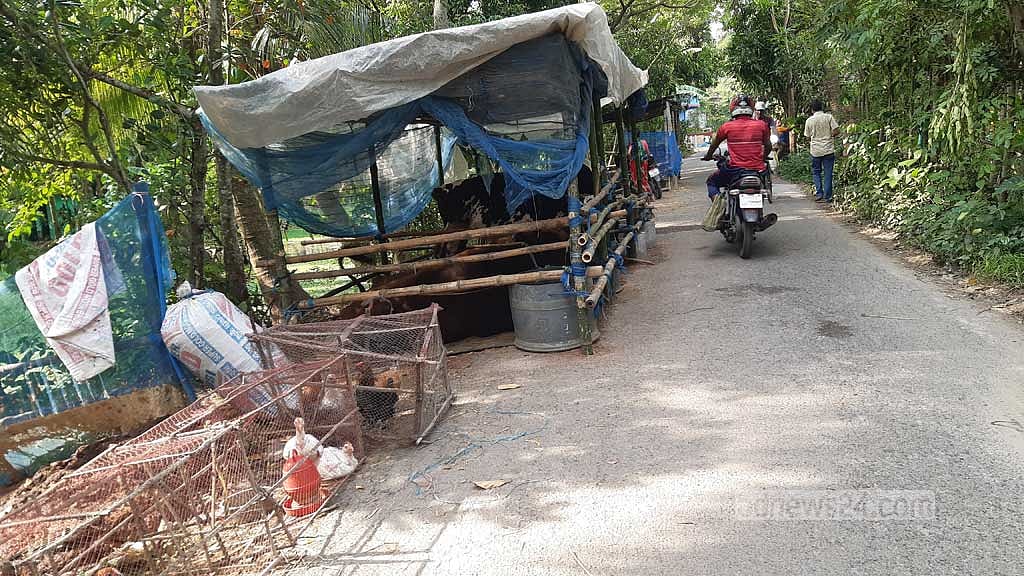
Monirampur’s Kapalia resident Ram Prasad Sarkar said, “The water pressure has rendered irrigation useless. River water is overflowing into homes, and as the water level rises, locals have built makeshift shelters on the roads to keep their livestock.”
The situation from Kapalia to Moshiakathi is similar. Along the way, Sushama Sarkar was feeding her cattle in a cowshed set up on the road. Living amidst the waterlogging, she said, “How can anyone survive in such hardship?”
Raj Ahmed of Paniyal village said waterlogging has plagued his area for nearly a month, with recent rain over four days making it worse. The only means of transportation in the area is by boat.
With the biggest annual festival for Bengali Hindus Durga Puja approaching, residents of the Bhabodah waterlogged region are finding it hard to prepare for the festival.
Priyabrata Dhar of Abhoynagar’s Sundoli said: "Puja is almost here, but preparations are absent. Though idols are being made in Sundoli’s mandap, roads and homes remain flooded, causing hardship for all."
Dipankar Das Ratan, president of the Jashore District Puja Celebration Council, said: "This year, temples in Haridas Kati’s Kuchlia Mandir, Hajirhat Mandir in Monirampur, and all temples in Sundoli union, Mahishayahi and Kultia in Abhoynagar, are submerged in knee-deep water. Nonetheless, Puja preparations are going ahead on a smaller scale."
According to WDB officials, the record rainfall in Jashore this year is responsible for the waterlogging. Between Aug 26 and Sept 16 alone, 623 millimetres of rain fell.
Palash Banerjee, executive engineer of the WDB in Jashore, said: "We are actively draining water from the waterlogged areas. Nine pumps are in operation, and we have started dredging 3.3 kilometres of river where sediment has accumulated. The dredging work is underway near the Dohuri sluice gate in Bhabodah."
"Water from Bhabodah also flows into Jashore city. Currently, the water draining is from the Hirina Bil. Once that water is cleared, we will begin draining the trapped water in Bhabodah."
Zahidur Rahman, a coordinator of the National Coordination Committee for the Resolution of the Bhabodah Waterlogging Crisis, said: "This is a longstanding problem, but this time we have more hope because Syeda Rizwana Hasan, who is well aware of the issue, is now in charge of the water resources ministry. The people of Bhabodah hope for a solution under her leadership."
Another coordinator, Md Imran Gazi, told bdnews24.com on Saturday: "I am currently in the Bhabodah region, and the suffering is unbearable. If immediate steps are not taken to remove the water, it will cause a severe crisis for the people."
"The only permanent solution is the implementation of TRM. We expect immediate action from the water resources advisor."
However, Rizwana acknowledged complications with the TRM project, saying: "Discussions with the government about TRM have been ongoing since 2006-07. The fact is, people want it, but the government does not want to provide compensation. You cannot fill people’s land with silt each year without compensating them—it affects their livelihood."
"The government argues that since not everyone in the village owns land, how will non-landowners be compensated? That’s where the issue is currently stuck. However, I hope to resolve this after discussing it with everyone during my visit. We will prioritise this matter."
[Writing in English by Arshi Fatiha Quazi]