Published : 06 Aug 2025, 06:00 PM
Updated : 21 Aug 2026, 01:37 PM


The Election Commission is gathering information on those who served as executive magistrates during the past three parliamentary elections held under the Awami League government, which have been widely questioned for their credibility.
The initiative comes in response to a request from the Police Bureau of Investigation (PBI), which is currently investigating a case filed by the BNP accusing the commission of conducting these elections without the “mandate of the people”.
In this context, the EC Secretariat has begun collecting data on the magistrates involved in the 2014, 2018, and 2024 elections.
On Wednesday, EC Deputy Secretary Monir Hossain sent letters to all deputy commissioners nationwide, as well as the divisional commissioners of Dhaka and Chattogram, asking for the required information.
For each national election, more than 1,500 executive magistrates are typically deployed across the 300 constituencies to enforce the electoral code of conduct and maintain law and order. Judicial magistrates are also engaged per the commission’s requirement.
The letter instructed authorities to send in detailed information -- names, addresses, national ID, passport and mobile numbers -- of the magistrates who served during the 10th, 11th, and 12th national elections.
Previously, the PBI had requested information from the EC on the returning officers, presiding officers, assistant presiding officers, and polling officers who had served in the last three parliamentary elections. It asked for the details to be provided by Jul 24.
EC Secretary Akhtar Ahmed had said they were taking steps to provide the details sought by the PBI.
On Jun 22, the BNP initiated a case accusing the EC of “not fulfilling” its constitutional responsibilities during the 10th, 11th and 12th national elections, and instead conducting votes without the people's mandate by instilling “fear and intimidation”.
Alongside all the EC officials who served during those three elections, ousted prime minister Sheikh Hasina is also implicated in the case.
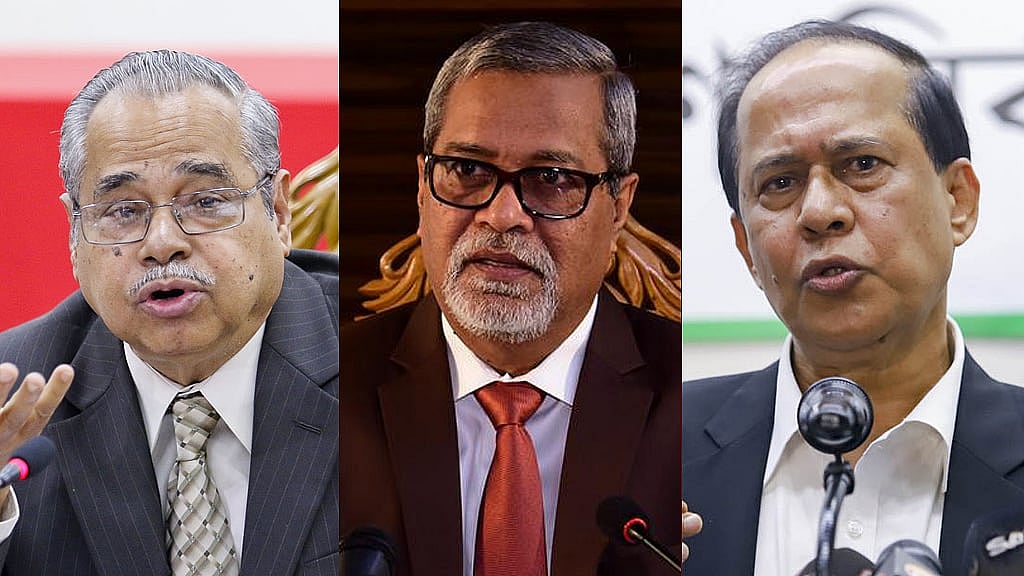
Kazi Rakibuddin Ahmad was the chief election commissioner (CEC) during the 2014 election, KM Nurul Huda during the 2018 election, and Kazi Habibul Awal during the 2024 election. Among them, Nurul Huda and Awal have already been arrested.
After coming to power in a landslide victory in the 2008 elections, the Awami League amended the Constitution and abolished the caretaker government system.
As a result, the past three national elections were held while the Awami League was in power.
Of them, the BNP and most other opposition parties did not participate in the 10th and 12th national elections as their demand for a non-partisan election-time government went unheeded.
As a result, the Awami League candidates were elected unopposed in 153 out of 300 constituencies in the 10th election.
The BNP, which boycotted the polls, termed that parliament a “vote-less parliament”.
In 2018, some opposition parties, including the BNP, formed the Jatiya Oikya Front and participated the 11th parliamentary election.
However, the election was marred by widespread allegations of vote rigging, including claims that most votes were cast the night before.
The opposition won only seven seats, and critics terms the vote as the “midnight election”.
In January 2024, to portray the 12th parliamentary election as participatory despite the boycott by the BNP and its allies, the Awami League left some seats for its allies and opposition party Jatiya Party.
The main electoral contest was between ruling party nominees and rebel candidates from the Awami League. This election came to be labelled as a “dummy” election.
In all three controversial elections, the Awami League emerged victorious and continued to rule the country for over 15 years.
Eventually, on Aug 5, 2024, Hasina’s government was toppled by a student-led mass uprising.
Many political parties later began demanding justice for those responsible for irregularities in the last three elections.
In response, the interim government formed a five-strong commission.
The panel was tasked with reviewing the allegations, analysing the roles of the EC, law-enforcing agencies, and other involved parties, determining responsibility for the irregularities, and making recommendations for holding free and fair elections in the future.