Published : 07 Dec 2025, 07:50 AM
Updated : 21 Aug 2026, 02:51 PM


Evening in Khulna now arrives with unease. In city streets and rural alleys alike, fear settles in. The discovery of bodies in rivers has become routine. Murders are no longer isolated incidents but an alarming trend. In some cases, as many as four killings have occurred in a single day.
The scale of violence has sparked public outrage.
On Nov 30, two men were shot and hacked to death in broad daylight outside the courthouse. That same night, another man was critically injured in a separate shooting. These attacks have reignited public concern over what many describe as lawlessness.
Since the fall of the Awami League government, police data shows that nearly 50 murders have taken place within Khulna city alone, with over 45 more in the district. In parallel, more than 50 bodies have been recovered from rivers.
According to Khulna Metropolitan Police (KMP), 45 murders occurred across the city’s eight police stations in just 14 months -- from August 2024 to mid-November 2025. Of these, 29 were committed this year alone.
The brutality has been relentless. On Nov 17, police recovered the bodies of a woman and two children from a house in the city’s Labanchora, who were beaten to death. Later that evening, in Karimnagar, a man recently released on bail in a narcotics case was shot and had his throat slit in front of his wife.
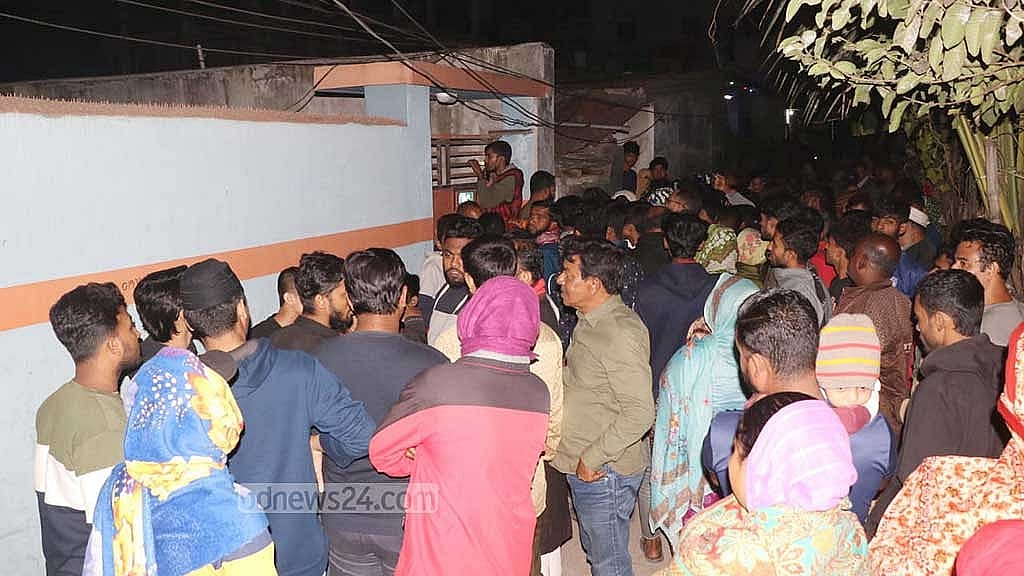
Police believe the killings stem from a volatile mix: domestic violence, drug turf wars, the rise of teen gangs, rampant illegal arms, activities of banned extremist groups, and emboldened criminals released on bail. Many are now vying once more for control of their territories.
Residents say armed men routinely stage patrols in neighbourhoods after dark. Some allege that these groups enjoy shelter from local political leaders, fuelling their impunity. In some cases, intra-party political rivalries have turned deadly.
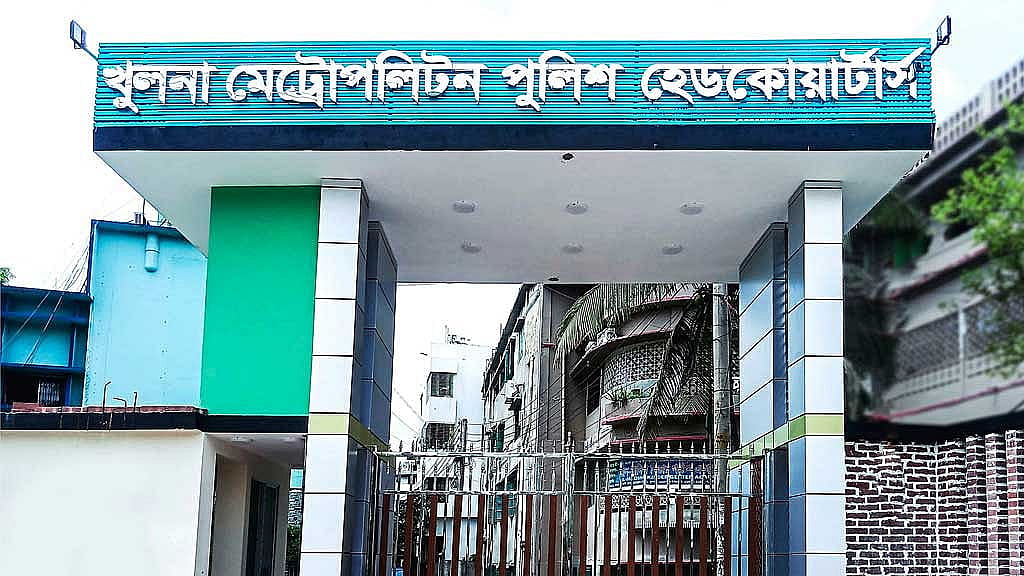
Khulna Metropolitan Police Commissioner Zulfikar Ali Haider said multiple operations are under way to arrest and restrain known criminals.
“Special measures are being taken, particularly ahead of the election, to prevent any attempts at destabilisation,” he said. “Checkposts are active, and patrols have been intensified.”
But the violence is not confined to the city. The district as a whole has also seen a sharp spike. According to the superintendent of police, 45 murders were recorded across Khulna district from January to November this year. Thirty victims were either gunned down or hacked to death. Two were strangled. Four others were killed over extramarital affairs or family disputes.
The worst-hit area appears to be Rupsha Upazila, where five murders occurred in just two months, and four of them involved firearms.
Police and experts trace much of the escalation back to August 2024, when several high-profile criminals were released on bail.
Many are now locked in violent struggles for control, with extortion rackets and other interests at stake. Analysts say the widespread availability of illegal firearms has only made matters worse.
Two incumbent and former senior police officers say strengthening grassroots intelligence is essential. Timely disbursement of “source money” for field operatives and restoring morale among the rank-and-file are also crucial. Most importantly, they argue, no political protection for criminals should be tolerated.
Prof Tanvir Ahmed Sohel of Khulna University’s sociology department sees a deeper crisis.
“A collapse in family values and social discipline is feeding the rise in violence. Add to that a glaring lack of state-level oversight, and you have the perfect conditions for chaos.”
‘POLICE ONLY COME TO COLLECT BODIES’
The recent spate of daylight killings and back-to-back assassination attempts has only deepened public outrage in Khulna.
In the wake of the latest attacks, residents are voicing long-held frustrations over what they see as police inaction during moments of real danger.
"Even with so many murders, police are never seen when the bullets start flying," said one city resident, visibly angry. "If they are nearby, they just step away. They only come later, to collect the bodies."
Locals also complain that police investigations into these killings are often half-hearted or inconclusive. As a result, many suspects are never caught. And when they are, they often walk free on bail within weeks.
This, residents say, only emboldens violent groups further.
FEAR-STRICKEN FAMILIES
A senior police officer recalled that between 1999 and 2006, extremist organisations in Khulna splintered into multiple factions and became locked in vicious cycles of reciprocal killings.
The Communist Party of East Bengal (ML) fractured into new groups, such as the Communist Party of East Bengal (ML–Jono Juddho). The Revolutionary Communist Party split into the New Revolutionary Communist Party and several other outfits. Many of these groups remain active today. In many cases, they receive protection -- and are used -- by mainstream political organisations.
Residents of Daulatpur say extremist dominance once ruled the area. Though their influence waned for a time, after Aug 5, they have grown desperate to reclaim control. Control over drug trafficking operations is now a major driver of lethal violence.
Families of the murdered say that in most cases, the prime suspects have not been arrested. Instead, they continue to receive threats from the perpetrators. Fear now governs their daily lives.
On Nov 30, Hasib Hawladar was killed in front of the court. His family has still not filed a case. That same day, Fazle Rabbi Rajan was also shot dead at the same location.
Hasib’s brother, Suman Hawladar, said: “We don’t even know who killed him. On top of that, we are living in fear. My elder brother is gone, and I am terrified for my children and the rest of our family.”
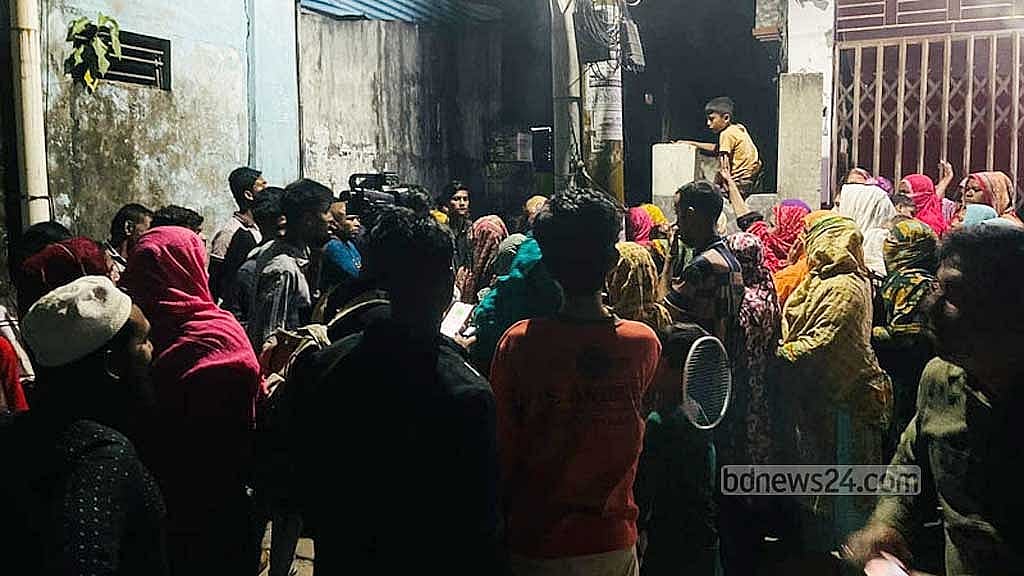
“I am now the only son in the family. What if we are attacked next? That is why we do not want to file any case. We have left justice for my brother’s murder to Allah.”
On Jul 11, Mohammad Mahbubur Rahman Molla, former vice-president of the Daulatpur Jubo Dal unit, was murdered inside his home in Maheshwarpasha. He was first shot, then hacked, and finally had the tendons in his legs severed. His father, Abdul Karim Molla, filed a case against unidentified assailants.
“We are still in deep anxiety because the killers have not been arrested,” Karim Molla said. “We are being threatened in different ways. Out of fear and panic, we cannot even sleep properly at night.”
On the night of Aug 3, Al-Amin, a fish enclosure trader, was murdered by throat-slitting at Khanabari of Maheshwarpasha Banikpara. His elder brother Awlad Hossain filed a case against unknown attackers.
“The criminals who brutally murdered my brother are still beyond reach,” Awlad said. “We are living our days in terror.”
On Sept 30, Tanvir Hasan, also known as Shubho, was killed in his sleep at a house near the West Para Market mosque in Maheshwarpasha. His father, Abul Bashar, filed a case against unnamed suspects.
“We are devastated that the killers have still not been arrested,” Bashar said. “We are being threatened constantly. We are living in fear.”
On Nov 2, at the Arangghata Jogipole BNP office, local party organising secretary Mamun Sheikh was targeted in a shooting. The bullet missed its intended target and instead killed Imdadul Haque, a teacher.
His son, Anik, said: “My father was killed while collecting donations for a religious gathering. His dream was for me to become a doctor. Now my studies have stopped completely. Every dream of our family has been shattered. Since the incident, we have been living in fear and panic.”
ARE MASTERMINDS HIDING BEHIND THE SCENES?
Despite the steady succession of murders, police have repeatedly failed to identify the real masterminds or arrest the main suspects. Both police and residents say that those who are caught are often hired gunmen. The true organisers operate from the shadows, working to secure bail for their foot soldiers and keeping the criminal machinery running from behind the curtain.
Many victim families allege that police have still failed to arrest the main accused in numerous cases.
KMP Commissioner Zulfiqar said, “Our review shows that in most of these murders, trained and professional operatives are involved. They carry out the attacks and then vanish. Even so, many criminals have been arrested from different areas. Efforts to capture the remaining suspects are continuing.”
He added: “Police are working to maintain law and order and arrest the suspects. But the locals are not cooperating with us. Without public cooperation, it becomes extremely difficult for police to maintain law and order.”
DISTRICT SITUATION ALSO DIRE
Analysis of data provided by the district police shows that 45 murders have occurred there from January this year.
Of these, four were killed by firearms, 26 were hacked or shot, 11 died under unknown circumstances, two were strangled, and several were believed to be linked to extramarital affairs, according to police assessments.
River Police statistics indicate that between August 2024 and August 2025, a total of 50 bodies were pulled from the waters across the Khulna region.
Among these were 32 men, seven women, and 11 children. Twenty of the recovered bodies remain unidentified.
‘ADMINISTRATIVE FAILURE’
Shafiqul Alam Mona, president of Khulna Metropolitan BNP, believes the city is witnessing targeted killings, highlighting “extreme failure” on the part of the administration.
“The wave of targeted killings shows that the law enforcers are losing control. Murders, robberies, terrorism, and the proliferation of illegal firearms demonstrate the police administration’s severe failure.
“Incidents of killings, assaults, extortion, and public display of weapons are alarmingly on the rise. No one is safe anywhere,” he said.
Commenting on the situation, the political leader added: “People live in fear even in broad daylight. Murders occur in homes, on streets, even while sleeping. Yet, no effective action from the police administration is visible.”
Mufti Amanullah, the Islami Andolan Bangladesh candidate for Khulna-2 (Sadar–Sonadanga), echoed similar concerns.
“We have repeatedly raised the law and order situation in Khulna with the authorities. There has been no improvement, and what is happening is deeply worrying.”
CIVIL SOCIETY VOICES CONCERN
Sheikh Ashraf Uz Zaman, president of the Greater Khulna Development Struggle Coordination Committee, expressed alarm over the deteriorating law and order.
“Criminals are exploiting police inaction,” he said. “The driving forces behind these crimes include territorial dominance, past rivalries, drug connections, and political patronage.
“Criminals now operate without fear, increasing both armed displays and killings.”
Kudrat-e-Khuda, president of the Conscious Citizen Committee (CCC) of Khulna, warned that preventive measures and social awareness are still largely absent.
Babul Hawladar, member secretary of a local civil society organisation, said: “The city is becoming unsafe. Public concern over security is rising. When criminals commit gruesome acts in public and walk away unhindered, it spreads fear among citizens.”
He added, “Teen gangs have formed in areas, gathering at night for armed demonstrations in neighbourhoods. If no steps are taken to curb these crimes, social instability and insecurity will worsen.”
POLICE PERSPECTIVE
Assistant Commissioner (CSB) TM Rokonuzzaman said, “Since the 5th of August, firearms have been looted from many homes and are now in the hands of criminals. The Khulna region has long seen Communist Party factions with weapons, including rifles. In addition, foreign pistols and revolvers are being smuggled from the Myanmar and Indian borders.”
He emphasised the police’s active efforts to recover illegal weapons and maintain law and order.
Khulna Police Commissioner Zulfikar said police are actively maintaining lists of suspected criminals and undertaking multiple operations to arrest and control them.
“Special measures have been implemented to prevent any disruption during the election period. Regular checkposts and patrols are in place. Overall security is being treated with utmost priority,” he added.