Home
+
Published : 26 Feb 2025, 02:56 AM
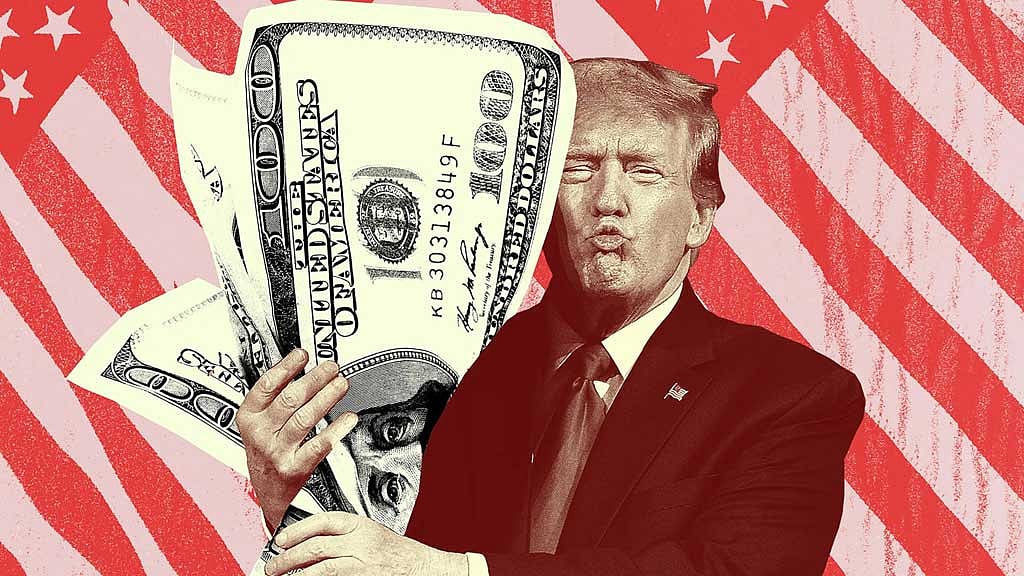
The storm triggered by US President Donald Trump's criticism of a US-funded project aimed at strengthening Bangladesh’s political landscape has put the spotlight on Democracy International, a Maryland-based NGO behind the initiative.
The project, titled Strengthening Political Landscape in Bangladesh, or SPL, was launched in 2017 and had a total budget of $29 million, with a duration extending until December 2024.
Trump’s remarks sparked intense debate in Bangladesh after he claimed that an obscure two-person organisation had become “rich” by receiving the funds to execute the project.
Social media discussions also linked the initiative to an NGO associated with Aynul Islam, an associate professor of political science at Dhaka University.
Questions have surfaced over who was responsible for spending nearly Tk 3.5 billion at the current exchange rate, what the project actually achieved, and whether it had any impact on Bangladesh’s political situation.
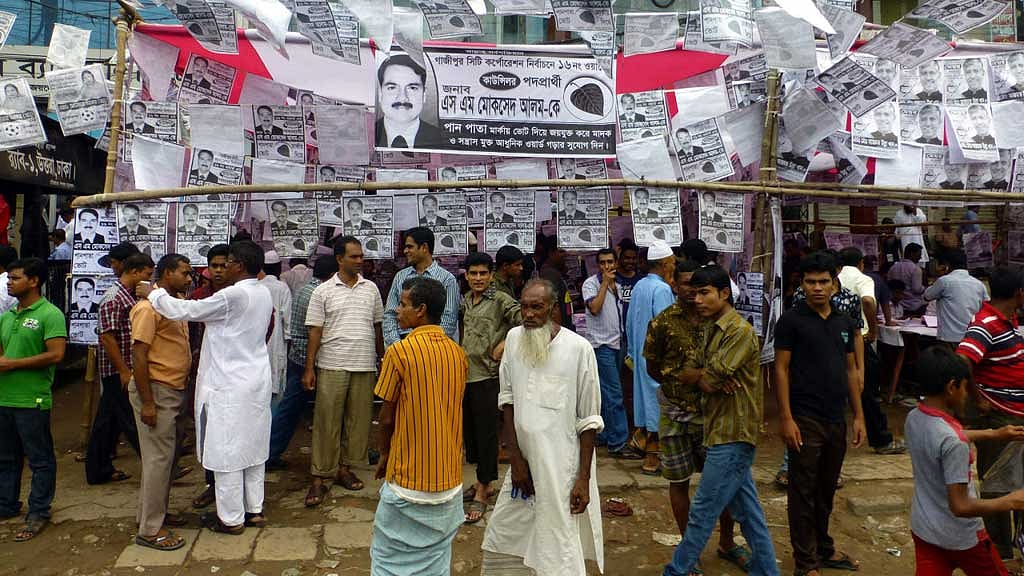
Some have questioned whether the project was used to influence Bangladesh’s politics.
Discussions have also focused on identifying the true beneficiaries of the large sum of money and whether it contributed to strengthening democracy or political institutions.
An examination of US government documents confirms that Democracy International was responsible for executing the SPL project, contradicting Trump’s claim that it was handled by a two-person NGO.
Foreign Advisor Touhid Hossain, responding to a query on Monday, said they were still awaiting more details about the grant.
Citing the NGO Affairs Bureau, he said there was no official record of any Bangladeshi entity receiving such funds.
According to data from the US Foreign Assistance website, the SPL project was launched under the United States Agency for International Development, or USAID, funding on Mar 2, 2017, and was scheduled to conclude on Dec 1, 2024.
The total pledged amount for the project was $29.01 million, with $28.02 million disbursed before its completion.
The eight-year project saw the following disbursements:
$3.64 million in 2024
$3.70 million in 2023
$3.24 million in 2022
$2.95 million in 2021
$3.37 million in 2020
$6.74 million in 2019
$3.56 million in 2018
$0.79 million in 2017
In response to Trump’s remarks and queries about the SPL project, bdnews24.com reached out to Democracy International via email.
Catherine Cecil, the chief of party for one of their projects in Bangladesh, declined to comment.
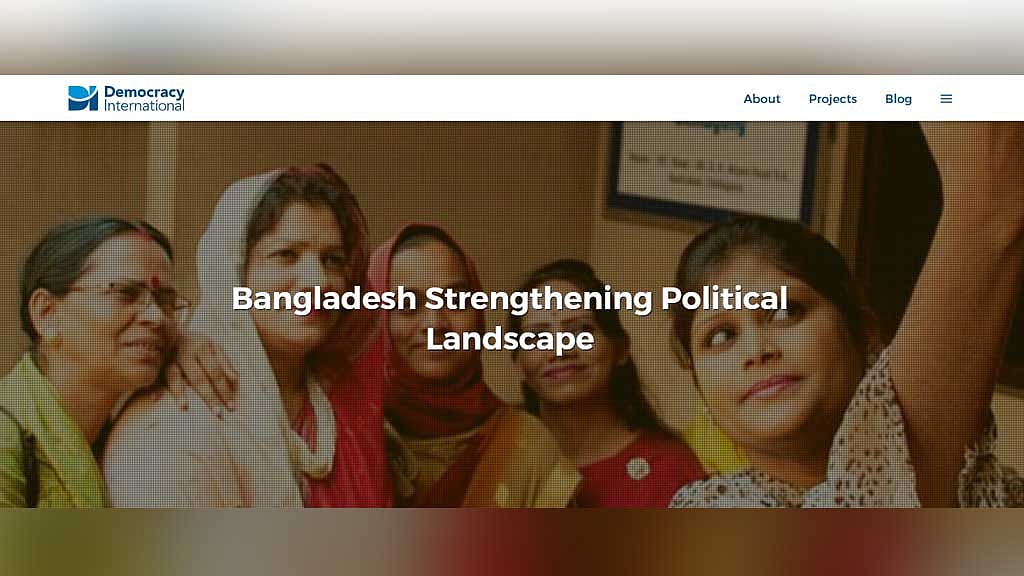
The Foreign Assistance website describes the project as an initiative to enhance political decision-making by training political activists and citizens in conflict resolution and governance.
“The initiative aims to build a strong cadre of male and female leaders for the future, contribute effectively to policy debates and reforms, foster tolerance and constructive engagement despite political differences, and enhance their ability to address political violence,” the website states.
TRUMP SUSPENDS USAID FUNDS AFTER TAKING OFFICE
Trump moved swiftly against USAID after assuming office for a second term, suspending all foreign development funding for 90 days through an executive order.
The US president accused the agency, which has overseen American humanitarian aid since the 1960s, of funnelling taxpayer money into unnecessary projects with no tangible benefits for the country.
At the same time, Trump has brought in billionaire Elon Musk to lead the newly formed Department of Government Efficiency, or DOGE, tasked with scrutinising federal spending.
Trump and Musk claim USAID has not only wasted resources but also facilitated fraud, enabling people to enrich themselves while engaging in political influence abroad.
One example they highlighted is a $29 million project in Bangladesh.
"$29 million to strengthen the political landscape in Bangladesh went to an organisation whose name no one has heard of before,” Trump said at an event on Friday.
“Can you imagine? With a small organisation, getting $10,000 here and there, and then suddenly receiving $29 million from the US government!
According to him, the firm in question had just two employees.
“I think they’re very rich and happy now.
“Soon, their pictures will be on the cover of some business magazine for being great scammers,” he said.
The remarks have triggered intense debate over which organisation in Bangladesh implemented the project.
On Saturday, addressing the Conservative Political Action Conference, or CPAC, in Maryland, Trump doubled down on his claims.
"That $29 million was spent to strengthen the political landscape and to help elect a radical leftist communist in Bangladesh," he said, a phrase he has often used to criticise his political rival, Joe Biden.
WHAT WORK HAS BEEN DONE IN THE SPL PROJECT, WHO IS INVOLVED?
The Democracy International website says the implementation of the SPL project has been funded not only by $29 million from USAID, but also by contributions from the UK’s Department for International Development, or DFID, its international cooperation agency.
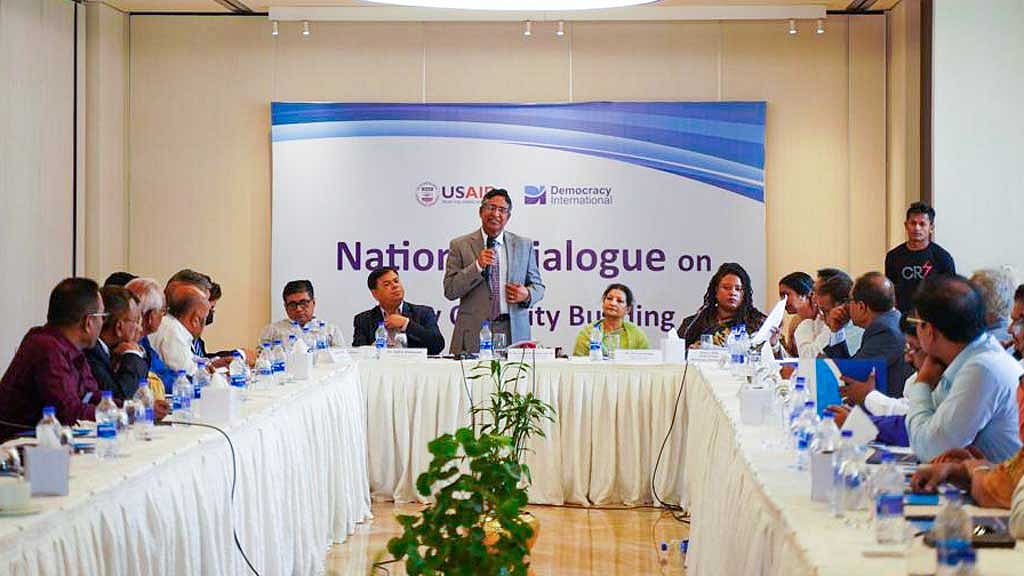
Under the project, various field activities, including training workshops and fellowships, were undertaken across Bangladesh.
After training grassroots workers of various political parties, dialogues were organised in the presence of the central leaders as part of Democracy International’s work.
A fellowship arrangement for senior leaders as well as grassroots leaders was arranged.
In a press release in March 2023, Democracy International said: “161 master trainers, 206 young fellows and 80 senior fellows of the Awami League have been trained so far.
“Later, they trained over 10,075 leaders and activists of the party by organising 572 sessions.
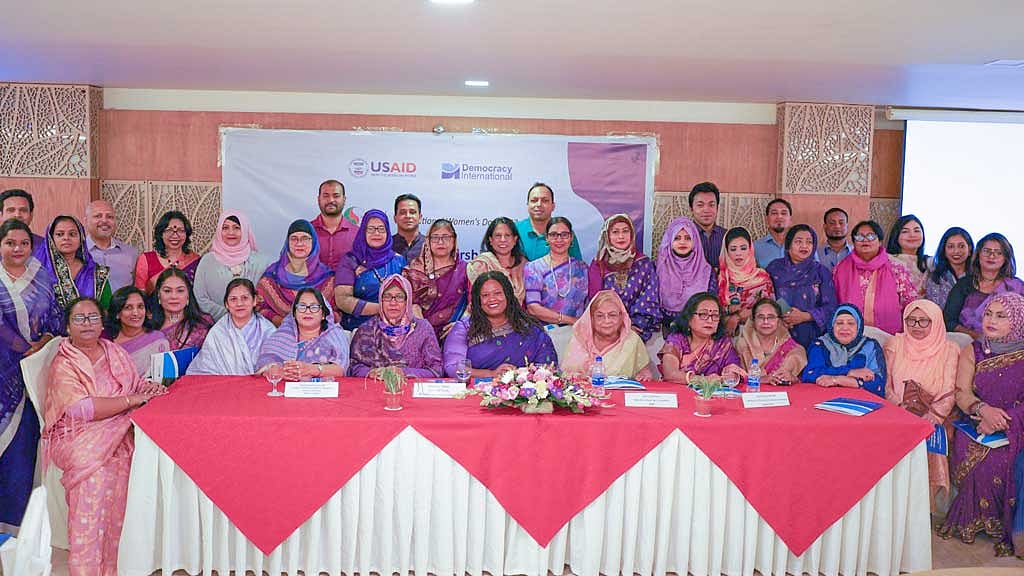
“In addition, the project has significantly expanded women's political empowerment, which has played a positive role in the political lives of 7,000 female leaders of the Awami League.”
Democracy International runs a programme called the Young Leaders Fellowship Program, or YLFP, under the APL.
Through this, workshops and training were organised mainly for members of the Awami League, BNP and Jatiya Party's affiliated and allied organisations.
Democracy International says 561 young political leaders have graduated from this programme in 23 batches until February 2024.
At the closing ceremony of the courses, certificates were handed over to the leaders of the main political parties.
Democracy International also carried out awareness-raising activities on voting, including video campaigns and various programmes for exchanging views as part of the SPL programme.
Several campaigns about voting were also run on a Facebook page called “Bangladesh Amar”, which was later changed to “Amio Jitte Chai”.
Websites have also been created under those two names. The “Amio Jitte Chai” website had a system for highlighting citizens’ demands, as well as carrying out different activities including poster-making.
The “Amio Jitte Chai” Facebook page says this page has been created under the APL project to “create bonds between politically active citizens and political leaders” in Bangladesh.
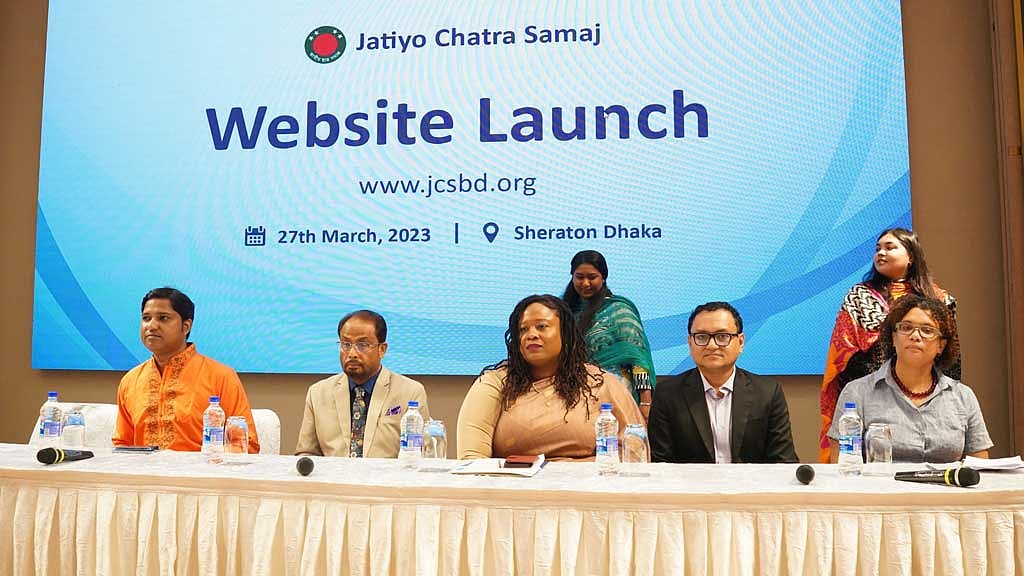
In addition to these two websites, Democracy International has funded the creation of the official website of the Jatiyo Chatra Samaj, the student wing of Jatiya Party.
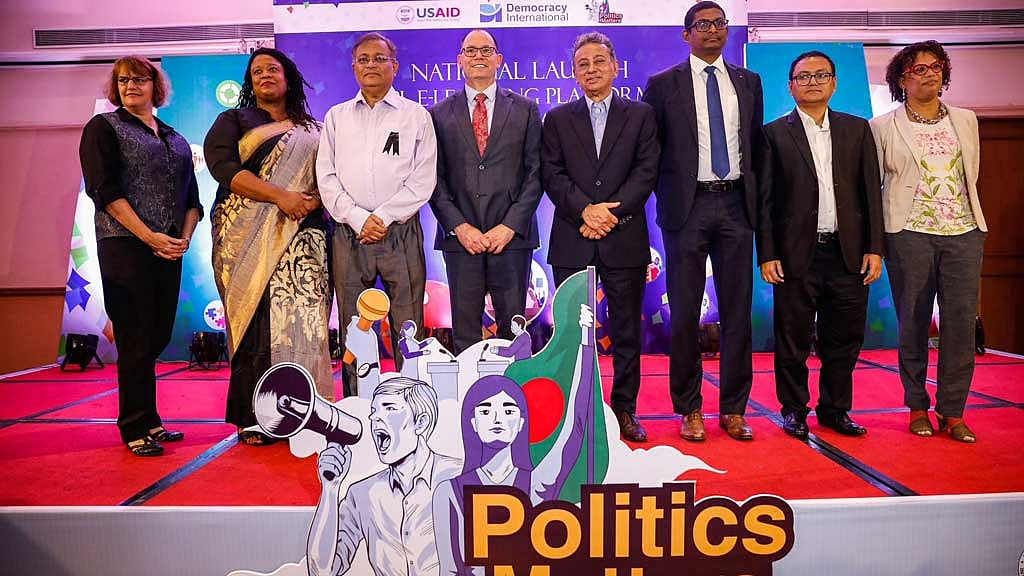
An online training programme styled “Politics Matters” was run under the SPL, which was inaugurated on Aug 10, 2022.
The event was attended by former US ambassador Peter Haas, along with the then information minister Hasan Mahmud, BNP Standing Committee member Amir Khosru Mahmud Chowdhury, and Jatiya Party Presidium member Shamim Haider Patwary.
The “team” option for identifying officials is no longer visible on the Democracy International website amid the controversy over the grant.
However, in the web archive of Jan 30, the list shows two officials as the “Chief of Party” and one as the “Deputy Chief of Party” of the organisation.
When bdnews24.com questioned the total number of staff working at Democracy International in Bangladesh, Chief of Party Catherine Cecil did not respond.
However, an idea about the manpower can be obtained by talking to two former and current employees.
Democracy International currently has four projects in Bangladesh, of which three funded by USAID are suspended.
An employee, who wished to remain unnamed, said they have more than a hundred employees in the Dhaka and regional offices.
Each project has a chief of party and a deputy chief of party. Although they were appointed through an open circular, the individuals holding the positions of the chief of party were foreigners.
After Trump's contradictory statements about the project's funding, its role in the July-August mass uprising in Bangladesh is also being debated.
Badiul Alam Majumder, head of the Electoral Reform Commission, believes the allegations that USAID's $29 million funding played a role in the change of power in Bangladesh are baseless.
He said, "If you notice the activities of Democracy International under the SPL, you will understand who was involved.
“Grassroots workers of the Awami League, BNP, Jatiya Party and other parties participated in it more.
“After that, central leaders of Awami League also regularly attended their events.
“Analysing the entire programme, it is notable those who want to belittle the mass uprising are running such campaigns."
AYNUL’S FUNDING UNDER ‘NAGORIK’ PROJECT
Amid the controversy following President Trump’s $29 million revelation, Dhaka University Associate Professor Aynul said in a Facebook post: “There is no link between the Strengthening Political Landscape in Bangladesh programme and [Microgovernance Research Initiative], or [Democracy-From Theory to Practice], or [Students Against Violence Everywhere].”
“We have never worked in this programme for a single day.”
In his words, the DFTP and SAVE programmes are entirely academic, focusing on enhancing the capacity of young teachers and students, and fostering respect for democracy and human rights.
Aynul urged everyone not to spread misinformation or get confused.
A part of the funding for his Microgovernance Research Initiative, or MGR, which works to strengthen democracy and increase youth participation, comes from USAID's Dhaka-based Nagorik, or Citizen, project.
Although US government records list the project as “Amar Vote Amar”, Aynul said its field-level activities operate under the name “Nagorik project”.
According to the Foreign Assistance website, this USAID-funded initiative is implemented by the Consortium for Elections and Political Process Strengthening, or CEPPS.
The CEPPS partners with the International Foundation for Electoral Systems, or IFES, along with the two voluntary wings of the United States’ main political parties—the International Republican Institute, or IRI, and the National Democratic Institute, or NDI.
In a LinkedIn post, USAID’s Political Process Advisor Lubain Masum said the total funding for the Nagorik project amounts to $21 million.
According to the Foreign Assistance website, the Amar Vote Amar project is scheduled to run until Jul 31, 2025.
While the website does not specify the project's starting date, its first fund disbursement took place in 2022.
Between 2022 and 2024, the total disbursed funds reached $13.44 million while the committed funds for this period exceeded that amount by $1.52 million.
Speaking to bdnews24.com, Aynul explained that his collaboration with IFES dates back to 2013, but he has been involved with the Nagorik project since 2022.
He said, “US government funds do not directly go to any organisation. Registered institutions in the country receive them first. Then, local consultants or small organisations access the funds.
“Since I work at Dhaka University, I am engaged as a consultant.”
“Institutions like ours liaise with the primary fund recipients to implement projects. Once we submit bills and vouchers, we receive the corresponding expenses.”
Aynul emphasised that under MGR, his work with IFES has been ongoing since 2013.
“I have no direct partnership with USAID. My work is with the International Foundation for Electoral Systems, an American organisation. I have worked with them since 2013, along with other organisations on smaller projects.”
He added that the IFES receives funding from multiple sources, including the US, Canada, and the United Kingdom.
When providing funds, the IFES instructs its partners on which logos to use, depending on the funding source.
Ainul denied any connection to the SPL programme mentioned by Trump, emphasising that the Nagorik project’s initial name was ‘Amar Vote Amar’.
“Our funding probably originated from there because the funders always informed us of the funding source.”
He also confirmed that the SAVE programme has been receiving funding under the Nagorik project since 2022.
Before that, it was funded by the UK government.
Under MGR, Aynul launched the SAVE in 2018, involving over 3,200 students in different activities.
In addition, he runs DFPT, which blends academic and practical training. USAID most recently funded the programme.
IS $21MN FOR INCREASING VOTER TURNOUT IN INDIA?
President Trump questioned USAID’s $21 million funding, alleging it was “misused” to increase voter turnout in India.
While the CEPPS has an Elections and Electoral Process project in India, it has not been very active.
USAID records show only $484,179 was disbursed between 2013 and 2018, with no further transactions recorded.
The Foreign Assistance website outlines the project’s goal as promoting democratic political processes and encouraging competition of views and political power, ensuring that public opinion is reflected in governance.
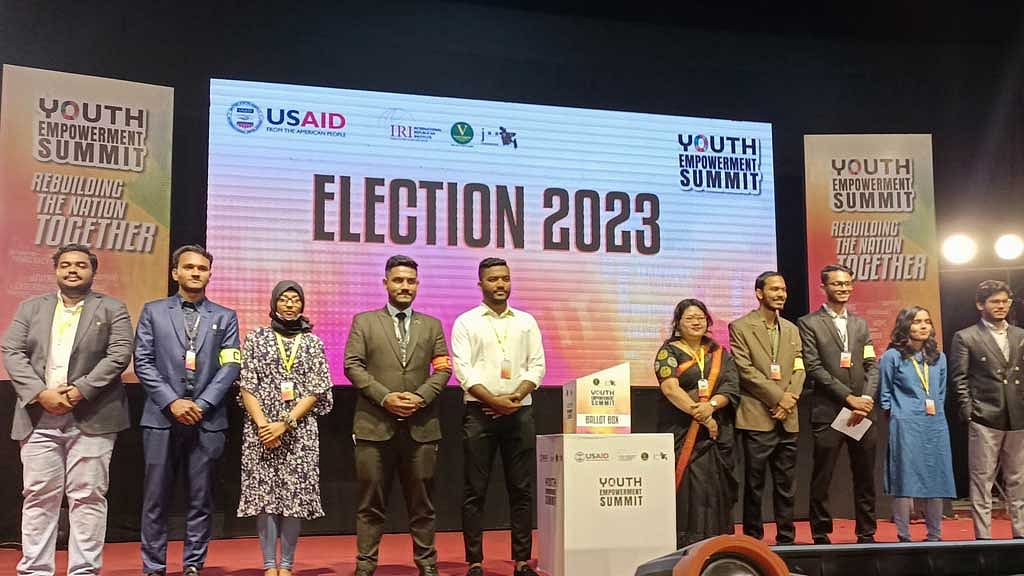
The project also seeks to explore methods for multi-party competition under political parties and powers.
However, Indian media reports claim the funding was not for India but for Bangladesh.
They say the grant supported the “Amar Vote Amar” or Nagorik project, which focused on increasing voter participation in Bangladesh.
A US-based advisory firm, HigherGov, listed the $21 million USAID grant under the Nagorik project, describing it as an effort to promote free and fair elections in Bangladesh.
According to an IFES report, the funding also contributed to the Power to Persuade programme, which supported people with disabilities across four South Asian countries, including Bangladesh.
He said their work focused on enhancing the skills of young people rather than influencing electoral participation.
OTHER ORGANISATIONS INVOLVED IN NAGORIK PROJECT
The Nagorik project, funded by the US government, engaged several organisations beyond Aynul's initiatives.
These included Hunger Project, Bangladesh Institute of Peace and Security Studies, or BIPSS, Jaago Foundation, Internews, and others.
According to The Hunger Project’s website, the project has been implemented across 12 districts and 22 Upazilas in Bangladesh as an IFES partner.
The initiative runs from January 2023 to June 2025.
The project aims is to enhance citizen participation in social, political, and civil society leadership by providing essential knowledge, skills, and tools.
The goal is to strengthen their role in preventing violence and promoting peace and harmony.
Badiul Alam Majumdar, the former head of the Hunger Project, told bdnews24.com that when large institutions win USAID or other project funding, they often seek assistance from local organisations for implementation.
“We have been involved in some activities under the Nagorik project, particularly in peacebuilding and youth engagement. The project is now in its final phase,” he said.
The BIPSS, led by ANM Moniruzzaman, has also organised policy cafes and other events funded by USAID through IFES.
TRUMP’S REMARKS POSE ‘RISK’ TO BILATERAL TIES
Trump’s repeated references to Bangladesh in his speeches have created concerns about potential negative impacts on overall Bangladesh-US relations, believes Transparency International Bangladesh, or TIB, Executive Director Iftekharuzzaman.
He told bdnews24.com that an immediate consequence of halting USAID funds would be setbacks for NGOs working with marginalised communities.
However, the broader concern is the effect on Bangladesh’s entire relationship with the US.
“US-Bangladesh ties are not just about development aid. They involve trade, investment, strategic, and diplomatic relations.
“This is something Bangladesh cannot ignore, and the US cannot deny either."
The TIB boss pointed out that Trump has repeatedly mentioned Bangladesh as an example.
“He keeps saying the same thing like a parrot. This suggests that the issue goes beyond development aid and threatens overall relations.”
He added, “Bangladesh cannot ignore this. If there are sensitive individuals in US leadership, they should not overlook it either. Both sides must take this seriously.”
Foreign Advisor Touhid said, "I don’t have clear information on who received the funds or where they were spent.
“I saw a report suggesting that the funds might have been allocated to a US-based organisation operating in Bangladesh. But we still don’t know for sure,” he said.
He continued, "We are still unclear about the details. NGO Affairs Bureau has confirmed that they have no records of such an entry.
He shared his experience of working as a consultant for an organisation, where expatriate Bangladeshis in San Francisco sent money for a dialysis centre.
“In my experience, it is not possible to receive funds without the Bureau’s approval. If the bureau says they have no record of this $29 million, we have to accept that for now.
“If any further information emerges, we will review it,” he concluded.