Home
+
Published : 17 Aug 2024, 02:53 AM
Bangladesh's healthcare sector has not been spared from the impact of attacks, vandalism, and power grabs following the fall of Sheikh Hasina's government.
In numerous government and autonomous hospitals across the country, Hasina’s Awami League-affiliated doctors have lost their control and influence, with supporters of the BNP and Jamaat-e-Islami now asserting their dominance.
Statues, pictures, murals of the nation’s founding father Bangabandhu Sheikh Mujibur Rahman, and Hasina, as well as the offices of doctors and officials, have been vandalised in several hospitals. Nameplates have also been removed.
Many doctors and officials, feeling insecure, have stopped coming to work, which is disrupting medical services.
These activities have continued into the 10th day since the government's fall. On Thursday afternoon, a group of doctors broke the nameplate of the office of Md Samiul Islam, the director of the National Institute of Preventive and Social Medicine, or NIPSOM, in Dhaka's Mohakhali.
When contacted for comments, Samiul did not answer his mobile phone.
A doctor who witnessed the incident told bdnews24.com, "Around 12pm, a group of people entered the director's room looking for him. The director was not in the room at that time; he was in another room. They shouted and screamed for a while, then broke the [director's] nameplate and left."
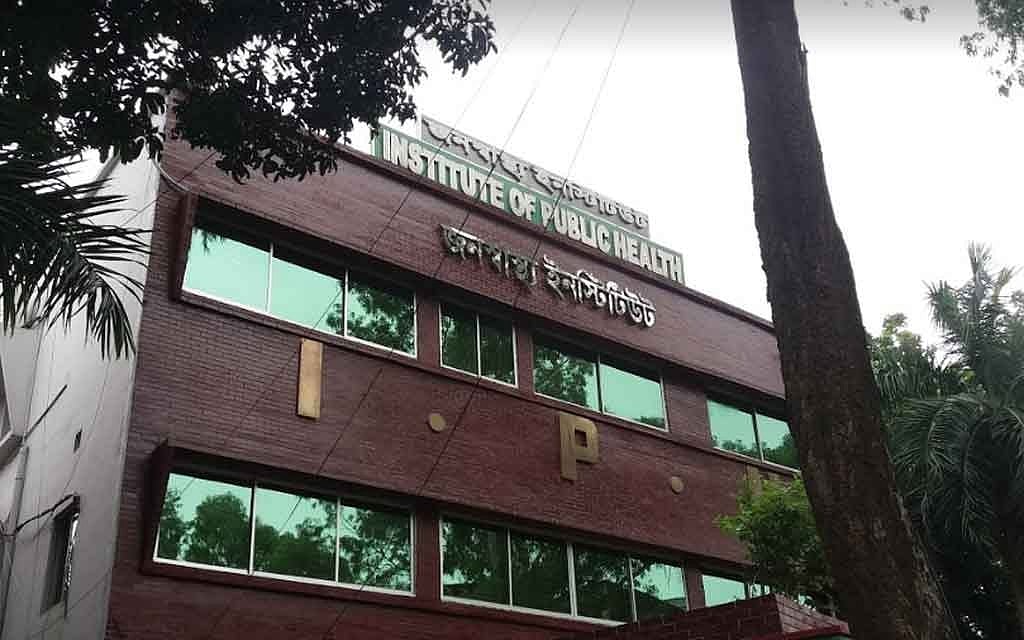
Afterwards, the same group tried to vandalise the office of the director of the Public Health Institute in Mohakhali.
Kazi Shafiqul Halim, the director of the institute, told bdnews24.com, "At that time, I was in my office. A group of people came here in a procession and tried to forcibly enter my office. However, our staff prevented them from entering. Before leaving, they broke my nameplate."
On Aug 5, the BNP and Jamaat supporters among the doctors and staff at Dhaka's Shaheed Suhrawardy Hospital vandalised the portrait of Bangabandhu and removed the nameplate of Hasina. For the first couple of days, a few doctors did not come to the hospital. However, one doctor said that now, most are returning to work.
"On the first day, some overenthusiastic individuals caused trouble. The Awami League-affiliated doctors didn’t come to the hospital for the first two days. But now, they have started returning. Our senior doctors are very cooperative, and things have mostly settled down," he added.
Pro-Awami League doctors have also faced backlash at Dhaka's National Institute of Traumatology and Orthopedic Rehabilitation, or NITOR.
On Aug 6, BNP and Jamaat-affiliated doctors and staff removed the nameplates from the offices of several doctors, including the hospital director.
In the days following the government's fall, many doctors refrained from coming to the office.
Professor Jahangir Alam, the general secretary of the central committee of Swadhinata Chikitsak Parishad, or Swachip - a doctors' organisation supportive of the Awami League - said the situation is now stable. He told bdnews24.com, "There was some trouble initially. I didn't come to the office for three days. But now the situation is calm, and we are back at work."
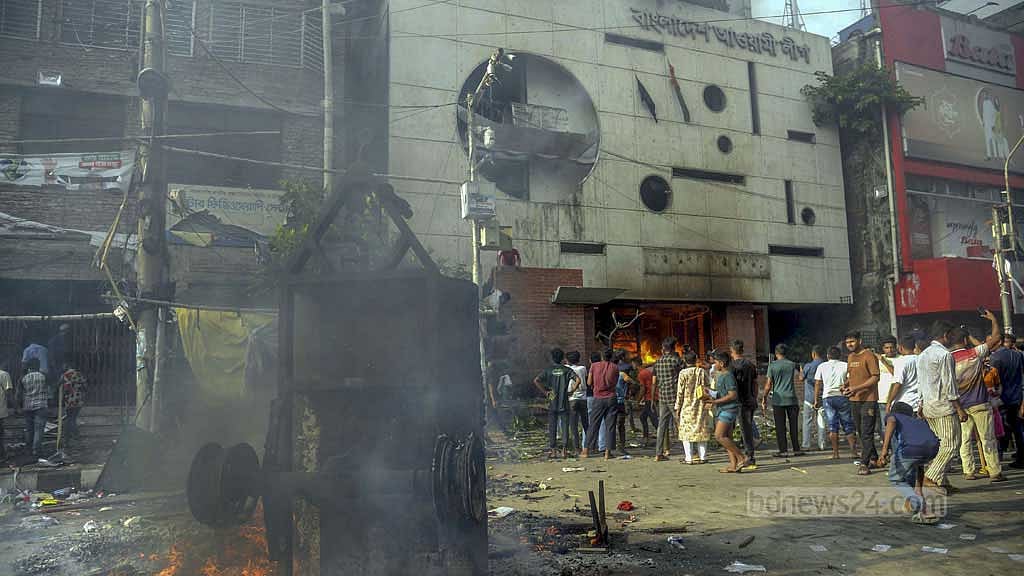
On Aug 5, under intense public pressure, Sheikh Hasina's 15-and-a-half-year-long continuous rule came to an end. From that day, attacks, vandalism, and looting began across the country, targeting government and private establishments, the homes, businesses, and shopping centres of the Awami League leaders, activists, and supporters.
There were also significant protests following attacks on members of the Hindu community.
In addition, there have been leadership changes in various state-owned enterprises, constitutional, government, and even private institutions.
After the Anti-discrimination Student Movement, the organisation that called for the government’s downfall, compiled a list of journalists, some of those listed have been dismissed by media outlets.
However, such widespread changes have not yet been observed in the healthcare sector, although BNP-Jamaat supporters are protesting and demanding the resignation of top officials in various institutions.
BSMMU STILL TENSE
The most significant disturbances following the fall of the Awami League administration occurred at Dhaka’s Bangabandhu Sheikh Mujib Medical University, or BSMMU.
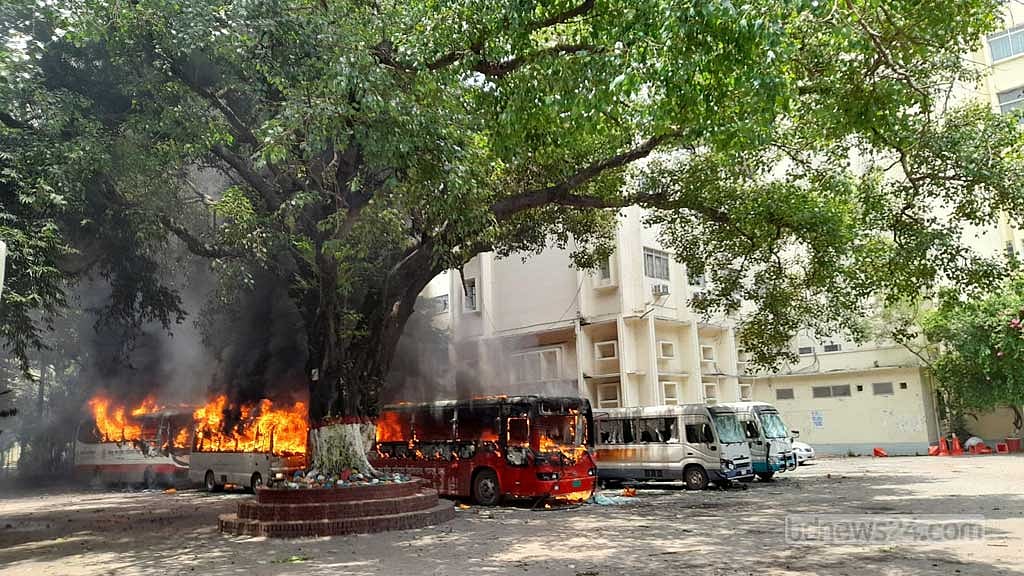
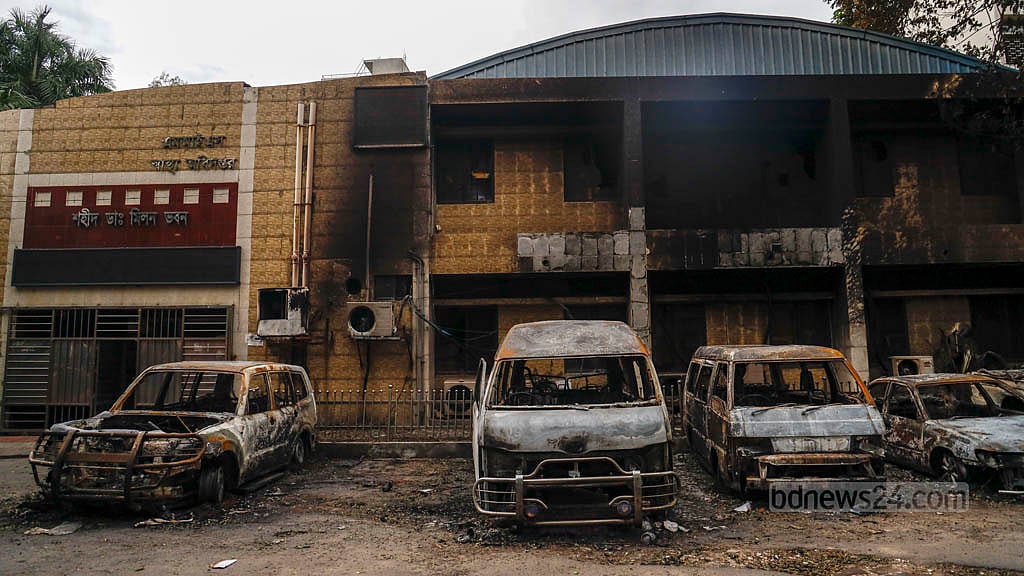
On Aug 4, the first day of the non-cooperation movement demanding the government's resignation, clashes broke out in Shahbagh between the student-led protesters, and Awami League and Chhatra League leaders and activists. On that day, vehicles were set on fire inside the hospital, and several properties were vandalised.
The following day, when Hasina resigned and left the country, widespread vandalism took place at the BSMMU. Doctors were forced out of the hostel in Block A. Offices of the vice-chancellor and other officials were locked on that day, and some Awami League-supporting doctors and staff went into hiding.
Although some doctors have started returning to the hospital, the vice-chancellor has not yet resumed his duties at the office.
A doctor involved in Swachip's politics told bdnews24.com on Thursday, "I started going to the office last Sunday, but I’m still in an uncomfortable position. Many doctors are still not going to the office. The VC is coming to the office less frequently. He didn't come in on Thursday either."
Another doctor said, "After 4th August, the situation at our office became very bad. I called the chairman and told him that I wouldn’t come in.
"I was scared, nothing felt safe. You never know what could happen from any direction! Later, BNP-affiliated doctors called me and assured me that there wouldn’t be any trouble. After that, I started going to the office from 8th August."
On Aug 8, three days after the government fell, 173 'deprived' doctors at BSMMU were promoted. Doctors went to the vice-chancellor's residence and got the order signed.
Despite the doctors’ promotions, the staff's protests continue. On Thursday, there were also marches demanding the resignation of the vice-chancellor, pro-vice-chancellor, and other officials.
Two groups of BNP-supporting staff members locked the offices of the vice-chancellor and registrar in protest on Thursday.
Attempts to contact Vice-Chancellor Prof Deen Mohammad Nurul Haque and Registrar ABM Abdul Hannan by phone were unsuccessful.
RMC PRINCIPAL STAYING AWAY
Rajshahi Medical College Principal Md Naushad Ali, who holds the position of organising secretary-1 in the central committee of Swachip, has been unable to return to his office since Aug 5. The photo gallery in front of his office was vandalised after the political changeover.
Naushad Ali told bdnews24.com that doctors supporting the BNP and Jamaat were involved in the vandalism, along with outside individuals.
“I can’t go to the office. Some of our doctors are there, but the problem is that they’ve brought in outsiders, which has made me feel unsafe. I’ve spoken with leaders of DAB (Doctors Association of Bangladesh), and they advised me to wait until the situation normalises before returning.”
Since the exit of the Awami League, Md Rakib Sadi, the general secretary of Swachip’s Rajshahi Medical College Hospital branch, has been unable to go to the hospital. Even when he attempted to go last Sunday, he was chased away.
He told bdnews24.com, "The director advised me to take a few days off. I'm currently on a five-day leave. If the situation calms down by then, I'll return to the office once the leave is over."
UNEASE AT DGHS
Since Aug 5, BNP-supporting doctors and employees have been organising campaigns and marches at the Directorate General of Health Services, or DGHS. Although Director General ABM Khurshid Alam came to the office following the government's fall, he has since stopped attending.
A group called "BCS Health Cadre" has begun a sit-in protest with a two-point demand, including the removal of the director general and other 'corrupt' officials. On Tuesday morning, they staged a sit-in at the main gate of the DGHS in Mohakhali. The protesters have warned of larger actions if their demands are not met promptly.
Following these events, DG Khurshid Alam has stopped coming to the office. Many other officials are also absent or leave shortly after arriving.
A DGHS employee told bdnews24.com on Thursday, "The DG hasn't come since Tuesday. I've heard that he only goes to the ministry for meetings. Many of the senior officials are also absent."
When asked about the absenteeism of doctors in hospitals since the government's downfall, DG Alam told bdnews24.com that attendance of doctors and staff has “slightly decreased” in the last few days.
"People are afraid to come in,” he explained and suggested: “Those currently in leadership need to take initiatives and ensure security to increase attendance."
DAB President Harun Al Rashid said, "We have sent letters across the country instructing members not to harass or threaten any doctor in any manner. Strict directives have been issued to ensure that medical services are not disrupted."
He claimed that the doctors who have engaged in various forms of “chaos” over the last 15 years are the ones who are now afraid to come to the hospitals.
"They are not coming despite numerous reassurances. I haven't seen a single incident where our doctors have attacked or threatened rival doctors. You all know well why they are not coming.
"They have tortured many doctors. However, the fear is gradually dissipating because so far, no transfers or punitive actions have been taken, which means they are still doing well," the DAB chief concluded.