Published : 05 Mar 2026, 11:51 PM
Updated : 21 Aug 2026, 03:26 PM


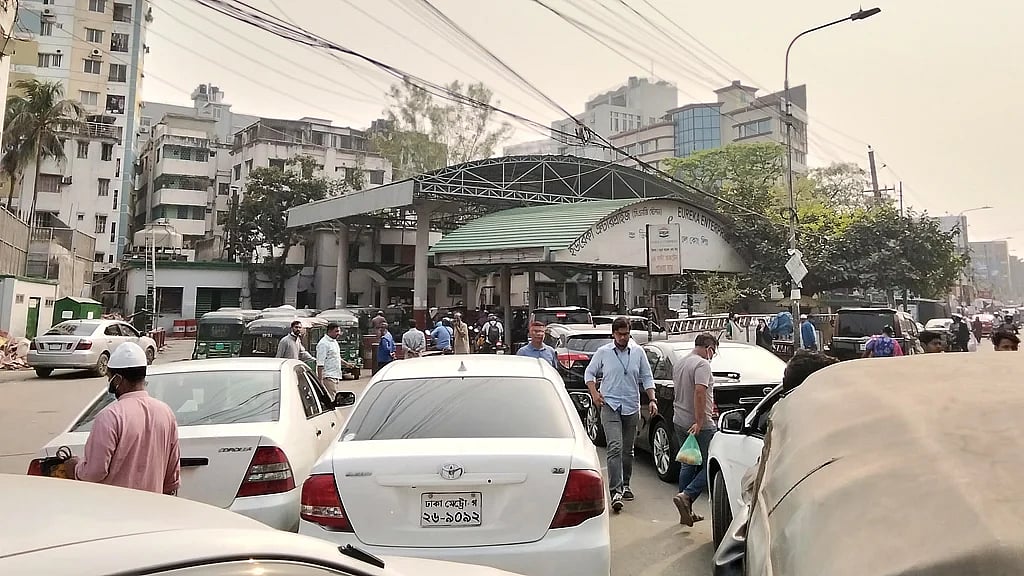
Escalating tensions in the Middle East have triggered a wave of panic-buying across fuel stations in Dhaka, with vehicle owners forming long queues to top up their tanks amid fears of a supply crisis or price hike.
Since Wednesday night, filling stations in the capital have seen a massive surge in demand as cars and motorcycles lined up, with some queues spilling over onto main roads and causing significant traffic congestion.
Pump workers said they have neither received any instructions nor seen any signs that a price increase is imminent.
At the "Eureka Enterprise" pump in Mohakhali, staff reported that the usual flow of vehicles has multiplied.
"Most people are opting for full tanks," said Rezaul Karim, a pump worker. "They are afraid prices will go up or that oil will run out."
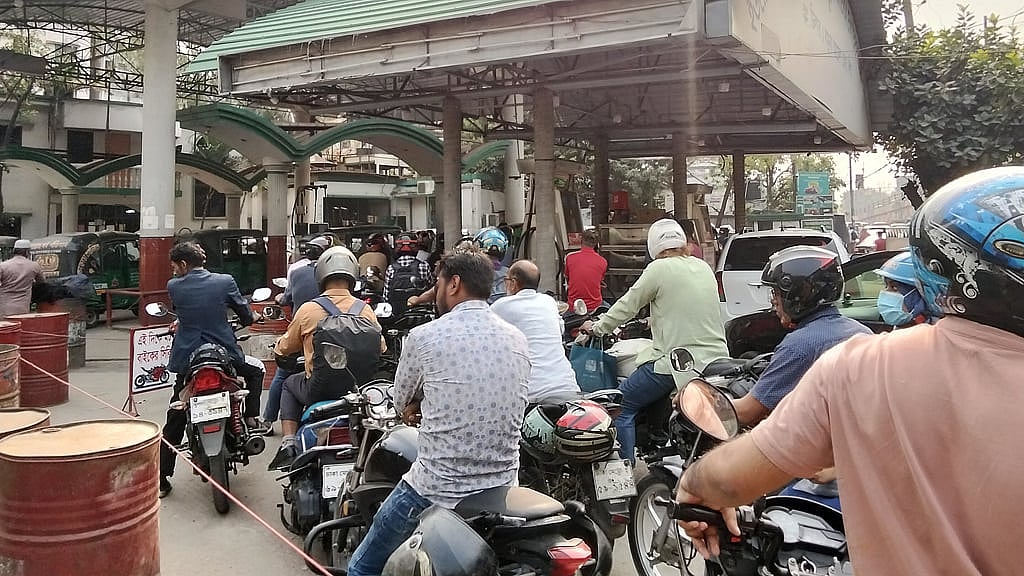
Imran, a motorcyclist waiting in line, echoed the sentiment.
"Normally, I buy only what I need. But fearing a crisis, I just filled my tank for Tk 1,080," he said.
Fuel station owners say the rise in demand is what is called “panic buying”.
Bangladesh Petroleum Dealers, Distributors, Agents and Petrol Pump Owners Association President Mohammad Nazmul Haque, warned: "If everyone tries to buy 50 days' worth of fuel when they only need 10 litres, the reserves will deplete prematurely."
According to Nazmul, sales jumped by 60 percent on Wednesday and reached 80p ercent by Thursday afternoon.
"If this continues, sales will double by this evening. We can only sell what the companies supply, once we run out, we have to close."
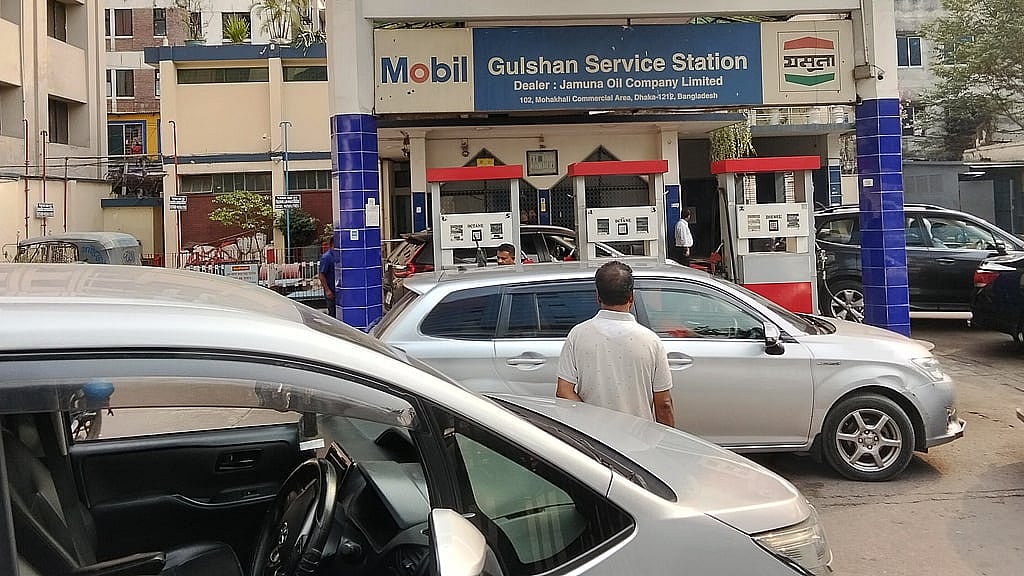
At the "Gulshan Service Station" in Amtali, sales representatives noted that while prices remain unchanged, the volume of oil sold has increased 1.5 times.
In response to the geopolitical volatility, the Ministry of Power, Energy, and Mineral Resources issued a press release on Thursday urging "precautionary measures" to conserve fuel.
The ministry warned that the Middle East situation could disrupt the international energy supply chain and advised measures such as using public transport and carpooling, limiting unnecessary travel, enforcing strict fuel austerity in government offices, and avoiding excessive fuel use in businesses.
Ministry officials also held a meeting with petrol pump owners on Thursday to determine supply quotas based on previous average consumption to prevent hoarding and manage the sudden spike in sales.