Published : 02 Jul 2025, 03:20 AM
Updated : 21 Aug 2026, 01:28 PM


Over a decade after closing the Padma Bridge corruption case due to lack of evidence under the Awami League government, the Anti-Corruption Commission (ACC) now asserts it has found “sufficient proof” of of irregularities.
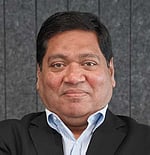
ACC Chairman Md abdul Momen said those accused were cleared from the case by “force”.
He also confirmed efforts are under way to revive the case.
He was speaking at the ACC headquarters in Dhaka on Tuesday in response to a question about the long-dormant corruption allegations tied to the bridge’s consultancy deal.
Momen said despite the case being based on valid materials, it was still closed with a final report marked “true”, essentially clearing the accused. That final report was submitted to the court.
Since taking office in December, he said the national anti-graft agency began reviewing the case filed on Dec 17, 2012, and launched a new round of investigation.
“After reassessing, we believe the case was shelved using undue influence. We believe this case must be revived. A fresh investigation is under way.”
The ACC chief said public projects must strictly follow the Public Procurement Act (PPA) and Public Procurement Rules (PPR), but in this case, the consultancy evaluation committee was “deliberately” altered multiple times.
“This was driven by bad intent or corrupt motives.”
Amid the World Bank’s pressure over the financing of the project, the then ACC deputy director Abdullah Al Zahid filed the case at Banani Police Station on Dec 17, 2012, naming seven accused.
Among them was then Bridges Division secretary Mosharraf Hossain Bhuiyan, who was arrested and suspended from his post.
He was later released on bail, and the suspension was lifted, reinstating him in service.
Former communications minister Syed Abul Hossain was also forced to resign over his alleged links to the corruption plot.
Similar accusations were made against former state minister for foreign affairs Abul Hasan Chowdhury.
Former ACC commissioner Mohammed Shahabuddin -- now president of Bangladesh -- later claimed no proof of wrongdoing had been found against any of them.
After 22 months of investigation, the ACC submitted its final report, saying it found no evidence of “corruption or conspiracy” in the Padma Bridge project.
On Oct 16, 2014, a Dhaka court accepted the report and dismissed all charges against the seven accused.
But the current ACC chairman now says the case contains enough material to pursue it further.
“In large projects, some items can be used repeatedly, but in this case, those items were shown as newly purchased multiple times. That is not acceptable,” he said.
He added that when CVs of consultants were supposed to be assessed jointly, the process was skipped.
“Irregularities were evident, with procurement laws ignored at multiple stages.”
He also said the evaluation committee “failed” to carry out mandatory checks, interviews and background reviews during the process.
“As a result, we believe the report that was submitted -- whether due to pressure or not -- was flawed and incomplete. Our investigator will now file a complete report and the case will move forward.”
When asked if those who prepared the initial report would be called in again, Momen said: “Among the initial accused were former secretary Mosharraf Hossain Bhuiyan, Superintendent Engineer Kazi Mohammad Ferdous, Executive Engineer Riaz Ahmed Jaber, Deputy Managing Director Mohammad Mostafa, former director Mohammad Ismail, and the then-president of SNC-Lavalin.
“If we observe negligence on anyone’s part, that too will be considered.”
When asked if the commission will review its earlier approval of the final report and consider the accused’s involvement, Momen said: “The agency enjoys a certain independence and immunity, which we must acknowledge.
“Still, we will strive to identify any errors or lapses on our part. Our preliminary assessment suggests that filing the final report was a mistake or it was not presented properly.
“We are now awaiting the investigation report,” he added.