Published : 05 Nov 2025, 09:37 PM
Updated : 28 Aug 2026, 04:10 AM


The city of Dhaka bristled with unrest. Across the Army ranks, competing factions manoeuvred in secrecy, their actions sending Bangladesh spiralling toward one of its most decisive and perilous historical moments.
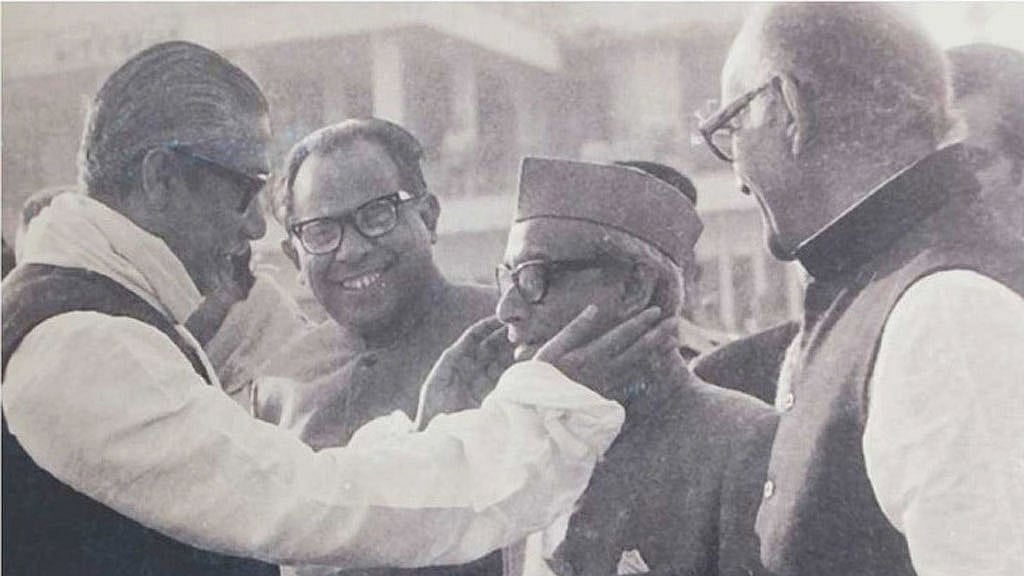
On Aug 15, 1975, the then president Bangabandhu Sheikh Mujibur Rahman, along with his family, was assassinated. Khandaker Mostaq Ahmad, a member of Sheikh Mujib’s cabinet, assumed the presidency. Yet, the country was effectively under the control of a group of military officers.
Some Awami League leaders joined Mostaq’s cabinet, while others were imprisoned or went into hiding for fear of their lives. In the early hours of Nov 3, a faction of the armed forces attempted to redirect the flow of events through a coup.
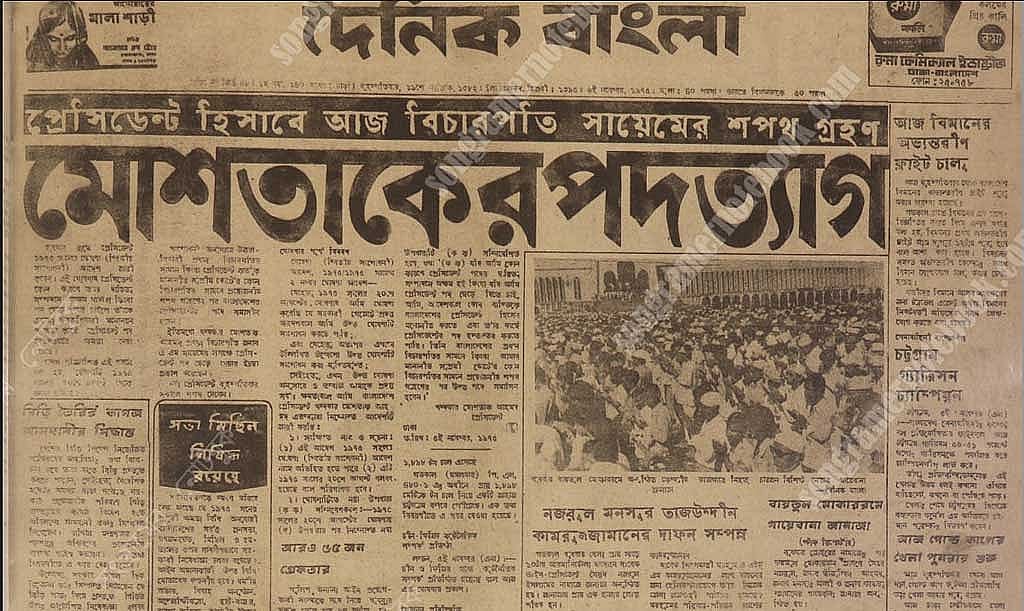
Led by Brigadier Khaled Mosharraf, this attempt resulted in the imprisonment of the then Army chief Major General Ziaur Rahman. Within 24 hours, the killers of the nation's founding father Sheikh Mujib had fled the country safely. Three days later, in a counter coup, Mosharraf was killed, paving the way for Zia to ascend to power.
The Air Force played a crucial role in the Nov 3 events. Squadron Leader Liaqat Ali Khan Bir Uttom, then a flight lieutenant, coordinated a group of officers who were central to the unfolding coup.
Originally part of the Pakistan Air Force, he had joined the Liberation War after fleeing the then West Pakistan. Despite being an Air Force officer, he fought in the infantry with the First Bengal Regiment during the 1971 war. After independence, he returned to the Air Force.
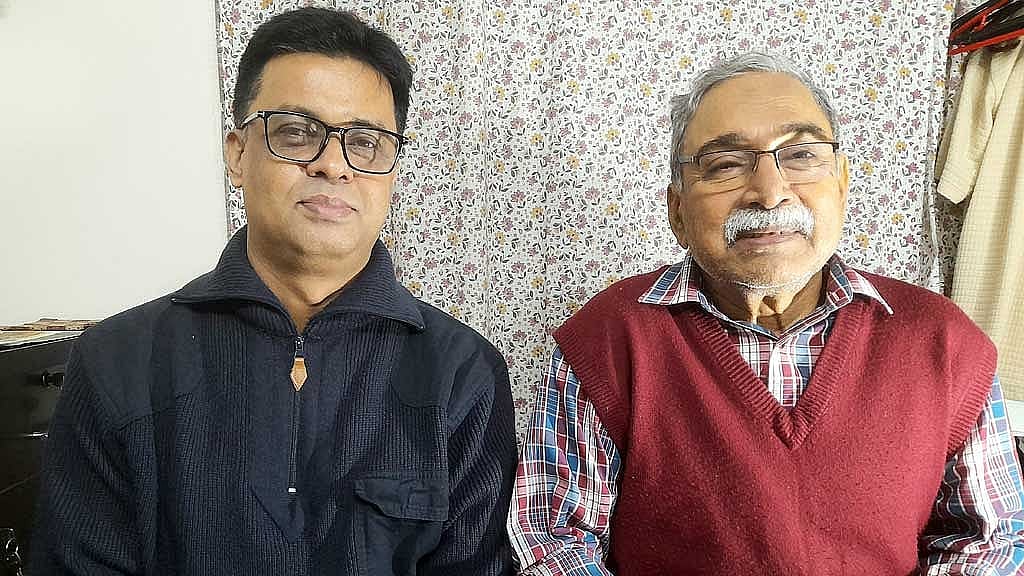
Following the Nov 3 coup, Liaqat faced a court martial on Nov 7 and was sentenced to death by a firing squad. Though later released from prison, he never regained his job or received any benefits. Today, the former squadron leader lives abroad. Last year, he met with writer and Liberation War researcher Salek Khokon during a visit to Bangladesh.
Half a century on, questions remain: what truly happened within the military on Nov 3? Why did the coup fail? How did Sheikh Mujibur Rahman’s killers leave the country? The conversation with Liaqat sheds a new light on the dark corners of that history.
Liaqat believes the coup failed primarily due to Khaled Mosharraf’s hesitation. Despite opportunities, he had sought compromise -- a choice that cost him and many fellow freedom fighter officers their lives.
Salek Khokon: What was the Air Force like in the early years of independence?
Liaqat Ali Khan: Look, some Bengali officers had surrendered to the Pakistanis on Dec 16, 1971 but later returned as senior officers. For example, the most senior Bengali officer in 1971 was group captain MG Tawab (Muhammad Ghulam Tawab), who had been commander at Pakistan’s Quetta base and did not take part in the Liberation War. In August 1971, he resigned with all benefits and went to Germany. After independence, Sheikh Mujibur Rahman appointed him Biman MD. Later, he returned to Germany. After Sheikh Mujib’s assassination, Mostaq reinstated Tawab, promoted him from group captain to air vice marshal, and then made him air chief. [Mostaq had been minister of commerce in Sheikh Mujib’s cabinet and assumed presidency after Aug 15, 1975, remaining in power for only 83 days]
Similarly, Group Captain Taher Quddus had spent nine months in 1971 at the Pakistan Embassy in Delhi working against us. Pakistan awarded him for his service. Yet after independence, he was made director of air intelligence.
The Air Force chief then was (AK) Khandkar. When Sadruddin received promotion and returned from Pakistan to become base commander, (Group Captain) M Shaukat-ul Islam took charge of the fighter squadron. That was followed by my position. I was then a flight lieutenant, later squadron leader.
Bengali officers stranded in Pakistan returned in 1974, regaining their positions in the Air Force. The Air Force was small, so it had to take in new personnel. Those who had served in the liberation forces were granted two years’ seniority. But this created tension: everyone retained their former rank and positions, with privileges and plots, except for the two-year seniority. Among them were group captains Taher Quddus, Shaukat, wing commander Rakib, and Altaf Chowdhury. The Mujib-era forces effectively became a protective force, creating frustration and division even within our ranks.
Salek Khokon: On Aug 15, Sheikh Mujib was assassinated with his family. You were in the defence services. Did you have any forewarning?
Liaqat Ali Khan: I had fought in the Liberation War with First Bengal Regiment, so I stayed in touch with many Army colleagues from that time -- Major Qayyum, Major Hafizuddin Ahmed, Major Iqbal, among others. Major Hafiz was injured alongside me during the war, so we continued to discuss various matters after independence.
Hafiz was then brigade major of the 46th Brigade, and Colonel Shafayat Jamil [who was involved in the Nov 3 coup and later captured in the Nov 7 counter-coup] was brigade commander. We often visited Hafiz’s house and discussed what was happening inside. He was discreet. Major Farooq (Syed Farooq Rahman), Major Dalim (Shariful Haque Dalim), and Major Nur (Nur Chowdhury) were also freedom fighters. So we had knowledge as colleagues. When Sheikh Mujib formed the BAKSAL and established the protective force, they were deeply upset.
Salek Khokon: Where were you on that day?
Liaqat Ali Khan: On the morning of Aug 15, a vehicle arrived at my home. I was posted close to the Cantonment Post Office. I felt nothing during the night; nobody in the forces had warned me, despite the connections we had.
I drove to the fighter squadron, beside the 46 Brigade headquarters, and it was there that I heard the news, that Bangabandhu had been killed. We were stunned. In front of us was the Fourth Bengal; when I went there, I found Major Hafiz and Colonel Shafayat equally confused.
There might have been a chance to resist, but I think he (then the Army chief Major General KM Shafiullah) was too afraid to act. Dalim and his group were hot headed; they had shown courage during the Liberation War. Farooq was somewhat of a loose cannon. They even brought one or two tanks. That frightened KM Shafiullah, too.
The artillery and the tank regiment were in their control, Shafiullah added, so if 46 Brigade and the Air Force had been activated together, they could have overcome those tank regiments with ease.
Salek Khokon: Do you think any external power was involved in the killings?
Liaqat Ali Khan: I saw nothing overtly at the time. But later, I realised it was a CIA plan; otherwise, where did such audacity come from? India was alarmed as well, because it appeared that a group of freedom fighters had turned against Bangabandhu. At that moment, hardly anyone was pro India here. They even warned him, but he did not take it seriously. He was overconfident and could not believe a Bengali would kill him. Yet it was his closest associates who did.
Salek Khokon: Could you have protested at that time?
Liaqat Ali Khan: There was no opportunity. They had fitted tanks against MiGs and helicopters and blocked ammunition.
Salek Khokon: What did you do then?
Liaqat Ali Khan: For several days after the assassination, we were in shock. Dalim and his men had gone to Bangabhaban. Why would they go there? They were Army men. I realised then that it was a large-scale conspiracy; the reasons behind the killings gradually became clear. Rumours circulated about how they had killed child (Sheikh) Russel and others. About a week later, the picture became clearer. That was when Major Hafizuddin, Iqbal, Mizan, two or three other officers, Colonel Shafayat Jamil, and my colleagues in the Air Force began considering action.
Salek Khokon: How did you proceed?
Liaqat Ali Khan: Planning began in September. One day, Major Hafiz went to General Ziaur Rahman’s house. He returned saying, “I have spoken to him. He is taking care of them.” Days went by in this manner. Then Hafiz told us, “Have them all brought here; Zia also has his own ideas and plans.”
We assumed Zia would establish a chain of command, and Shafayat thought the same. But we never spoke directly to Zia—Major Hafiz was our sole link.
Salek Khokon: What was your primary aim at that stage?
Liaqat Ali Khan: If we were to act against the murderers, we wanted Zia on our side. Dalim and the others should first return from Bangabhaban to the Cantonment; once physically back, we could arrest or restrain them. Meetings were held at Hafiz’s house in small groups of two or three; the full group never met together.
Salek Khokon: Who comprised your Air Force group?
Liaqat Ali Khan: I carefully prepared my Air Force colleagues mentally. Everyone knew we were planning something. Seven or eight of us formed the core: myself, Badrul Alam, Zaman, Iqbal Rashid, Wali, Salauddin, Qayyum, and Signal Officer Mizan. Several others were involved at different levels. Kamal Mahmud, a friend at Biman (Bangladesh Airlines), was always with us. Essentially, our co-action group operated under my leadership and coordination.
Salek Khokon: Iqbal Rashid once said in an interview that General Zia initially wanted to lead this initiative, is that accurate?
Liaqat Ali Khan: In mid-September, Iqbal asked me who would lead. I told him again, it was not a coup; we were considering corrective action -- a purification operation. Iqbal thought it was a coup and assumed Zia would lead; that was a misperception.
Salek Khokon: When did the main plan take shape?
Liaqat Ali Khan: In the first or second week of October, Hafiz told me to come to the Sangrai restaurant at Dhanmondi 8. There I found (Khaled) Mosharraf, Shafayat, and two or three others. We discussed the plan and drafted a preliminary version. They asked whether the Air Force would participate; I gave confident approval. (Khaled) Mosharraf then said, “Bravo”.
Salek Khokon: Was Zia on your side then?
Liaqat Ali Khan: No. We realised that Zia was not our man. He was doing nothing to help us; in fact, he was posting brigade officers according to the other side’s wishes, signing orders and sending them to them. That confirmed he was not with us. For that reason, everyone later chose (Khaled) Mosharraf, and the final plan centred on him.
Salek Khokon: Did the Air Force group take preparations immediately after?
Liaqat Ali Khan: I called everyone together and gave clear instructions on who would do what. Iqbal took charge of the helicopters. Salauddin was assigned the MiG-21s. Jamal, Ziarat -- everyone received directives.
Salek Khokon: What did you do then?
Liaqat Ali Khan: One day, I went to Bangabhaban. Captains Shahriar and Farooq were close to me. Initially, the guards in black were stationed at Bangabhaban. Hafiz and I spoke to them and asked them to assign the responsibility to the First Bengal. They agreed after some thought.
At the end of October, under Major Iqbal’s leadership, we positioned a group from the First Bengal inside Bangabhaban. Two platoons of commandos under Captain Nazrul also took positions inside. This was part of our plan. I instructed Iqbal to keep us informed about what the guards in black were doing – whether they were active or idle. I received updates through them.
I visited every three or four days, so they assumed I was one of them, which made our task easier.
Salek Khokon: Was the plan still secret then?
Liaqat Ali Khan: No. It became known that a movement was happening in the Cantonment. Once, Major Dalim caught me, Iqbal Rashid, Major Hafiz, and Major Iqbal in a room. We were discussing the plan internally. Dalim arrived, so we changed the subject, but after that, he suspected us.
Salek Khokon: When did you begin preparations for the attack?
Liaqat Ali Khan: On the night of Nov 2, around 10 or 11pm, Hafiz informed me the attack would happen the next day. I went to Iqbal Rashid’s residence to relay the information. I liaised with Major Hafiz regarding the Air Force group and the Army group.
Salek Khokon: What happened on Nov 3?
Liaqat Ali Khan: Very early in the morning, I was tense. I did not know what the Army was doing; that was Hafiz, Mubin, Mizan, and Munir’s responsibility. At dawn, they went to the Fourth Bengal headquarters and met Col Shafayat and Mosharraf. They informed me the Air Force was ready.
When asked about take-off, I instructed them the First would take off first. They followed the order. Kamal Mahbub from the airlines provided catering and went with us to the tower. From there, I directed the pilots.
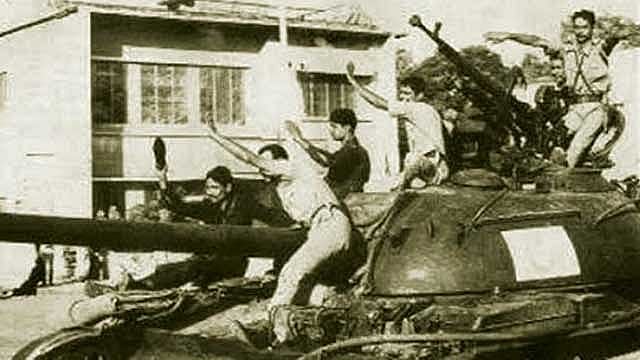
At approximately 6:30am, two MI-8 helicopters were fully armed, with rockets and guns ready for action. Squadron leader Badrul Alam (Bir Uttom) went with Iqbal Rashid. Flight Lieutenant Mizan, the signal officer, ensured all communications were shut.
The helicopters flew towards Bangabhaban. Flight Lieutenants Jamal and Salauddin piloted the two MiGs. Inside Bangabhaban were Major Dalim, ABM Nur Chowdhury, and the assassins. They positioned tanks above the president’s house and Rececourse for rockets, calling four times for clearance. The Fourth Bengal headquarters informed me via telephone that the tanks were ready to surrender. I instructed, “Do not fire.” The tanks ceased fire, indicating surrender intent.
Iqbal Rashid was agitated, wanting to finish everyone, but I ordered “no”. They reluctantly returned.
Salek Khokon: What did you do then?
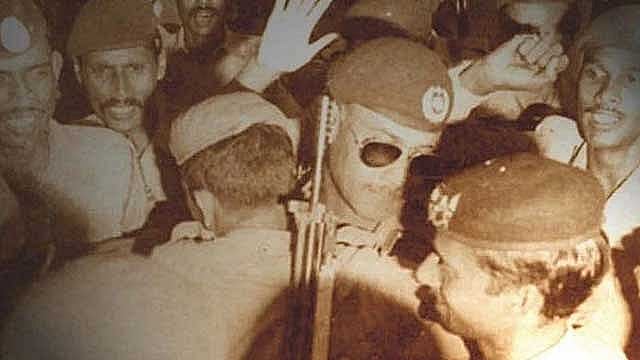
Liaqat Ali Khan: Disappointed, I went to Fourth Bengal headquarters, where Mosharraf, Col Shafayat, Major Hafiz, Col Malik, and others were present. General Osmani was mediating between the assassins and Mosharraf.
Salek Khokon: Was the airport still under your control?
Liaqat Ali Khan: Yes. We secured it with MODC (Ministry of Defence Constabulary) guards to prevent any entry. There were many freedom fighters inside, so we maintained control.
Salek Khokon: Couldn’t you act because there was no direct order?
Liaqat Ali Khan: We had fulfilled our Air Force duties completely. Had we acted, everyone would have been finished.
Salek Khokon: Were you still waiting at the airport?
Liaqat Ali Khan: Wing Commander Sultan Mahmud (Bir Uttom) arrived. He asked if the Air chief was aware of our actions. I replied we could not locate him. He said, “Check, you will find him” and left. I realised he probably informed the chief. Iqbal and I then took some soldiers from the Bengal Regiment to locate the Air chief, Tawab.
He was in a C-type house near the Prime Minister’s Office. We saluted and brought him to the command post at Fourth Bengal, where (Khaled) Mosharraf and Tawab were present.
Salek Khokon: How did Khaled Mosharraf react?
Liaqat Ali Khan: He expected an arrest or worse but was greeted by Tawab: “Khaled, how are you? You did a great job.” Mosharraf was pleased.
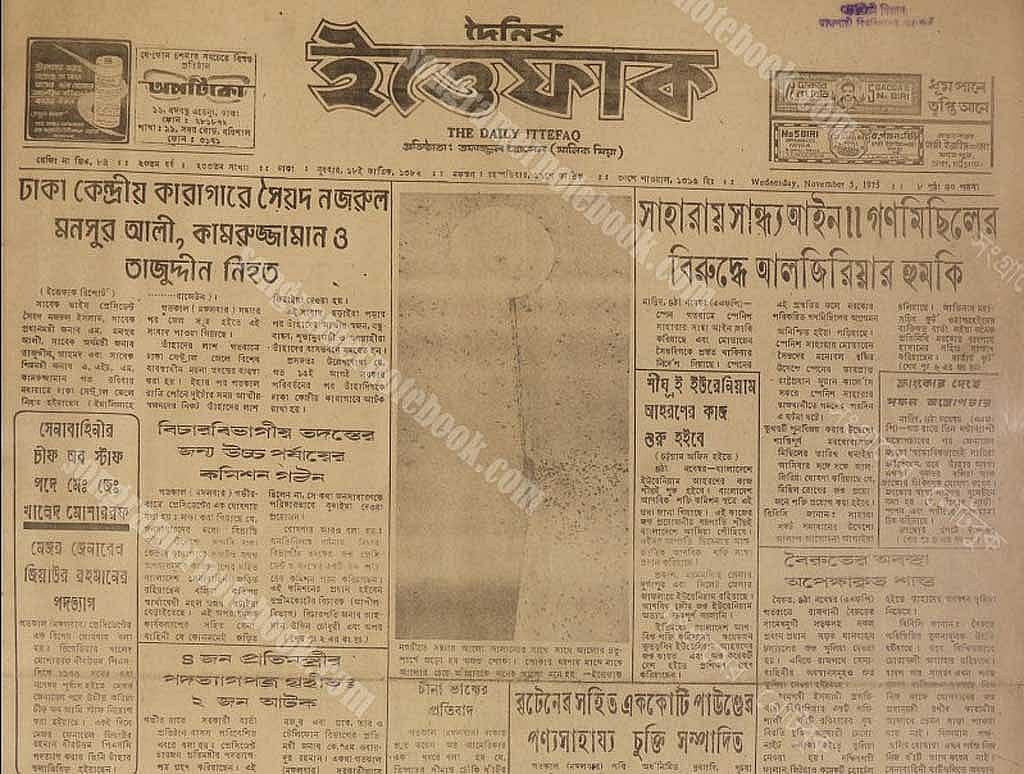
Negotiations followed between Bangabhaban and Fourth Bengal, with calls from BDR Brigadier Khalilur Rahman and General Osmani. The core matter was to prevent further bloodshed. Osmani suggested sending the assassins abroad. Young officers opposed it initially.
Salek Khokon: Were the assassins then sent abroad?
Liaqat Ali Khan: By the afternoon, they were ready with their assets to leave the country safely under Air chief Tawab’s supervision. Our small Air Force plan to divert them to Syedpur for execution failed. Tawab intercepted and substituted the flight crew, enabling the assassins to leave safely to Thailand via Burma by the evening of Nov 3.
Salek Khokon: What happened next?
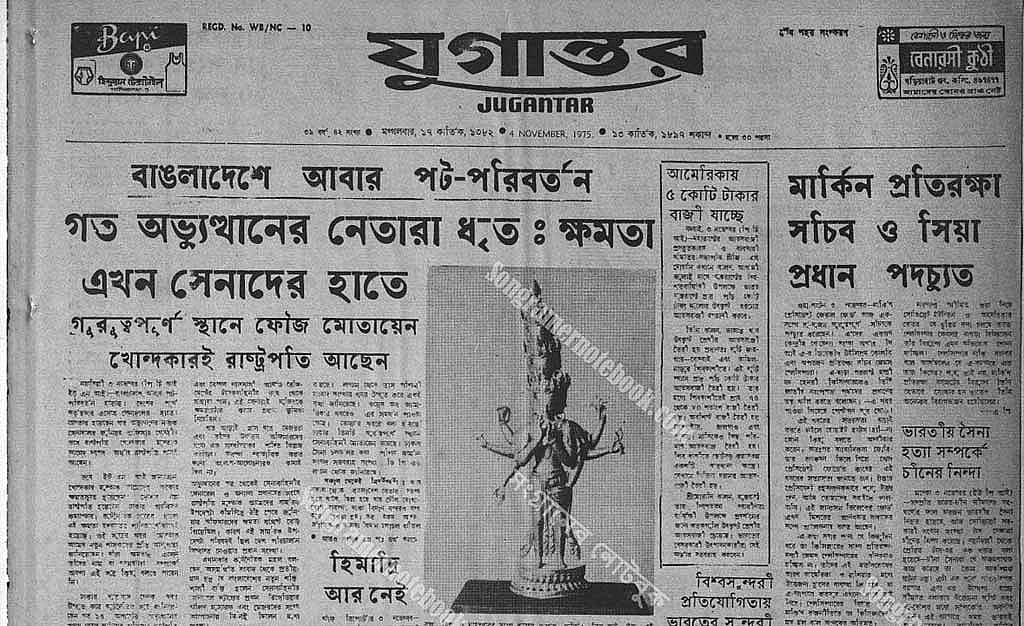
Liaqat Ali Khan: On Nov 4, we learned about the jail killings. Young officers protested against senior officers. There was a showdown at Bangabhaban, where Col Shafayat ensured surrender during a cabinet meeting. On Nov 5, Air Vice Marshal Bashar (Bir Uttom) joined our squad, praising our actions for saving the nation and Air Force.
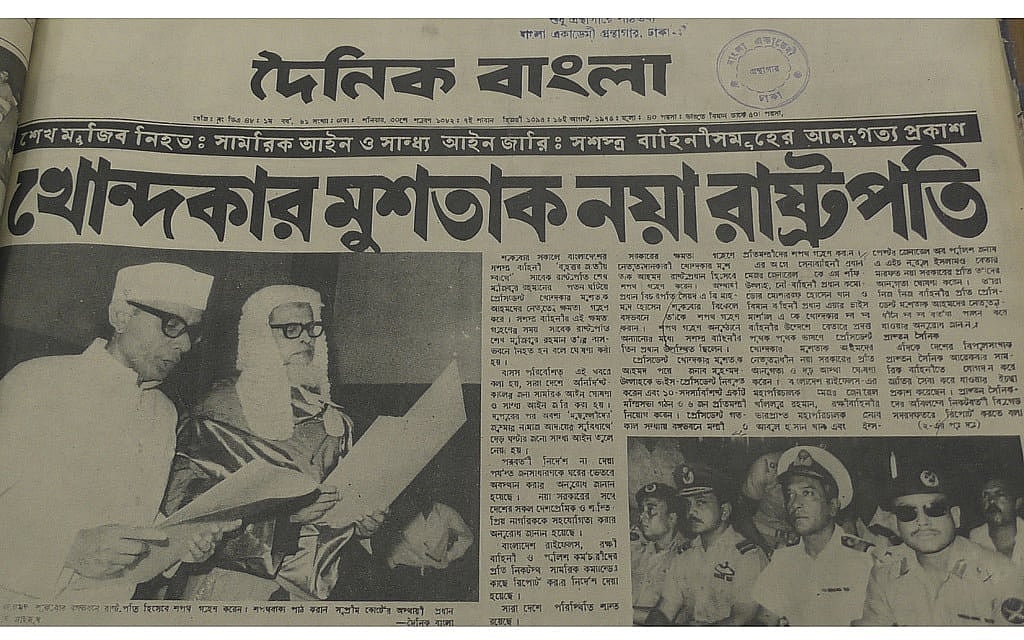
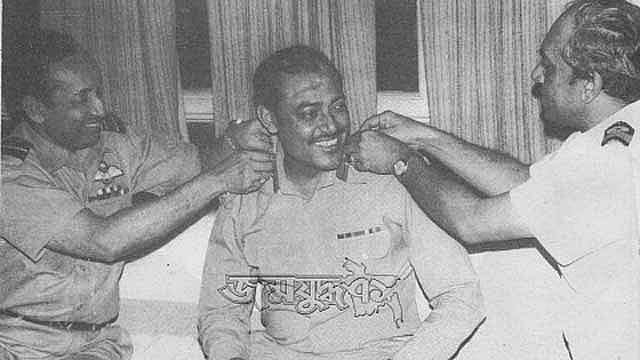
The new president took oath with the then Supreme Court chief justice Abu Sadat Mohammad Sayem. Mosharraf was promoted to brigadier.
Salek Khokon: What did Khaled Mosharraf do afterwards?
Liaqat Ali Khan: On Nov 6, we saw nothing was progressing. That day there was a match at the stadium between Abahani and Mohammedan, and provocative leaflets were distributed. I was at Bangabhaban, in the MSP office, next to the president’s office. In the afternoon, Mr Islam of DGFI came in agitated, saying the situation was getting tough and asking me to inform the chief.
I recognised the leaflets as incitement from JaSaD. I passed them to Col Shafayat, but he did not treat the matter as serious. He said lightly, “No need to worry, these things will happen.”
Salek Khokon: Was the plan to sign martial law made then?
Liaqat Ali Khan: The plan to sign martial law was drawn up that evening. As night fell, trouble began. The issue was that Mosharraf would not sign. He wanted one person to become DMLA and another to be AMLA; he insisted justice Sayem should be involved because he wanted an effective role. Air chief Tawab opposed that; he wanted “we should be three equals.”
I told Col Shafayat: sir, put the three of them on the same level. The Army chief will be in command anyway. Division now would be harmful. Shafayat agreed.
But by 10pm, there was still no signature. At about 10:45pm, Shafayat told me that Mosharraf had agreed. Arrange to bring the two chiefs. I called Bashar; he told me to call MH, the Navy chief, who had the Air chief at his house. After a phone call they arrived at Bangabhaban within 15 minutes.
Mosharraf entered a room, made no civil greeting to them, and went straight to the president’s room. The two chiefs felt deeply insulted. The signing did not take place. I apologised to them; they said they would sign in the morning. Only then could martial law be declared.
Salek Khokon: What happened after that?
Liaqat Ali Khan: I was frustrated. On someone’s advice I phoned Major Hafiz and said: the two chiefs came but Khaled has not signed; come. While we were speaking there was suddenly the sound of gunfire. He said: gunshots are happening here, I’m calling you because of that. After that I could not get through to Hafiz. He was at brigade headquarters in the Cantonment.
I went to the MSP room and saw Khaled Mosharraf and Huda speaking on telephones to many places. I realised the situation was out of control. I told them I would check whether the Air Force was okay and left.
I called Wali first. He reported the Air Force was fine. I then drove toward Bangabhaban. Mosharraf’s group had three cars ready; they said they were heading to the command post and asked me to join. I followed behind their cars. The first was an MPR, the second a Land Cruiser carrying three officers -- Huda, Haider and Mosharraf -- the last black car was empty.
They passed by the university and the British Council, then turned onto Mirpur Road. They stopped near Asad Gate after passing Dhanmondi 2. I was confused; I could see their indecision. They turned again toward New Market. My car ran out of petrol, so I took my vehicle to a relative’s house at Dhanmondi 28.
Salek Khokon: Nov 7 arrived, what happened in the Cantonment?
Liaqat Ali Khan: On that day Col Taher’s group began firing in the Cantonment. That day Mosharraf, Lt Col ATM Haider and Col KN Huda were shot dead. Tawab was then at his peak because he had joined with Zia.
Salek Khokon: How were you arrested?
Liaqat Ali Khan: Seven to eight days later we received a message that Air chief Tawab wanted to speak. He first invited officers’ wives to Padma Guest House; with them present he had us called and arrested for court martial.
Salek Khokon: Who presided over the court martial?
Liaqat Ali Khan: There were five judges, all repatriated officers. Hamidur Rahman, Saiful Azam, Habibur Rahman -- they were the judges. We call it a kangaroo court. The decision was already made; they only needed to read out our sentences.
Salek Khokon: What punishments were given?
Liaqat Ali Khan: After the trial I was sentenced to death by firing squad. Iqbal Rashid and Badrul received life imprisonment. Others were sentenced to five years, two years, one year respectively. Then we were sent to Dhaka Jail, cell number 01.
Salek Khokon: How were you released later?
Laiqat Ali Khan: For some reason Zia sent Tawab out of the country and Air chief became Mohammad Khademul Bashar, a freedom fighter. He released us from jail in about May 1976.
Salek Khokon: Why do you think the Nov 3 operation failed?
Liaqat Ali Khan: Mosharraf wasted time. Even though the Air Force, Army and Navy were in his hands, he did not appreciate that others could move against him. His mind was unstable then. Did he truly want to declare martial law? If not, why take that responsibility? Why were the radios shut for three days?
Mosharraf did not declare anything; instead he destroyed his own life. Officers like Huda and Haider were killed because they stayed with him.
Salek Khokon: Did you receive service benefits afterwards?
Liaqat Ali Khan: We have not. Initially we were compulsorily retired in 1975, then service continued until 1980 and we received full pension benefits for that period. Later a letter was issued stating we would receive no benefits. As a result we have not received pension or benefits to this day. I believe we were wronged, and that remains in force.
Salek Khokon: What about those in the Army who were involved on Nov 3, did they face the same?
Liaqat Ali Khan: No. Those in the Army who were involved rose to ministerial positions. If the Air Force had not moved that day, the Army could not have advanced; they lacked the capacity to fight. Yet after these events the Army personnel received pensions. Air Force members received none. The Army were not punished; only Air Force personnel faced consequences. Why this discrimination?
Salek Khokon: Thank you for your time.
Liaqat Ali Khan: Thank you.
[Translated in English by Syed Mahmud Onindo and Sheikh Fariha Bristy]