Home
+
Published : 16 Dec 2024, 03:56 AM
During a sudden attack by the Pakistani forces, a family had to jump from their boat into a swamp.
Amidst the chaos, the youngest member, a nine-day-old baby girl, fell into the mud from her mother's lap.
Fear forced the family to flee, leaving the infant behind.
After the troops left, the child was found, barely alive, but despite surviving, Anish Mondal’s sister has never fully recovered.
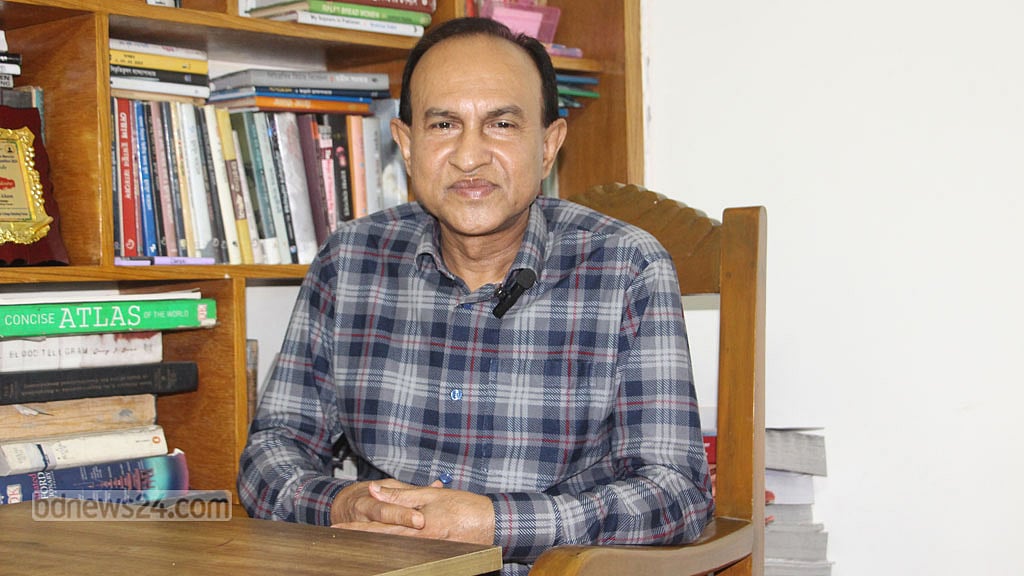
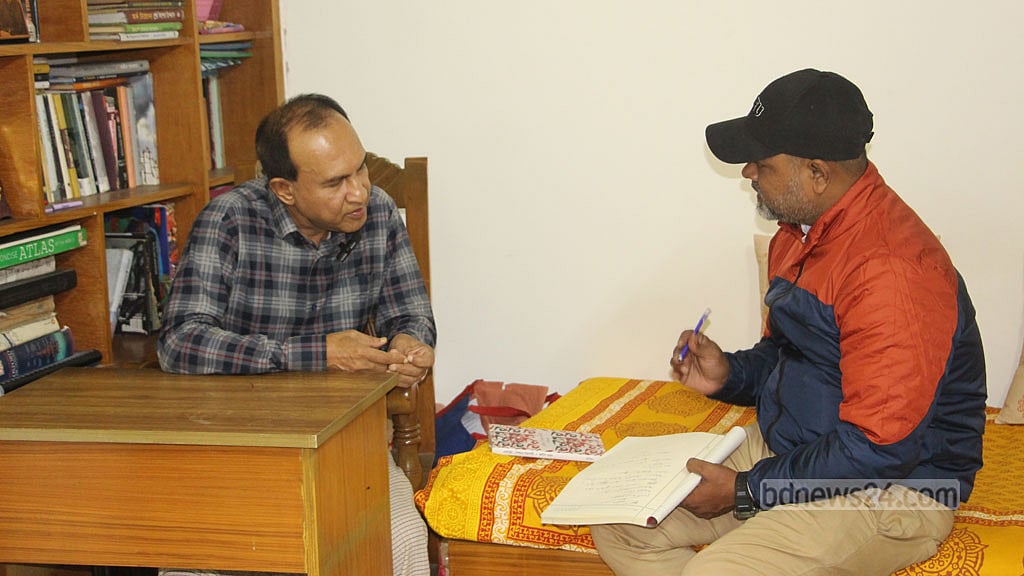
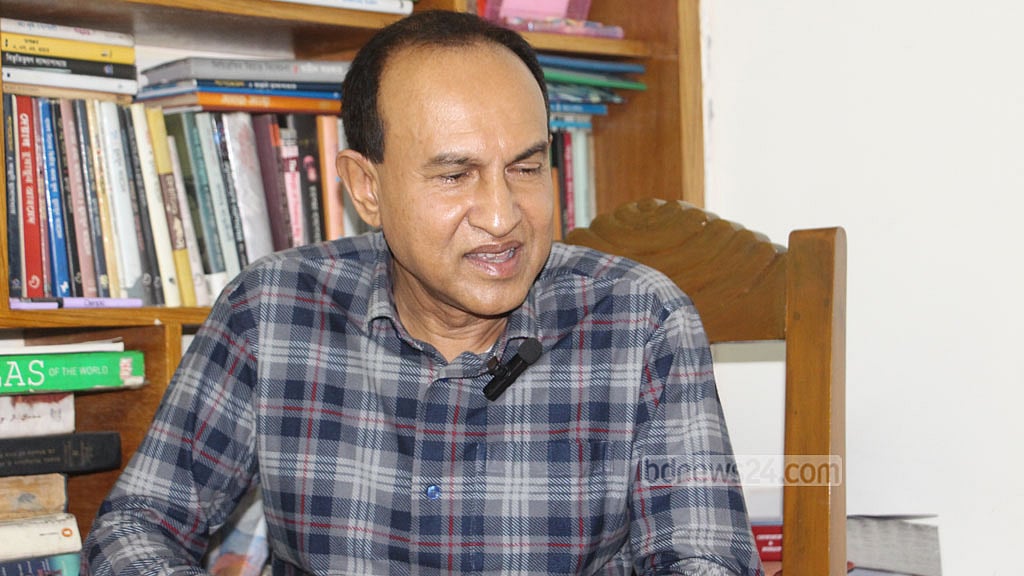
Anish, a former English teacher at Amrita Lal Dey College in Barishal, recalled the horrors of his journey as a refugee during the Liberation War while speaking to bdnews24.com
In 1971, he was only eight years old when his family sought refuge in India’s West Bengal.
These painful memories are chronicled in his book Ekattor: Shoishober Shoronarthi, or 1971: Refugee of Childhood.
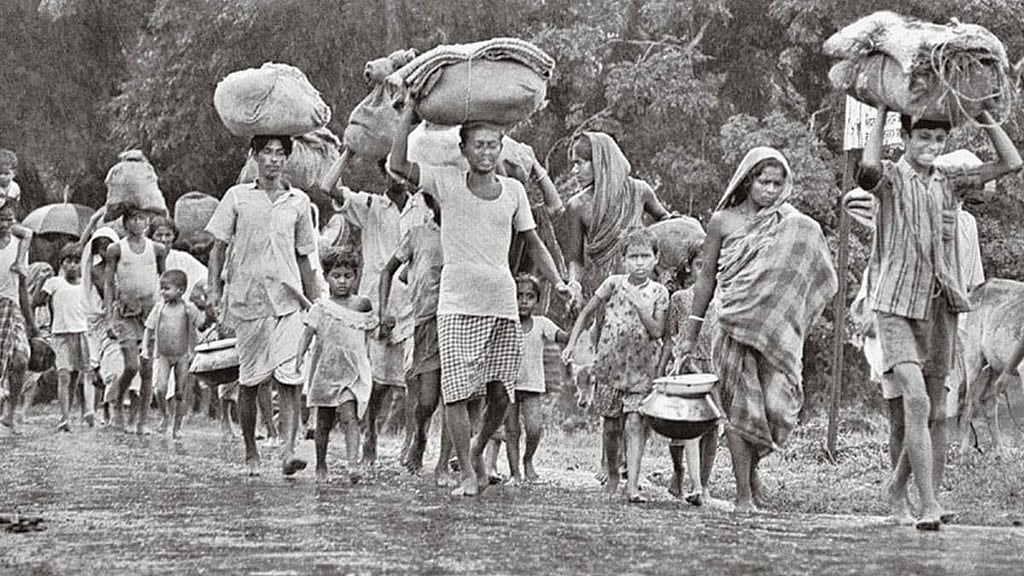
On the night of Mar 25, 1971, after the declaration of independence by Bangabandhu Sheikh Mujibur Rahman, the Pakistani army began their brutal crackdown in East Pakistan, now Bangladesh.
Millions fled to India, crossing the border to escape the violence.
Anish’s joint family lived in a village in Ghona union of Khulna’s Dumuria Upazila.
His father, Ashok Mondal, was a teacher at Khulna Saint Joseph's High School.
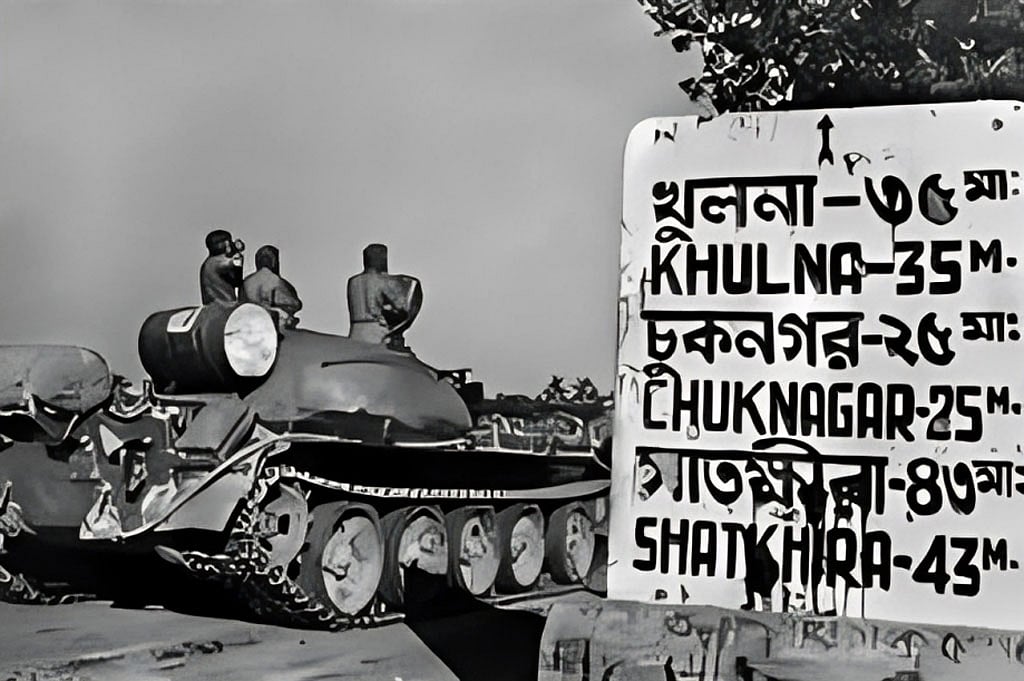
Anish recalled the early days of the war, remembering that the site where the Khulna University stands today was home to the Gallamari Radio Station in 1971.
On Mar 28 of that year, the Pakistani troops entered Khulna and set up a base at the radio station.
It was later turned into one of the killing grounds of the 1971 Liberation War by the occupying forces.
The freedom fighters had already planned an attack on the station.
Major MA Jalil, commander of Sector 9, entrusted the operation to Subedar Major Zainal Abedin Manik Mia of the East Pakistan Rifles, a resident of Chitalmari in Bagerhat.
Coordination for the attack was handled by Kamruzzaman Tuku.
On Apr 4, the freedom fighters launched their attack on the station but were unsuccessful in taking control.
Anish said the attack intensified the fury of the Pakistani forces, who began targeting surrounding villages.
Reports of indiscriminate killings, looting, and arson in Hindu-majority areas of Khulna city and its outskirts began to surface.
The Gollamari Radio Station was near Anish’s village, and the Pakistani forces soon attacked it too.
Anish shared that many Hindu families from Khulna and the surrounding areas sought refuge in his village.
Towards the end of the Bengali month of Baishakh, a group of looters attacked their homes, looting cattle and poultry.
Fearing further attacks, the villagers fled by midday, crossing the Khichimichi River and seeking refuge in the nearby Dhanibunia village.
The Salta River flows along the eastern side of Dhanibunia village, leading to Kathaltala or Chuknagar Bazar.
From there, a 25-30 km walk reaches the Hakimpur border. Across the Ichamati River lies India.
Anish recalled hearing of the widespread looting and killings carried out by the Pakistani forces.
His teacher, Ananta Biswas, along with his young son, who was also Anish’s playmate, had been killed.
The elders of Anish's family decided to hire a boat and head towards India.
They reached Kathaltala by boat, from where the Indian border was nearly 28 km away.
Anish described the terrifying moment when they encountered the Pakistani forces: “As we were crossing a river near Kathakhali village, we were suddenly attacked by the Pakistani army.”
“Everyone jumped off the boat and took shelter in the swamp. But my nine-day-old sister, Konika, who was in my mother’s lap, fell into the mud. We had to flee, leaving her behind in the chaos.
“After the shooting stopped and the forces left, we went back to search for my sister. We found her in the swamp. She was alive but gravely ill. She never fully recovered after that.”
Anish said, "After that, thousands of people, lost and desperate, began their journey toward India. But as we were passing through Palpara in Dumuria, we were attacked again. Somehow, our refugee group managed to run and pass through Chuknagar Bazar."
Chuknagar Bazar, according to Anish, was a transit point for refugees.
Refugees would gather there before heading towards the Indian border.
After crossing the Ichamati River at the Bhomra border, India was just across.
Later, when they crossed the Ichamati River by boat, there was intense fear among the group.
Everyone feared that the Pakistani army might show up at any moment.
Standing face-to-face with this fear, Anish’s family faced yet another danger.
He said, “When we were crossing the Ichamati River, everyone was so terrified that many people rushed to board the boat all at once. The boat capsised in the middle of the river.”
"At that time, my mother was still holding my nine-day-old sister in her arms as they were swept along by the current. Eventually, others managed to pull them to safety,” Anish added.
However, they survived by crossing the river in a hurry. After they crossed, several Pakistani army jeeps arrived.
The soldiers took several people waiting to cross by boat and forced them into the jeeps.
Anish said, “At that moment, my grandfather, his brother, and an uncle offered all their money, valuables, and gold jewellery to the Pakistani forces, pleading for their mercy. In the end, they were forced to leave the women behind with the soldiers.”
Recalling the scenes from the riverbank, Anish said: “Due to the narrowness of the river, we watched those events unfold from the shore. From there, we made our way on foot, each finding their own path to India’s Machlandapur. Not far from there, in Chandipur, a vast field had been turned into a refugee camp."
Life in the camp started in a makeshift tent, where Anish’s family first faced the harsh reality of refugee life.
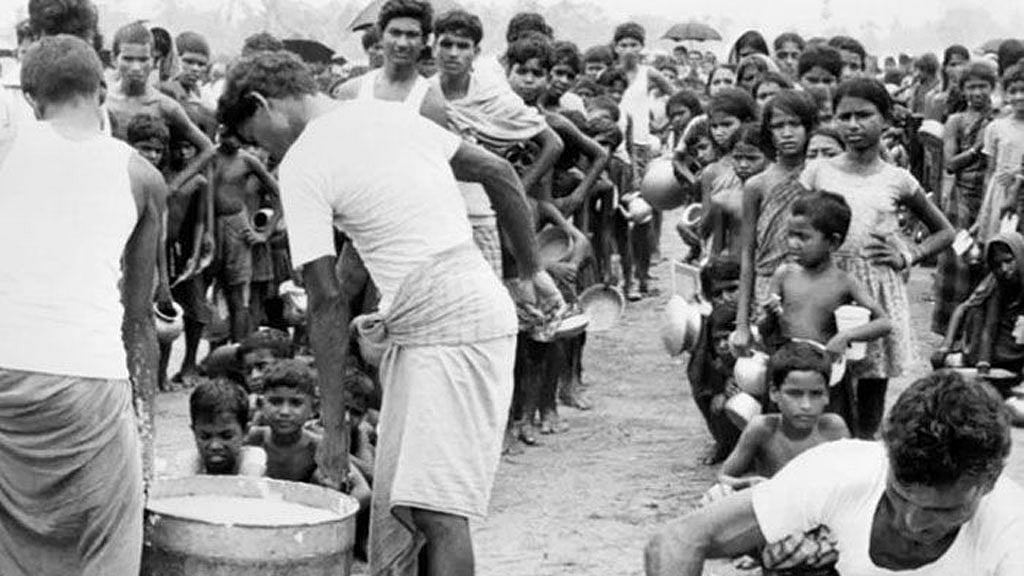
"We were given khichuri in Sanki [clay bowls], and every day, we'd line up with our bowls in the morning and evening for our portion," said Anish.
He added, “India wasn’t as developed as it is now. The refugee camps were poorly managed, and the unhygienic environment led to the daily death of children and the elderly. Cholera and dysentery claimed lives in every tent. According to UNESCO [United Nations Educational, Scientific and Cultural Organisation], half a million children died in the refugee camps."
Anish could not help but remember how his friends and so many others had fallen victim to the disease.
"We became accustomed to the life in the camp. Disease and illness became a part of everyday life. Cholera and dysentery decreased, but a new disease emerged—conjunctivitis. Everyone started calling it the 'Joy Bangla disease'," he said.
During that time, Salauddin Yusuf, a member of the government-in-exile, visited the camp.
Everyone was demanding that arrangements be made for their swift return home because of the ever-growing fear as people continued to die in the camps.
Amidst these struggles, Anish’s father moved their family to a house outside the camp for some safety.
Anish expressed gratitude towards the local community who bore significant hardships due to the influx of refugees.
"They had to relieve themselves in the fields and the jungle near their homes. Although it was unbearable for them, they had no choice but to do it," he said.
Anish added, “We were living in an inhumane system. Those of us who managed to survive and return, it was our great fortune.”
He explained that efforts were being made to restore normalcy at the time, saying: “The decision was made that the young men would go to war, and the children would go to school. So, with the help of locals, a school was set up along the Hakimpur-Machlandapur road for the refugee children.”
“However, there was no real pressure to study, as there were no books or notebooks available for the children.”
Anish said, there was no rhythm to life as a refugee, so the concept of rhythm-breaking did not even apply.
Still, his father took him to watch a Jatra Pala, or traditional theatre performance, by the Natta Company in Chatra, near the refugee camp.
Wearing relief-distributed English pants to watch the play was a new and unique experience in those challenging times.
His uncles lived in the nearby Ramchandrapur refugee camp. Anish had visited there with his father as well.
The camp, located near a large mango orchard, was made of bamboo, polythene, and mats.
Families lived in cramped, small huts, and the surrounding environment was overwhelmed by the stench of human waste, with flies buzzing everywhere.
To save the infants in the camp, milk was provided. Mothers would stand in line, holding their babies in their arms.
There was often chaos as everyone rushed to get their turn.
After spending two days there, Anish and his family returned to the Chandipur refugee camp.
Despite the hardships, life moved on. Anish's elder sister got married while they were in the camp. Her husband, a government employee in India, had once been a resident of Bangladesh.
Anish and his family stayed in the refugee camp for seven and a half months.
Although Bangladesh gained independence in December, they could not return home immediately due to financial constraints.
They finally returned to Bangladesh in the first week of January.
Anish said, "Many had returned earlier, but due to our financial situation, we had to wait for a truck arranged by the Refugee High Commission to return. It took us until the first week of January to get a spot on that truck."
Describing the journey back, he said: "The truck dropped us off at the Bangaon Railway Station. From there, we travelled by train to Khulna Railway Station.”
“The government had arranged a launch from there, and we disembarked in the neighbouring village of Dhanibunia. After that, we walked for three or four hours to get home," added Anish.
When Anish and his family arrived, they discovered that nothing remained of their previous life.
Anish said, "We came back to an empty homestead. When we arrived in the evening, my grandmother made a few flatbreads with the flour she had brought with her. We spent that night eating those flatbreads."
Anish shared that after the country’s independence, there was such scarcity that people in the village faced severe hardships.
His younger uncle, a freedom fighter, had managed to gather some rice, and with that, they lived on fen-bhat, or rice gruel, to get through those challenging times.
Anish recalled that during the difficult years after the war, the family survived on his father's meagre salary as a teacher.
"We managed to survive like this until 1974. We also felt the impact of the 1974 famine. There were days when we couldn’t even get two meals a day," he said.
[Writing in English by Sheikh Fariha Bristy]