Home
+
Published : 06 Nov 2024, 07:30 AM
“How can we work on an empty stomach? It’s been nearly eight weeks without a salary. Regardless of who is in power, they should ensure our survival," said Jharna Begum, a worker at Lakkatura Tea Garden in Sylhet.
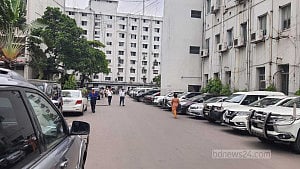
Workers from three tea gardens in Sylhet under the state-owned National Tea Company, or NTC, staged a human-chain protest at the main gate of the divisional cricket stadium on Airport Road, Sylhet, on Tuesday afternoon, against the non-payment of wages for seven consecutive weeks.
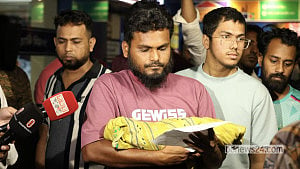
Before the protest, workers shared their hardships with bdnews24.com.
The Bangladesh Tea Workers Union estimates that around 17,000 labourers work in the 16 tea gardens owned by the NTC in Moulvibazar, Sylhet, and Habiganj.
Approximately 30,000 family members depend on the income from these workers. All NTC-operated tea gardens in Sylhet Division are facing arrears.
Raju Goala, president of the Sylhet Valley unit and organising secretary of the union’s central committee, said: "NTC-owned tea gardens in Sylhet, including Lakkatura, Doldoli, and Kewachhara, have not paid workers for eight weeks, including the current one."
“Workers in Lakkatura again held a human chain and protest [Tuesday], demanding their unpaid salaries. But the garden authorities have not made any progress. They just keep asking the workers to wait. How long can we starve?” Goala fumed.
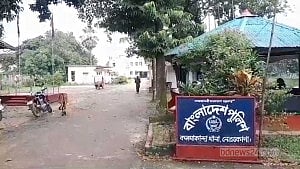
During a visit to Lakkatura Tea Garden, several female workers, visibly distressed, gathered at the main gate of the cricket stadium. Many others walked from the garden to join the protest, some arriving on vehicles typically used for transporting tea leaves.
"We can’t educate or feed our children properly. After salaries stopped, we went to the deputy commissioner for help, and he gave us 20 kg of rice," shared Jharna.
"But what about lentils, oil, or other necessities? We’ve resorted to eating rice with edible roots, prepared without salt. It breaks my heart to share this."
With tears, Jharna continued, “The company deducts Tk 300 monthly for a fund, but we don’t even know if we’ll ever get that money. I can’t even afford medical treatment. My debt at the local shop is Tk 6,000, and now the shopkeeper is demanding repayment."
Appealing to the government, she said: "We’ll return to work when our wages are paid. Otherwise, we’ll keep protesting and may even block roads. If you have to shoot us, go ahead. We have nothing left to lose."
Another worker, Kulbati Lohar, voiced her frustration: "How can we survive with our children? We are protesting on empty stomachs, yet the government is ignoring us.”
Jamuna Begum, standing alongside Jharna and Kulbati, shared her struggle to support her eight-member family.
"The company doesn’t pay us, and now shopkeepers have stopped extending credit,” she said. “Look at how we’re living. Why are we so overlooked? Don’t we deserve respect as garden workers?”
Parul Lohar added, “It’s been eight weeks without pay. I can’t send my children to school. Just tell us if we’ll ever be paid.”
Shilpi Mudir, struggling to provide for her eight-member family, echoed similar hardships. “I can buy food if my wages are paid,” she said.
Other workers, including Ameeran Gowala and Majan Urao, shared similar sentiments.
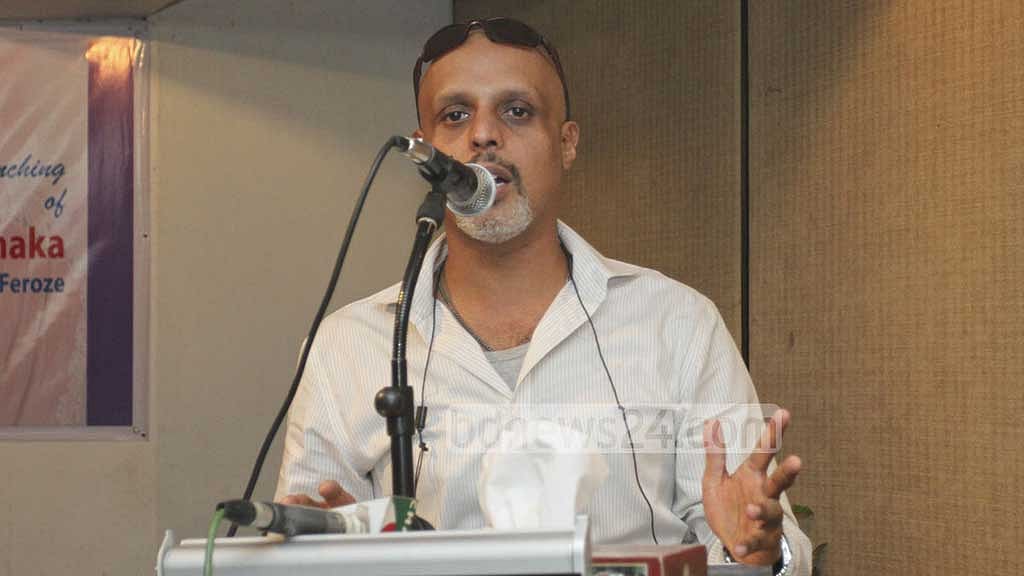
NTC Managing Director Syed Mahmud Hasan was unavailable for comment on the unpaid wages.
Earlier, he had told bdnews24.com that the NTC is in contact with Bangladesh Bank, Krishi Bank, and the Ministry of Commerce to resolve the issue.
“We hope to resolve this soon,” he said.