Published : 21 Feb 2025, 09:41 AM
Updated : 28 Aug 2026, 01:17 AM


In the misty hills of Bandarban, where the Mro people have long spoken their mother tongue, a rare linguistic offshoot quietly emerged nearly seven decades ago—a language known as "Rengmitchya".
Once a vibrant thread in the cultural fabric of this community, it now stands on the precipice of extinction, spoken by a mere six to eight individuals.
With each passing day, the voices of "Rengmitchya" grow fainter, and experts warn that when its last speakers fall silent, the language will vanish from the world forever.
But amid the looming threat of erasure, a desperate yet determined resistance has taken root.
For over two decades, researchers and linguists have fought against time, crafting a lifeline for "Rengmitchya" by developing its vocabulary, drawing from Mro and Bengali, and publishing books to cement its legacy.
A dedicated “school-cum-hostel” now serves as a sanctuary for young learners, ensuring the language is not just remembered, but lived.
Modern linguists, along with the International Mother Language Institute, have stepped forward to bolster these efforts. Surveys, research, and documentation are underway to capture the language before it fades into silence.
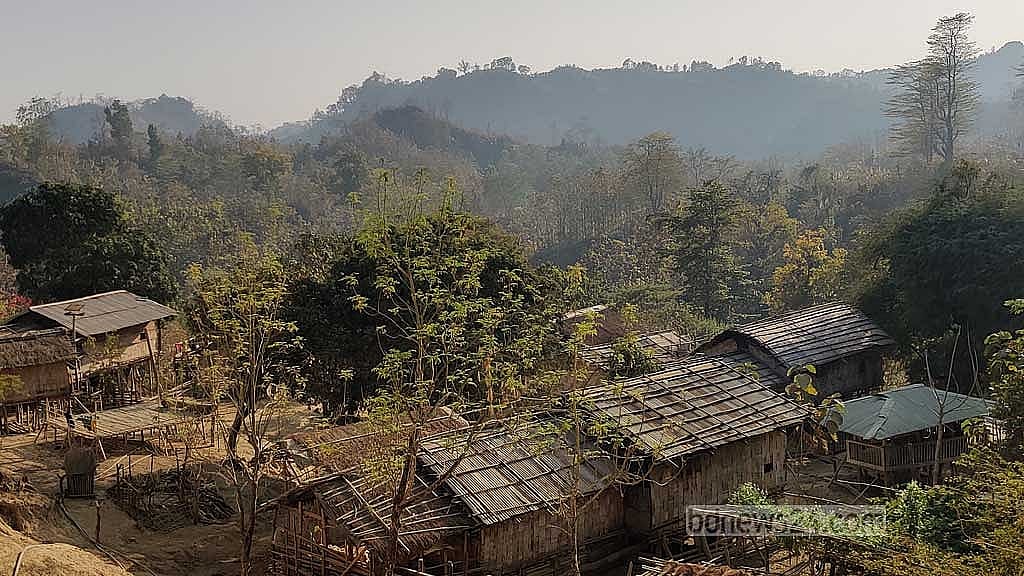
"We will document ‘Rengmitchya'," said Md Asaduzzaman, director of the Institute. "After Eid, we may venture deep into the remote hills of Alikadam in Bandarban to preserve what remains. After all, a language survives through its speakers—keeping them engaged is our mission."
The Mro community clings to hope.
They believe, with these renewed efforts, "Rengmitchya" may yet defy extinction, its echoes carried forward by a new generation.
LANGUAGE AND HILLS
In the 1950s and 1960s, German anthropologist Lorenz G Löffler visited the Chattogram Hill Tracts to study the Mro community.
Later, as part of his work, “Ethnographic Notes on Mro and Khumi of the Chittagong and Arakan Hill-Tracts” was published by Harvard University in the United States.
In it, Löffler wrote that in the Tain Mouza area of Alikadam, there is a community called 'Rengmitchya', whose language is distinct and unique.
However, their social and cultural characteristics are similar to those of the Mro community.
Later, in 1999, David A Peterson, a Linguistics professor at Dartmouth College, began researching languages in Bandarban under a fellowship at the Max Planck Institute for Anthropology in Germany’s Leipzig.
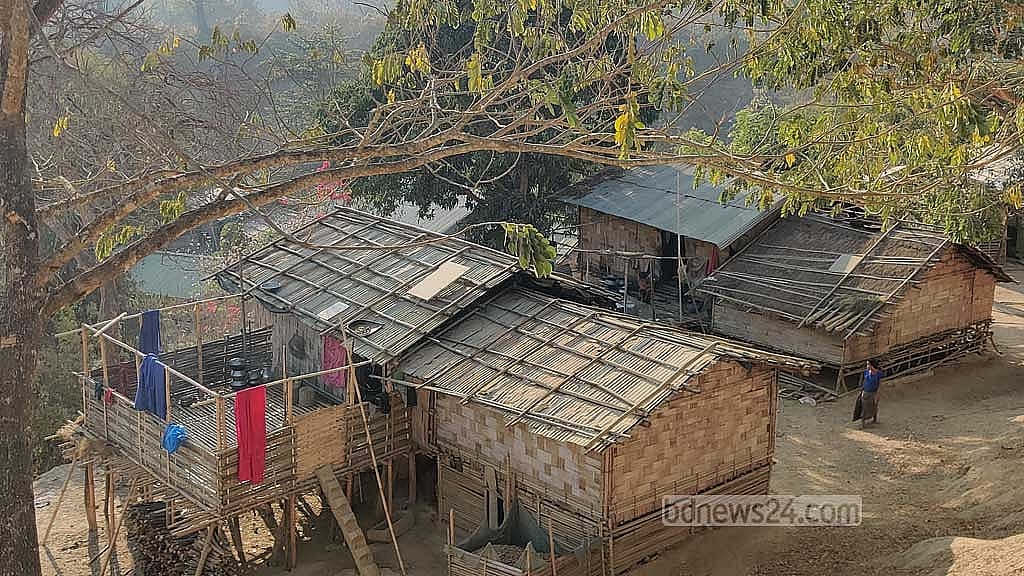
His primary focus was on languages belonging to the Kuki-Chin group.
In 2009, while conducting his studies, Peterson came across the Rengmitchya-speaking community. He subsequently managed to find a group of Rengmitchya speakers.
In 2013, in several areas of Alikadam Upazila, 22 women and men were found who spoke the “Rengmitchya” language.
Later, Prof Peterson's associate in research and Mro language writer, Yanggan Mro, continued the search and identified an additional 10 Rengmitchya speakers.
At that time, the total number of speakers stood at 32. However, most of them were elderly.
As a result, within eight years, by 2021, the number of Rengmitchya speakers had dwindled to just six, as the rest had passed away.
The remaining six were Mangpung Mro, 73, Kunrao Mro, 60, and Kunrao Mro, 73, from Krangsi Para in Ward No 8 of Alikadam Sadar Union; Thoai Lok Mro, 59, from Mensing Para in Nayapara union; Rengpung Mro, 69, from Waibot Para in Naikhongchhari union; and Mangwai Mro, 63, from Sangpla Para.
Among them, two named Kunrao are women, while the others are men.
Mangpung's elder brother is Rengpung, and his younger brother is Mangwai.
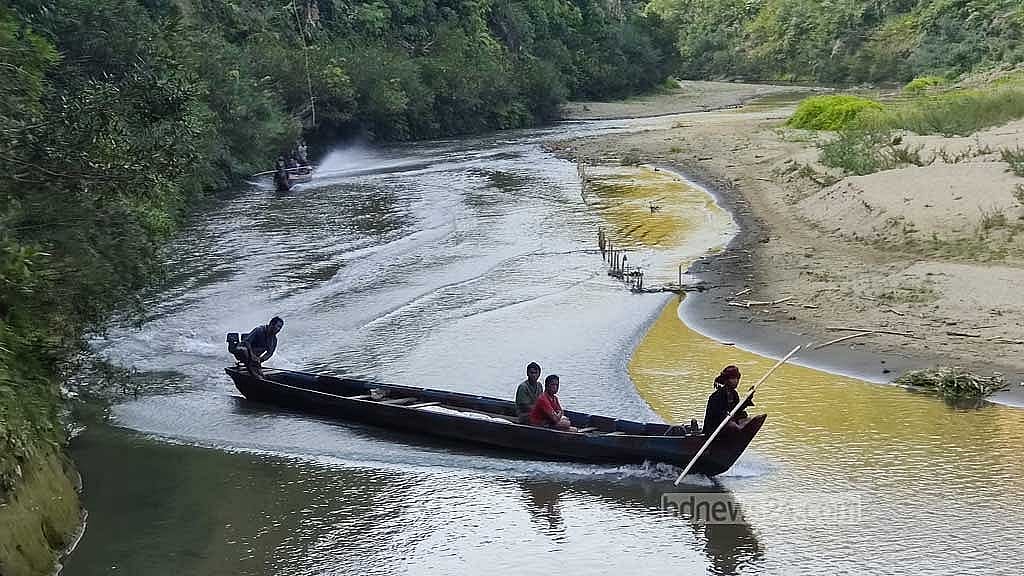
Recently, two additional speakers, Chippi Mro, 55, and Rungrung Mro, 60, were found in the remote hills of Kurukapata union.
They were discovered by Singra Mro, a researcher working on the “Rengmitchya” language.
Singra said, "In Paya Mro Para, Union No 9, there are 22 families, of which 15 speak ‘Rengmitchya’. However, none of them are fluent anymore. The Paya Mro headman, who passed away, had married a Rengmitchya woman, and she still lives in her 80s.
“She can speak ‘Rengmitchya’, though not very well. There may be others who know a little of the language."
On Chippi and Rungrung’s language skills, Singra said: "When I asked Rungrung Mro how he was in ‘Rengmitchya’, he replied fluently.
“Chippi Mro, who was with him, also spoke the language. We had a lengthy conversation in ‘Rengmitchya’, though Rungrung’s grasp of it isn’t as strong—he can manage only to speak it moderately well.”
Singra Mro, citing Chippi, said: “When David A Peterson visited Kurukpata in Alikadam, he reportedly found Chippi Mro.
“However, they lost contact afterwards. Perhaps Prof David assumed that Chippi Mro had passed away.”
EFFORTS TO REVIVE ‘RENGMITCHYA’
Singra, 47, son of 73-year-old Mangpung Mro—one of the most proficient “Rengmitchya” speakers—lives in Krangsi Para, upstream of Tain Khal in Alikadam Sadar Union.
He studied up to the fifth grade and learned to understand “Rengmitchya” while living with his grandfather as a child.
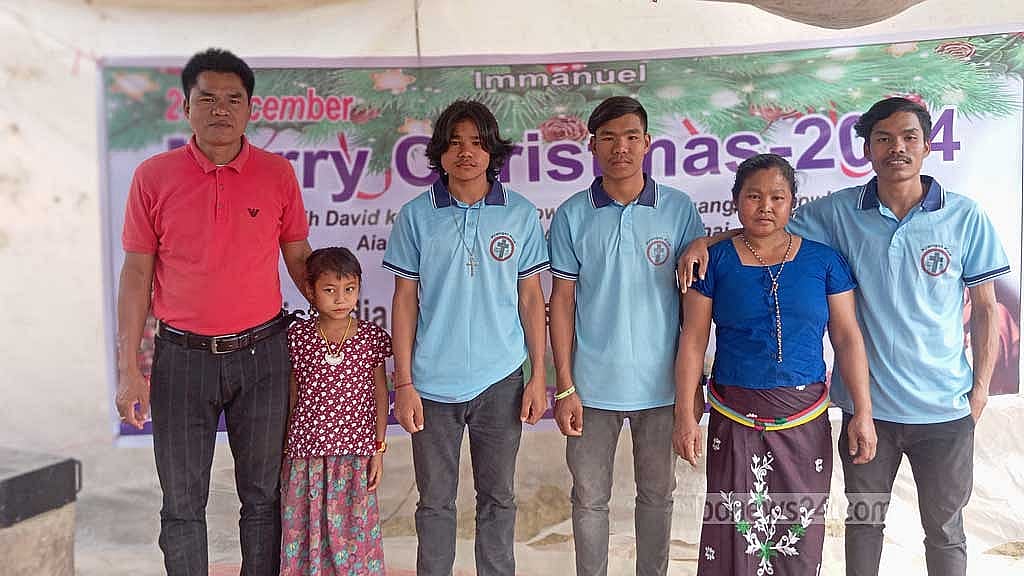
Over the years, through personal effort, he managed to learn the language and can now speak it moderately well and comprehend it better than before.
Singra shared his experience of working with the “Rengmitchya” language.
“A few years ago, a group of journalists visited our para to document Rengmitchya. While speaking to them, my father uttered a sentence in ‘Rengmitchya’: ‘Himi Rengmitchya Takhok Tamak Wet Dok,’ which means in Bengali, ‘This Rengmitchya language is disappearing.’”
“I understood what he meant, and it pained me deeply. That was when I decided that I had to do something to preserve this language.”
In February 2024, Singra took it upon himself to trace Rengmitchya-speaking families.
His search led him beyond his own para, where he found more families in nearby areas of Alikadam.
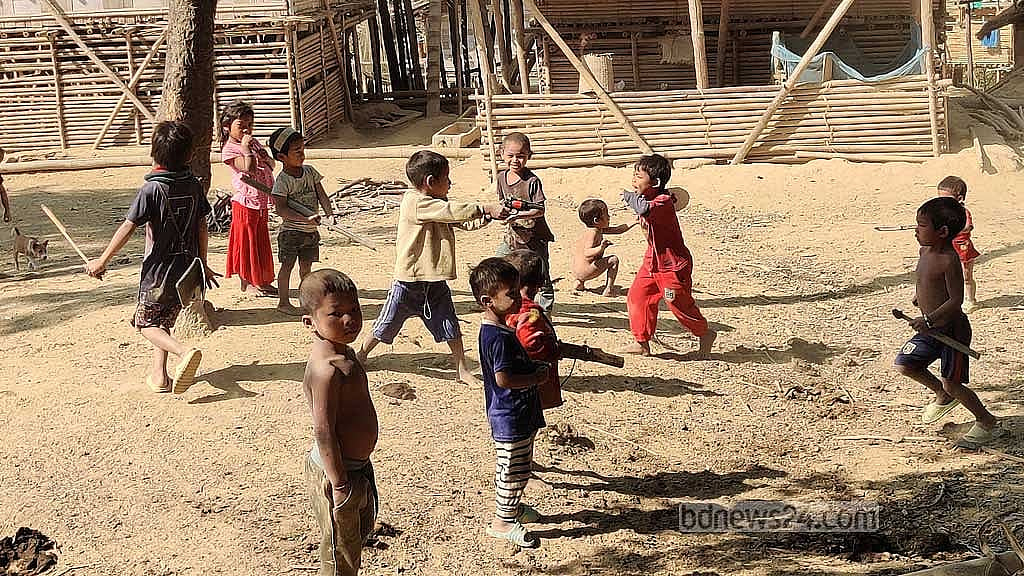
Due to time and financial constraints, he could not cover all areas, but he believes more families might be discovered, especially in the upstream regions of the Matamuhuri River.
Singra provided bdnews24.com with a list of the families he discovered. According to his findings, newly identified Rengmitchya-speaking families are located in:
Alikadam Sadar union
• Paya Para (Ward No 9): 15 families
• Menthong Para (Ward No 8): 5 families
• Boloi Para (Ward No 8): 2 families
Kurukpata union
• Kaingpa Para: 2 families
• Rengbuk Para: 5 families
• Waibot Para: 2 families
Nayapara union
• Mensing Para: 6–7 families
• Saklang Para: 1 family
• Mongpong Para: 4 families
• Raong Karbari Para: 5 families
• Dokkhoi Para: 1 family
• Krongline Para: 6 families
• Patui Para: 2 families
In addition, there were already seven Rengmitchya-speaking families in Krangsi Para.
Based on his findings, Singra Mro estimates that the total Rengmitchya-speaking population may be around 200.
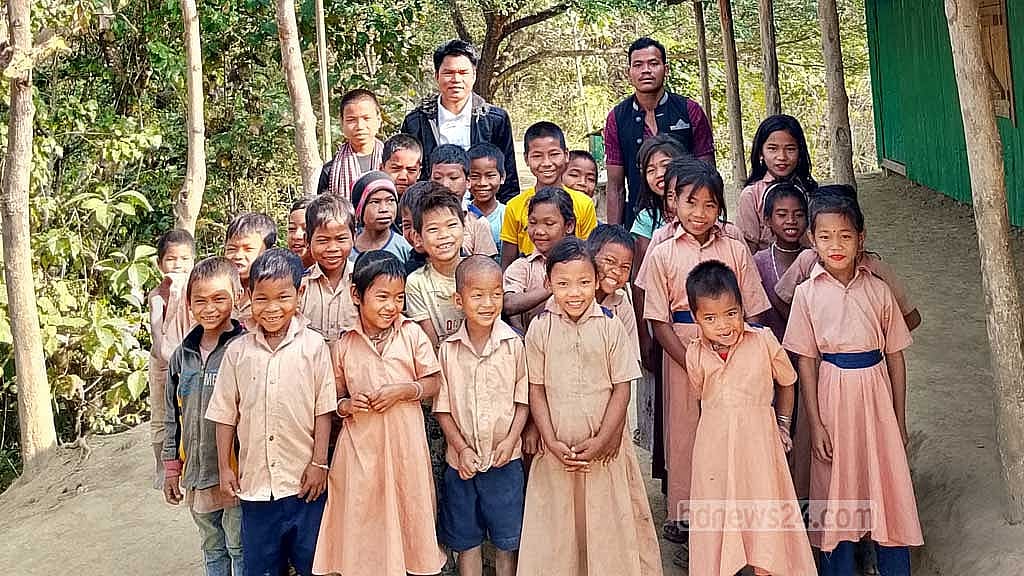
However, among the newly identified families, he has so far only found two Mro individuals who can still speak the language.
LANGUAGE TREASURY THROUGHOUT TAIN KHAL
In Krangsi Para, three residents—Mangpung, Kunrao, and Kunrao (2)—who speak “Rengmitchya” remain physically strong despite their advanced age. They continue to cultivate rice.
When asked about the presence of the Rengmitchya-speaking families in Tain Khal during their upbringing and family life, they recalled during the British period, Rengmitchya-speaking communities were widespread across Tain Khal, with large neighbourhoods.
Based on their estimates, there were 20 Rengmitchya-speaking families in Buncho Para, 80 in Rani Para, 80 in Kuarao Para, 50 in Kuiki Para, 30 in Haiwang Para, 40 in Sarak Tong Para, 35 in Niang Para, and 70 in Sangthong Para.
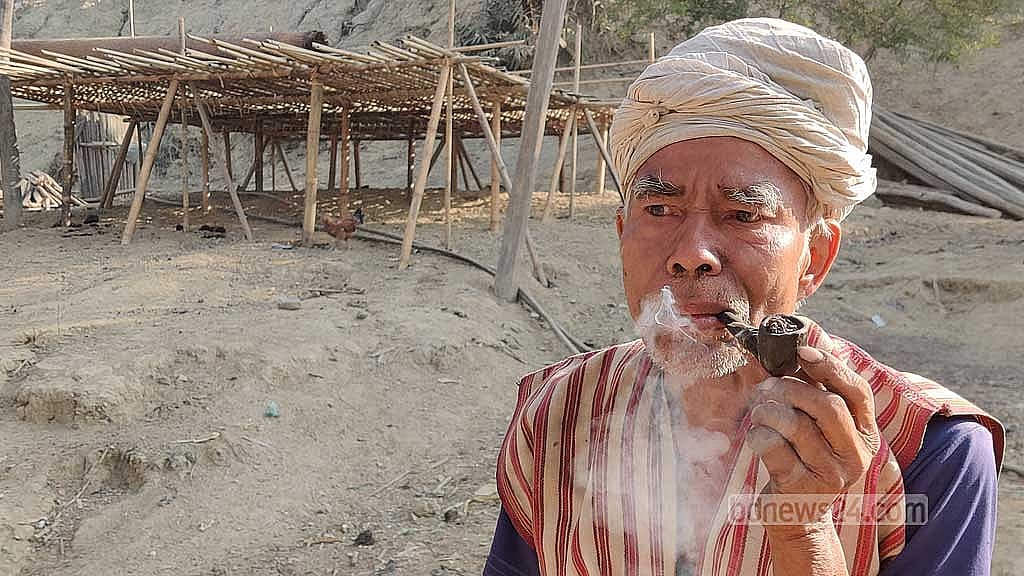
Mangpung told bdnews24.com he was born in Buncho Para but left the neighbourhood due to water shortages and cholera at the time.
Both of his parents were from Rengmitchya-speaking families and did not speak Mro. His grandparents also spoke Rengmitchya, which helped him retain the language.
Kunrao, 60, said his mother was from a Rengmitchya-speaking family, while his father was Mro.
Kunrao (2), 73, said her husband was Mro and passed away 24 years ago. However, he could speak the “Rengmitchya” language.
While he was alive, she would switch between speaking Mro and “Rengmitchya”.
Even now, Kunrao always speaks “Rengmitchya”. There are four grandchildren at home, and they all sleep together, communicating exclusively in the language.
She said, “The grandchildren can now say their names and their parents' names in ‘Rengmitchya’. They can also count numbers and use common daily words.
“They are learning the language with interest, which makes me happy.”
LANGUAGE: CHOLERA AND JHUM
The Rengmitchya-speaking families that were once present upstream of Tain Khal in Alikadam no longer exist. Those present today can no longer speak the language.
However, even if they cannot speak the language, more Rengmitchya families should still exist.
In this regard, several reasons for their population decline emerged in conversations with Rengmitchya language speakers in Krangsi Para.
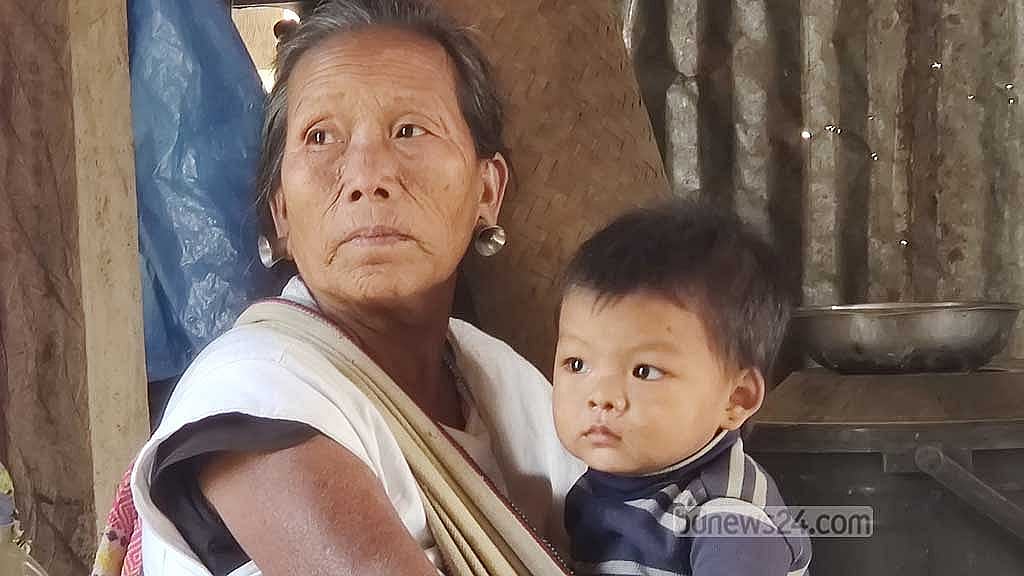
Kransi Para resident Singra said: “After talking to the people of our language, we came to know a month and a half ago that there are six clans within this language family.
“They are Thangdop Cha, Matak Cha, Khangtar, Sung Pong Cha, and Tam To Cha.
“There are two divisions within the Khangtar clan – Khangtar and Khangwe.
“The Khangtar is the largest group (with more families), and the smallest is the Sung Pong Cha group.
“The issue now is that there is no rule allowing everyone to marry within all six groups.
“For example, a boy from the Thangdap Cha group cannot marry a girl from the Matak Cha group.
“However, someone from the Khangtar group can marry a girl from the Thangdap Cha group.”
Singra said, “As a result, some people are unable to marry within their group due to the restrictions.
“Those who marry outside the prescribed rules face social punishment, including exclusion from society and banishment.
“Due to this, many have been compelled to marry Mro individuals and blend in with them, leading to a decline in the number of people speaking the language.”
Singra's father, Rengmitchya-speaking Mangpung Mro, said: “At that time, there was a cholera epidemic, as well as diarrhoea.
“There were times when entire families died due to the outbreak of these diseases. I saw four or five bodies being discarded daily in some families.
“Some left the area out of fear, while others married Mro and blended in with them.
“Some went elsewhere to focus on Jhum cultivation.
“Since then, everyone has dispersed as they wished, and the remaining individuals have lost contact with others, resulting in a decline in the number of Rengmitchya language speakers.”
LANGUAGE PRESERVATION EFFORTS AMID FINANCIAL STRUGGLE
In 2023, to preserve the “Rengmitchya” language, Singra took the initiative to teach 23 children in the neighbourhood in his home.
The number of students continued to increase gradually.
Upon receiving the news, the Bandarban Army Region helped build a school with bamboo, wood and tin fences, naming it Krangsi Para Sena Maitree Primary School.
The school was inaugurated on Mar 10, 2024, by the then Army Region Commander Brig Gen Golam Mohiuddin Ahmed. Currently, the school has a total of 50 students.
Singra personally teaches the “Rengmitchya” language to the students, while a teacher named Paitra Mro teaches Bangla.
Singra received an honorarium of Tk 4000 from the army, while Paitra received Tk 3000.
Singra said the bamboo and wood kept for building his own house were used for the construction of the school.
He added that while dedicating time to the school, he was unable to tend to his jhum cultivation properly last year.
"Each pot of seeds, in turn, used to yield 50 bowls of paddy. That too was finished in two to three months.
“Now I have to buy rice from the market. As I was unable to do jhum cultivation properly, I am facing a food and financial crisis.The forest has not been cut down yet this year.
"I am now caught in a dilemma while taking steps to preserve the Rengmitchya language. On one hand, there is the matter of earning for the household, and on the other, the responsibility of preserving the language."
“If the hostel is built, the children will get the opportunity to speak the ‘Rengmitchya’ language together. The practise of this language will increase.
“If necessary, arrangements should be made to bring the three Rengmitchya speakers outside this neighbourhood here and teach the children. But no government organisation has come forward for that yet.”
‘LANGUAGE IS SUSTAINED BY PEOPLE, NOT RESEARCH’
Afsana Ferdous Asha is doing her PhD research at Trinity College Dublin, Ireland on how to preserve and sustain the endangered Rengmitchya language.
She is a lecturer in the Department of English and Modern Linguistics at North South University in Bangladesh.
Her research on the “Rengmitchya” language is supervised by Nathan Hill, professor at the School of Linguistics, Speech and Communication Sciences in Ireland and Director of the Trinity Centre for Asian Studies.
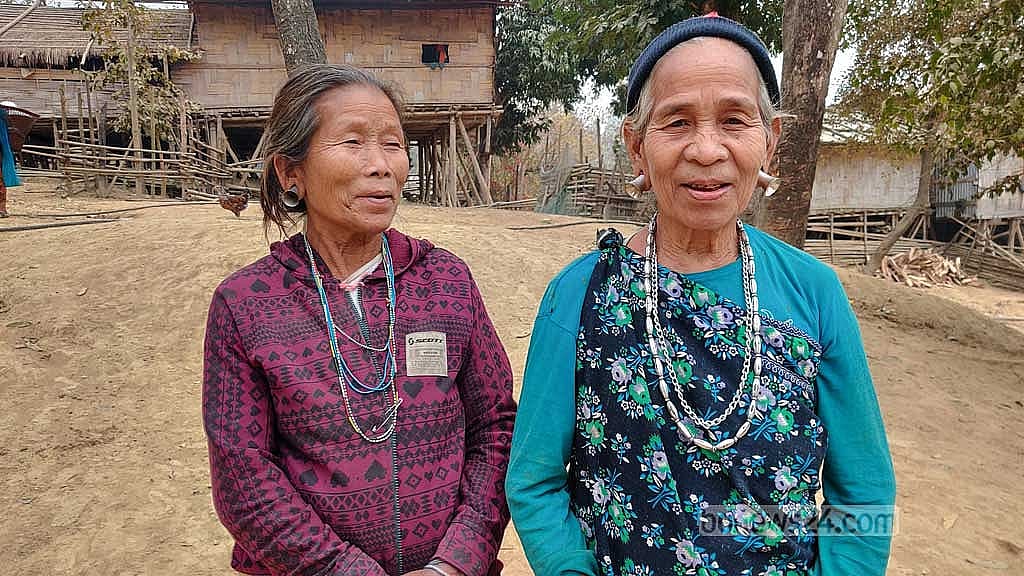
Asha said, “In May 2024, I went to the Krasangsi neighbourhood of Tain Khal and worked for seven days straight.
“It is clear that more research needs to be done on this language over an extended period.
“If German anthropologist Lorenz G Löffler and later David A Peterson hadn't highlighted it, not much would have been known about this language.
“They were the ones who brought attention to a language called Rengmitchya. Now, we need to focus on how to preserve and protect it through intensive research.
“To preserve this language, I am now working on the documentation (documentary) of the ‘Rengmitchya’ language.
“We must preserve the oral words of Rengmitchya speakers. To do so, we will have to go there and stay for six to seven months.
"Later, we will need to create a textbook on the words of this language. The next generation will have to be taught it.
“The more work is done in this way, the more this language will survive. Otherwise, it will cease to exist.”
Asaduzzaman, director of the International Mother Language Institute, said the International Mother Language Institute mainly works on researching, documenting, and preserving endangered languages.
Out of the 40 languages in Bangladesh, 14 are disappearing.
Among them, “Rengmitchya” and “Khariya” are the most endangered, as their populations are very small.
Particularly, the current generation does not use their language. Only six people still speak “Rengmitchya”.
Asaduzzaman said, “Research cannot save a language. What research can do is preserve it.
“It can be stored in a language museum or kept for archaeological purposes. The language survives in the tongues of its speakers.”
“Now the people in the ‘Rengmitchya’ language community cannot use this language because of several social, political and economic reasons.
“They do not benefit from learning this language. They cannot study in schools and colleges, or get jobs.
“Their ecological system is not what it was before.”
[Writing in English by Sheikh Fariha Bristy and Nahifa Nawar]