Published : 06 Nov 2025, 05:33 PM
Updated : 28 Aug 2026, 01:29 AM


Nine years after being gang-raped in Barishal, a young woman remains deeply traumatised despite a court delivering justice in her case.
Earlier this year, a tribunal sentenced four men to death for raping the then 19-year-old girl. But her family says she has not been able to return to a normal life.
She barely speaks and has been living in isolation under her family’s care.
Doctors say she continues to suffer from post-traumatic stress and urgently needs counselling. Her condition has worsened due to the stigma and isolation she has faced from society.
The incident took place in Barishal city on Nov 10, 2016.
Four men raped the woman after luring her away at night. Another man later took advantage of her helplessness and raped her again.
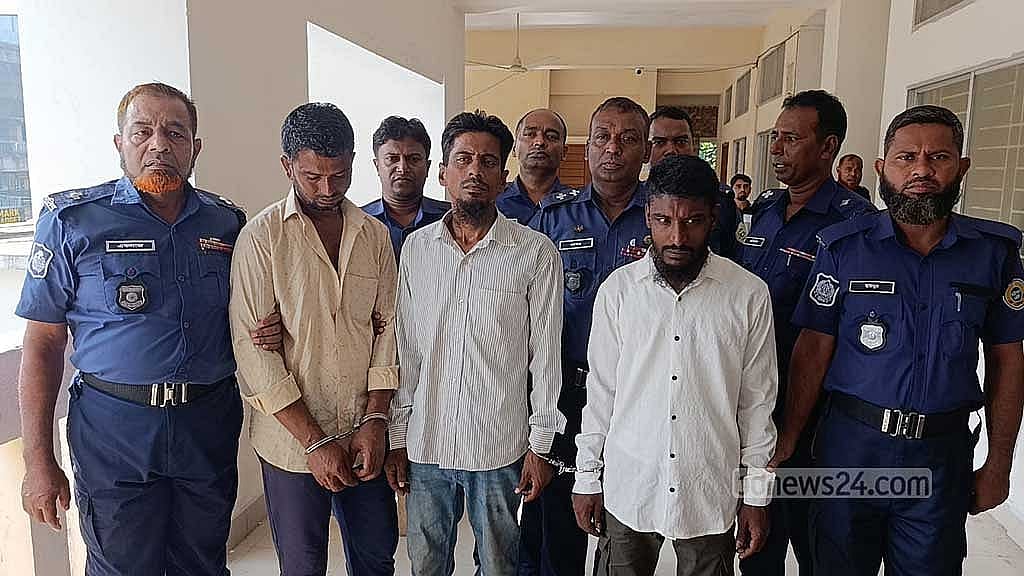
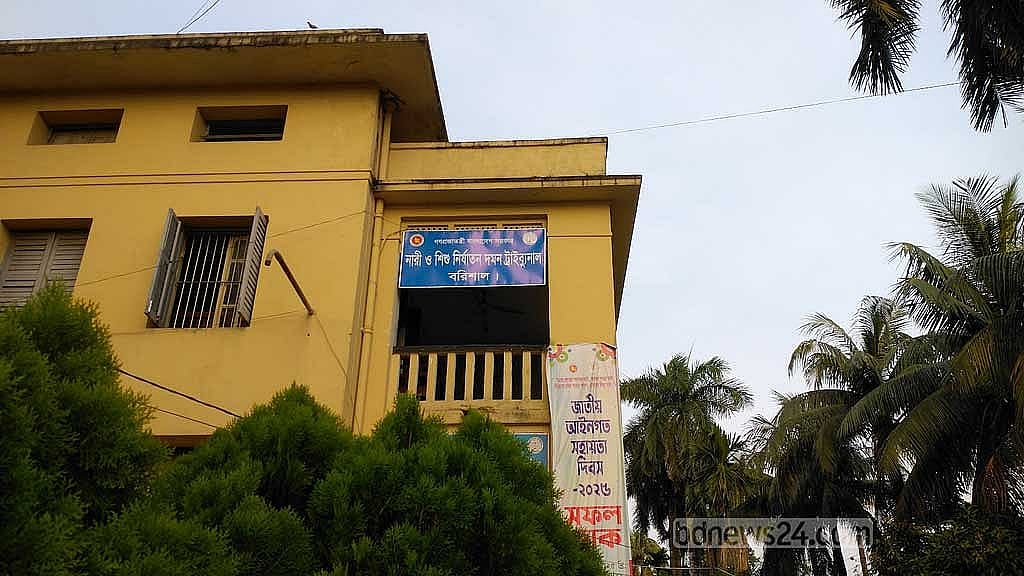
After nearly nine years of proceedings, Judge Rakibul Islam of the Barishal Women and Children Repression Prevention Tribunal handed down the death penalty to four suspects on Oct 26.
The convicts are Russell Gazi, 44, Rokon Khan, 32, Rajib Jamaddar, 34, and Zahid Howlader, 35.
Three of them were present in court when the verdict was delivered, but Rokon absconded after securing bail during the trial.
THE NIGHT OF THE INCIDENT
According to the case dossier and the family, the woman had recently married but had not yet gone to live with her husband. She was staying with her parents and siblings in Barishal.
On the night of Nov 10, 2016, following an argument with her mother, she decided to visit her husband, who was admitted to Barisal Sher-e-Bangla Medical College Hospital.
She hired an easy bike, but the driver took her in the wrong direction toward the city’s Trish Godown Bridge.
There, he picked up three accomplices before driving to a secluded forested area in Christianpara.
The men held her captive overnight and gang-raped her. In the morning, they abandoned her in front of a house.
Another man, who initially pretended to help, raped her again.
When the survivor finally made it to the streets, locals detained and assaulted her, questioning her character because of her dishevelled appearance.
Her family later rescued her and took her home. The next day, she filed a case.
HUSBAND FILES FOR DIVORCE
The survivor’s family has been struggling to rebuild their lives in Barishal. They bought a small piece of land in the city and now live in a house with four small rooms. The woman had left that house on the night she went to visit her husband in the hospital.
When bdnews24.com recently visited the home, she was not there. Her mother, brother, and sister spoke to reporters, describing the long years of pain that followed the incident.
They said the girl’s husband divorced her soon after the rape -- just days after their wedding. He has since remarried and started a family.
Since then, the survivor has withdrawn completely from the outside world. She barely speaks to anyone outside her family and often breaks down in tears.
Her mother said the trauma has taken a heavy toll on the entire family. The girl’s father died of a heart attack, which relatives believe was brought on by his distress over his daughter’s suffering.
“My husband died worrying about our daughter,” the mother said.
“Now she is dying slowly from within. We are also falling ill because we can’t afford proper food or medicine.”
THREATS FROM THE SUSPECTS
Although the family welcomed the court’s verdict sentencing the four rapists to death, they say their ordeal has not ended. They continue to receive threats from the convicts’ families.
Fearing for their safety, they have tried to sell their house and relocate, but have been unable to do so due to the intimidation.
“The threats started right after the verdict,” said the survivor’s elder sister.
“They said they would get bail from the High Court and then come after us. We are living in constant fear.”
She described the horror of the crime, saying, “The rapists were so cruel that when they raped my sister and when she asked for water, one of them urinated on her face. When she was lying on the road later, no one helped -- instead, people beat her. Many of those involved still haven’t been brought to justice.”
The survivor’s mother added: “I have received justice, but not peace. I only want safety for my daughter and help for her treatment.”
STATEMENT OF THE ACCUSED
Convicts Zahid Howlader worked as a mason’s assistant, Rokon Khan was employed at a cement factory, Russell Gazi ran a tea stall, and Rajib Jamaddar drove a truck.
In their court statements, they admitted to being at the scene and said they had gone to Russell’s place to smoke marijuana that night. When they arrived, they saw Russell raping the girl and then joined in.
Abdul Mannan Mridha, the state prosecutor of the Barishal Women and Children Repression Prevention Tribunal, said the judge fined each of them Tk 100,000.
“The court has ordered that the fine money be given to the mentally unstable survivor,” he said.
“Now, the district administration must take steps to ensure she actually receives it.”
SURVIVOR’S TREATMENT
Barishal Deputy Commissioner Mohammad Delwar Hossain said the administration would take steps if the family submitted an application seeking help.
“If they apply to us, the necessary action will be taken,” he told bdnews24.com.
“The Department of Social Services will be instructed to investigate the matter.”
Sajjad Parvez, assistant director of the District Social Services Office, echoed the statement.
“We will act as per the instructions of the deputy commissioner,” he said.
Pratima Sarkar, joint general secretary of the Barishal district unit of the Bangladesh Mahila Parishad, said the organisation was aware of the case and would raise it with their central committee.
“We will discuss the matter and talk to the central office,” she said.
“There is a ‘Rokeya Sadan’ at our Dhaka office, where women in such conditions receive shelter, mental health treatment, and counselling. We will visit the family and take the initiative to send her there.”
Brig Gen AKM Moshiul Munir, director of Barishal Sher-e-Bangla Medical College Hospital, said the survivor required long-term psychological care.
“The girl will need long-term treatment,” he said. “She should be admitted to the hospital’s mental ward, and we are ready to provide all necessary assistance.”