Published : 06 Nov 2025, 03:17 AM
Updated : 21 Aug 2026, 02:41 PM


Michelle Obama has reflected on how her fashion shaped her years as First Lady and how the media’s fascination with her style, particularly her sleeveless looks, often turned into a tool of “othering”.
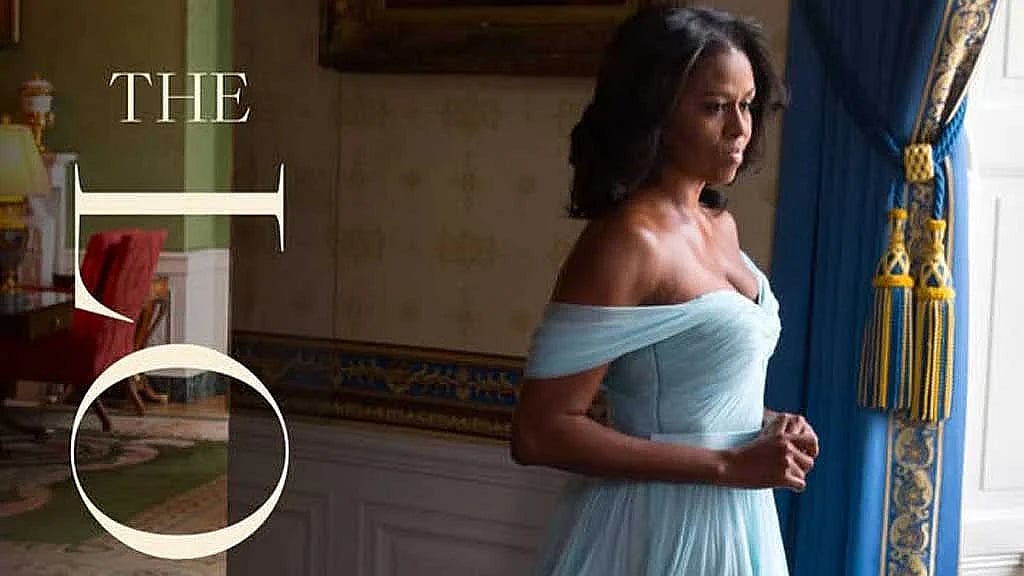
According a report by The Guardian, the former First Lady delves into these experiences in her new photo book "The Look", released on Tuesday, where she explores her evolution of style during her time in the White House and beyond.
The book combines photographs with commentary from Obama’s longtime stylist Meredith Koop and several designers who dressed her for official occasions.
It aims to portray how she used fashion not just as adornment but as a form of visibility and empowerment.
American academic Farah Jasmine Griffin, writing in the foreword, notes that Obama’s choice of skirts and slacks, and her embrace of emerging Black, Asian and Latina designers, “lent style to her substance”.
In The Guardian’s telling, Obama recalls the uproar over her decision to bare her arms in her first official portrait in a black sleeveless shift dress by Michael Kors -- a look that became both iconic and controversial.
“LPG is largely under the private sector, but we are not getting the efficiency we should from it,” she writes, recalling how something that seemed like a simple fashion choice became a matter of cultural debate.
“Michelle Obama goes sleeveless again,” read a The New York Times headline cited in the book, which chronicled how four of her seven looks in a week were sleeveless -- including a pink Vogue cover dress and a blue one worn in the White House kitchen.
But the real uproar came when she showed her arms during Barack Obama’s first address to Congress.
Critics described it as “too informal” and “inappropriate”, while one publication ran the headline “Up In Arm”, and another coined “Sleevegate”.
As reported by The Guardian, Obama notes that while sleeveless dresses had been worn by First Ladies before, the response to her style was exceptional.
“This felt different,” she reflects, suggesting that her fashion choices were used to mark her and her husband as outsiders to the “rarefied world” of Washington.
She also revisits an incident in 2009, when she was criticised for wearing shorts, a tank top and hiking shoes during a visit to the Grand Canyon.
“I found it particularly painful,” she writes, after The Washington Post’s fashion reporter Robin Givhan described the outfit as “common”.
“I’d grown to expect this kind of commentary from men and political opponents, but it was upsetting to me that a fellow Black woman would contribute to the pile-on,” Obama notes, as quoted by The Guardian.
“We were seven months into a brand-new administration, and I was the first Black First Lady trying to find my way.”
The book also reveals tensions within her own campaign team, who advised her to soften her expressions to avoid feeding the “angry Black woman” stereotype.
“I was shocked when our communications team shared notes, rather sheepishly, that I should be careful of my tone and facial expressions,” she writes. “While I intellectually understood how that ‘angry Black woman’ trope could be used against me -- and frankly, why Black women should be angry -- in these instances, I was simply speaking my truth.”
Still, Obama used her platform to champion new voices in fashion. At her husband’s inaugural ball, she famously chose a white one-shoulder gown by Jason Wu, a then little-known Taiwan-born designer. “Wearing his dress would signal to the world that I was willing to buck the establishment,” she writes.
The gown now resides in the Smithsonian’s National Museum of American History -- a testament to her influence on modern American fashion.
She also recalls the contrast between her approach and that of earlier First Ladies. While Nancy Reagan was associated with couture and Jacqueline Kennedy with Chanel, Obama became known for her “high-low” philosophy -- mixing luxury labels with accessible brands such as H&M, Target and J Crew.
“As First Lady, you’re put on a de facto pedestal,” she writes, “but I was not interested in a ‘look, don’t touch’ approach. My clothing had to reflect openness, connection and the idea of inviting people in.”
In "The Look", as summarised by The Guardian, Obama’s wardrobe becomes more than a chronicle of style -- it is a political language, a symbol of agency, and a reminder that fashion, too, can speak truth to power.