Published : 16 Feb 2026, 04:54 AM
Updated : 21 Aug 2026, 03:10 PM


For valid reasons, the month of February will be etched in the hearts of Bangladeshis from all social spheres.
An open, well organised election was held while voters, who had not seen the face of a polling centre for decades, went to cast their votes in numbers.
Apart from a few sporadic incidents, no major cases of confrontation were reported and, as one citizen pithily remarked: an election held without a single loss of life!
Some are terming this a new dawn, others the reset this country had been waiting for, but instead of resorting to hyperbole, let’s just say, Bangladesh is on the path of democracy once more.
Remember the jubilation and the hope of 1991!
Well, in that light, the nation is once more on the right track.
But this new start is also about bringing in significant change to the way things were done in the past.
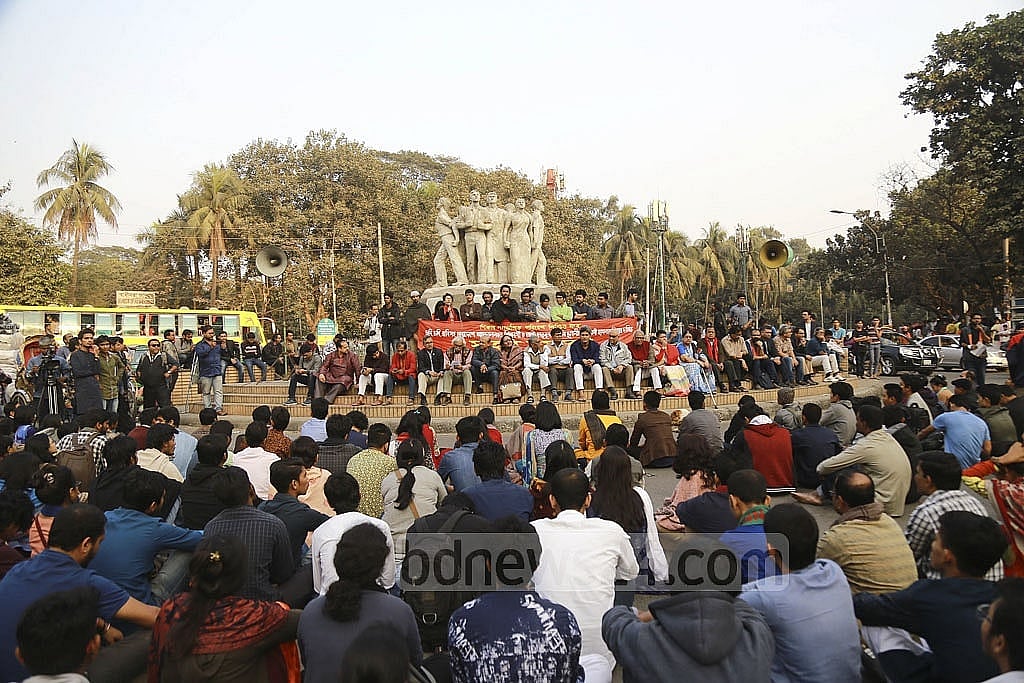
The country, inspired by youth ideals, needs to see some fundamental reforms and the number of young I spoke to came out with some suggestions which they feel will ensure the Bangladesh envisioned by the mass movement of Jul-Aug 2024.
A FREE, RESPONSIBLE AND BOLD MEDIA
Speaking about the role of the media, Abdullah Al Bake, a journalist for a daily, says: “For too long, the media, mostly at the behest of their respective owning business conglomerates, had to toe the line of the power in place, becoming subservient and toothless in the process. This tendency of the media becoming a tool of the power in place must end.”
Echoing what Abdullah said, Zahirul Mamoon, another journalist, feels that this can only be possible when media owning bodies stop interfering in the affairs of their respective news-papers, channels or news portals.
However, for this the government also needs to issue a clear statement saying that it welcomes a vibrant independent media which performs its duty to the nation instead of any entity or ideology.
Delving a bit deeper into the matter, Shahnoor Karim, a retired journalist contends: “As a social being, any person, including a journalist, will have a particular political ideology but that cannot impact his/her work, whether it’s a report, an opinion piece or a news analysis.”
Nusrat Ahmed, a journalism department student, feels that the role of the media must be to laud as well as lambast the new government.
However, every comment or a statement by the media needs to be backed by hard core data and facts, feels Nusrat.
Looking at the role media can play in creating a democratic and liberal Bangladesh, Bashir Uddin, a reporter for an online portal, believes that the new government has to interact directly with working journalists and not just editors and senior journalists who are often the full or partial owners of media houses.
“For a robust media scene plus a sector where journalists are not deprived of the just wages and privileges, the government must have links to working journalists,” Bashir said.
Only then will the grievances of journalists get the right attention, he added.
Sohel Islam, a media landscape analyst, highlighted the usage of sycophantic body language and tone, warning that this approach proved totally counter productive during the last regime.
Such fawning behaviour, bordering on buffoonery, made the media into a laughing stock, leaving the profession’s integrity in jeopardy, he maintained.
The practice of exploiting a media house for business concessions is a pernicious culture that needs to be vociferously discouraged, Sohel said.
VALUE MERIT AND RECOGNISE THE TALENTED
The principal driver of the July Aug movement was the end to the quota system and the recognition of talented young people.
In a new Bangladesh, merit has to be given the due recognition, feels Arpita Chowhan, a Dhaka University business faculty student.
Every year, hundreds of meritorious students silently go abroad for higher education never to come back because they realise that without any link to those in power, their merit will not be recognised, deplored Arpita.
Adding to this, Ahsan Mahmud, a private university graduate said: “Transparent merit-based recruitment is still rare.”
Admitting that connection building is crucial everywhere in the world, he observes: “In the past, we saw genuine merit being sidelined for people with political connections. This led to a feeling of disillusionment, forcing many young talented to consider the option of going overseas for good.”
Zainal Abedin, a social analyst, feels that the government must also be actively engaged in spotting talented people who are already working in some sector, whether in the country or outside.
“True change will come when competent people are chosen from the private sector for responsible posts in government,” he said.
Mostaq Hossain, a trader by profession, believes that for comprehensive change, ward commissioner level leadership must include the young.
If a ward commissioner is answerable to a board comprising civil society members, youth activists and the media, grass root level development will be long lasting and corruption will fall dramatically, contends Mostaq.
The new leadership should interact with civil society, the youth plus experts from all sectors to get new, innovative ideas as to how aberrations can be minimised, observes Bablu Chowdhury, a graphic media expert.
ENCOURAGE DISSENT, PROMOTE HEALTHY DEBATE
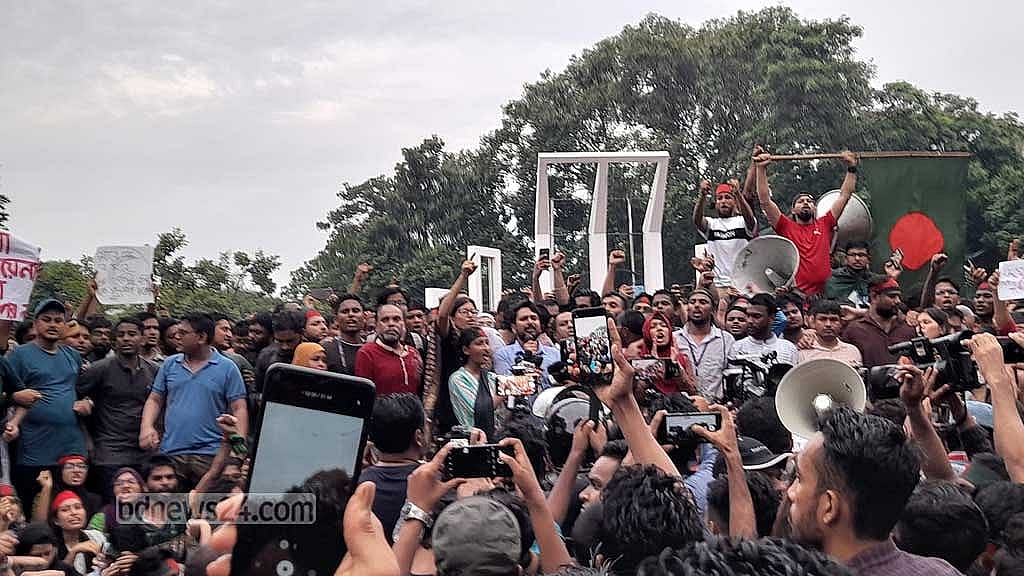
One motivating force for the July-Aug movement was the demand to express dissent which had been stifled for too long.
Speaking on the need to allow people to disagree without fear, Alvi Ahmed, a university student, says: “Not everyone has to agree to what’s going on and that is the pillar of a democratic society.
The government in power needs to listen to the dissenting voices and understand what is triggering the debate, instead of muzzling it.”
No doctrine should be foisted on the young, instead, they should have the freedom to analyse, dissect and debate an ideology, Alvi asserts.
Prima, a student of political science, believes that in the academic sphere healthy debates are essential and no subject should be treated as taboo.
In the end, almost all the young I spoke to agreed that to really create visible change, there has to be some radical shifts from the old ways of doing things.
Amidst the current air of hope and optimism, the youth sentiment echoed the line from Tagore: Ore Nobin, Ore Amar Kacha, Adh Morader Gha Mere Tui Bacha!
[Towheed Feroze is a former journalist!]