Published : 31 Jan 2026, 07:20 AM
Updated : 21 Aug 2026, 03:05 PM


Banners and festoons have brought an election look to Dhaka-11, but at roadside tea stalls the conversation is strikingly subdued. Voters talk less about manifestos than about fear: of clashes at polling centres, of “engineering” behind the scenes, and of whether their everyday problems will again be ignored once the ballots are cast.
The constituency straddles the northern bank of the Narai River, taking in Aftabnagar, parts of Banasree and Rampura, connected by narrow footbridges that locals cross daily. It was beside one such bridge in Aftabnagar, on Monday evening, that several residents shared their unease.
A part-time hardware shop worker from Banasree pointed towards Ideal School and College, a major polling centre.
“There could be clashes,” he said quietly. “There was violence here in 2018. The risk is still there.”
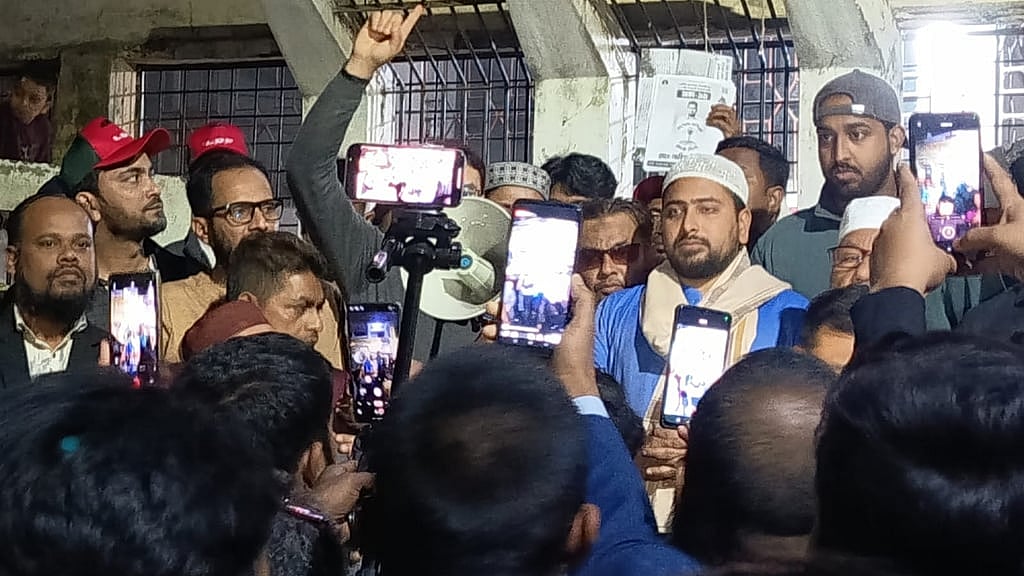
When asked who might clash, the six men at the tea stall fell silent. None wanted their names published. Even the shopkeeper, after initially giving his name, asked that it not appear in print.
Similar fears were echoed by residents across Banasree and Aftabnagar; worries about disorder at polling stations, claims that a “climate of fear” is being created, and repeated references to something more opaque: election engineering.
On Jan 24, National Citizen Party (NCP) Convenor Nahid Islam, one of the main contenders in Dhaka-11, publicly alleged that intimidation and violations of the electoral code were under way.
“A fearful environment has been created in this constituency,” he said during campaigning. “We are emphasising that people should not be afraid to vote.”
Nahid, contesting in his first election, repeated that concern in interviews, saying fear had become visible not only nationwide but in his own constituency.
Asked on Tuesday evening what exactly that fear entailed, a rival candidate from the Jamaat-e-Islami-led alliance dismissed the claim, without naming Nahid or any party.
“They are afraid they might lose,” he said. “That is why they are attacking and trying to create fear.”
A CROWDED FIELD, A POLARISED CONTEST
Dhaka-11 has become a microcosm of the post-July Uprising political landscape. With the Awami League absent from the ballot after being ousted on Aug 5, 2025, the main contest is widely seen as between the Bangladesh Nationalist Party (BNP) and Jamaat-aligned forces, with the NCP emerging as a key new player.
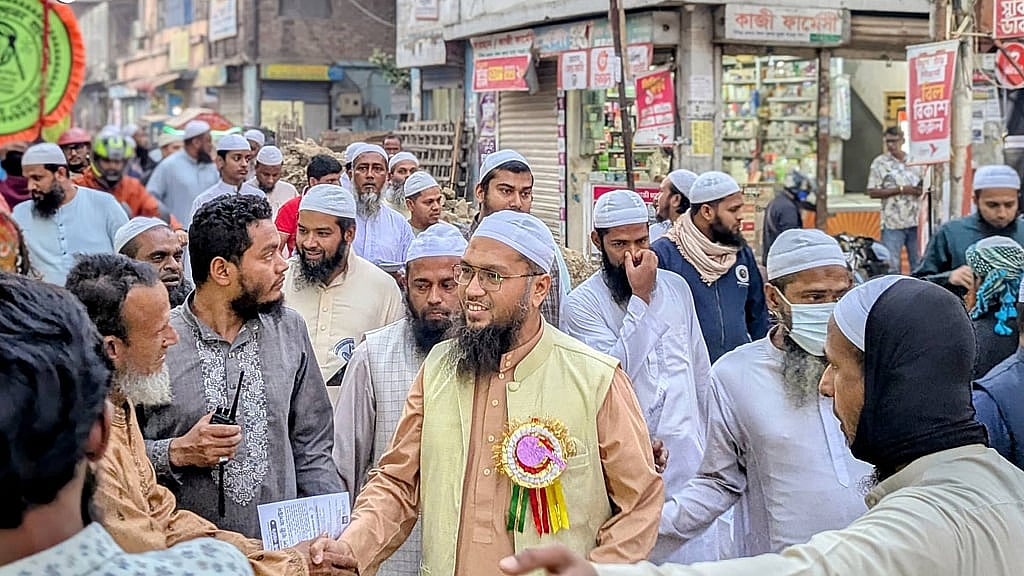
Among those in the race are BNP’s MA Quayum, Islami Andolan Bangladesh candidate Sheikh Md Fazlay Bari Masud, NCP’s Nahid, and several smaller party and independent candidates.
Jamaat has sought to expand its reach through an “11-party electoral alliance”, which includes the NCP and the Liberal Democratic Party led by Oli Ahmad.
The BNP, meanwhile, has accommodated former joint-movement partners in seat-sharing arrangements.
Nahid briefly joined the interim government after the Uprising before resigning to take charge of the NCP. While he speaks of fear, his party’s Rampura Coordinator Abdul Haque Talukdar Liton disagrees.
“By the grace of God, there is no threat here,” he said. “People, especially women voters, are with Nahid Islam.”
BNP’s Quayum struck a more cautious tone.
“We want tolerant politics and a peaceful election,” he said. “I don’t know why Nahid is talking about fear.”
But Quayum, too, voiced anxiety though not about street violence, but about manipulation.

THE SPECTRE OF ‘ENGINEERING’
Both the BNP and Islami Andolan candidates repeatedly returned to the same phrase: election engineering.
Dhaka-11 goes to the polls on Feb 12, alongside a national referendum. Many residents see the race as a three-way contest between Quayum, Nahid and Masud, whose “hand-fan” symbol could split votes in key neighbourhoods.
Masud, who secured more than 28,000 votes in the 2020 Dhaka North City Corporation election, has a strong institutional presence in Aftabnagar and Rampura, where he runs several educational establishments.
“If there is no election engineering, I will win,” Masud said. “I am confident about my votes. But whether the election is engineered, that is the real fear.”
Quayum echoed that concern, citing rumours circulating online and in local groups.
“Some people are saying candidates will win even without votes,” he said. “Who is predicting in advance who will become MPs or ministers?”
He warned that remnants of the old Awami League regime still occupy positions within the administration.
“That is why we are training our polling agents and keeping everything under live monitoring,” he said. “I hope the Election Commission will remain alert.”
VOTERS’ GRIEVANCES GO UNHEARD
For many residents, however, fear is only part of the story. Daily frustrations, such as gas shortages, mosquito infestations, gridlock and safety concerns, dominate conversation far more than ideology.
“Banasree has gas problems year-round,” said a private sector employee at a tea stall in Block C. “The Narai River exists only on paper. It’s now a garbage canal. Mosquitoes, traffic -- these problems will remain after the 12th of February.”
He added that while some areas were relatively safe, parts of South Banasree and Meradia were crime-prone and required targeted planning.
“No candidate is really focusing on this.”
Quayum has promised CCTV coverage, night guards and community-level surveillance to curb crime, while also pledging traffic reforms in Badda, Rampura, and Banasree.
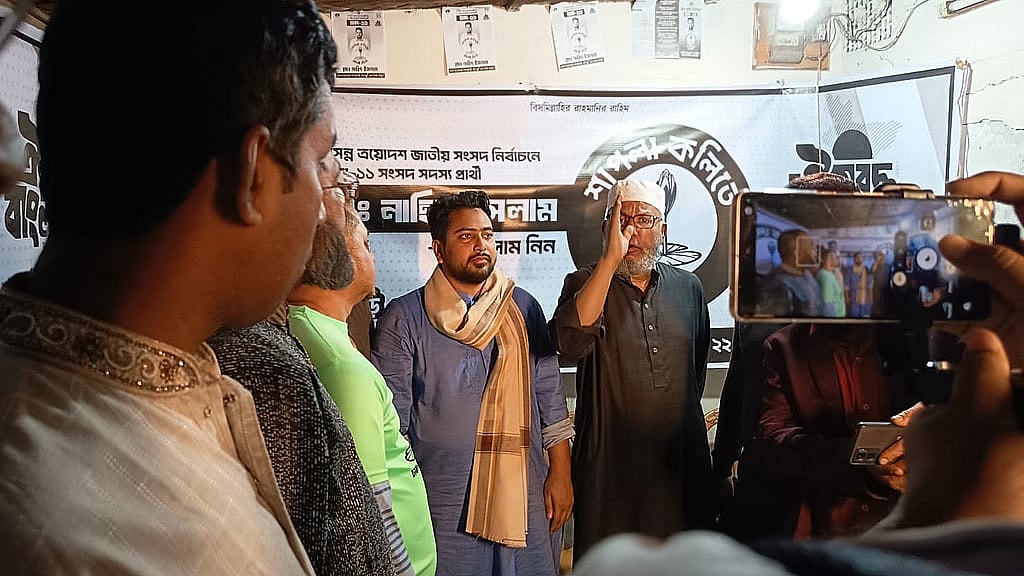
NCP's Nahid says his campaign has mapped neighbourhood-specific problems, from gas shortages and muggings to teenage gangs and women’s safety, as well as shortages in schools and hospitals.
CAMPAIGN DYNAMICS ON THE GROUND
Formal campaigning began nationwide on Jan 22. On the ground in Aftabnagar and Banasree, however, the most visible campaigns belong to Quayum and Nahid.
Observers note strong organisational backing from Jamaat activists in support of Nahid, particularly in Rampura and Banasree, areas that saw some of the fiercest violence during the July Uprising.
Supporters argue that Nahid’s role in that movement has given him credibility among young voters.
His rallies frequently feature Jamaat slogans and mobilisation, with chants of “Jamaat, NCP are brothers” echoing through neighbourhoods.
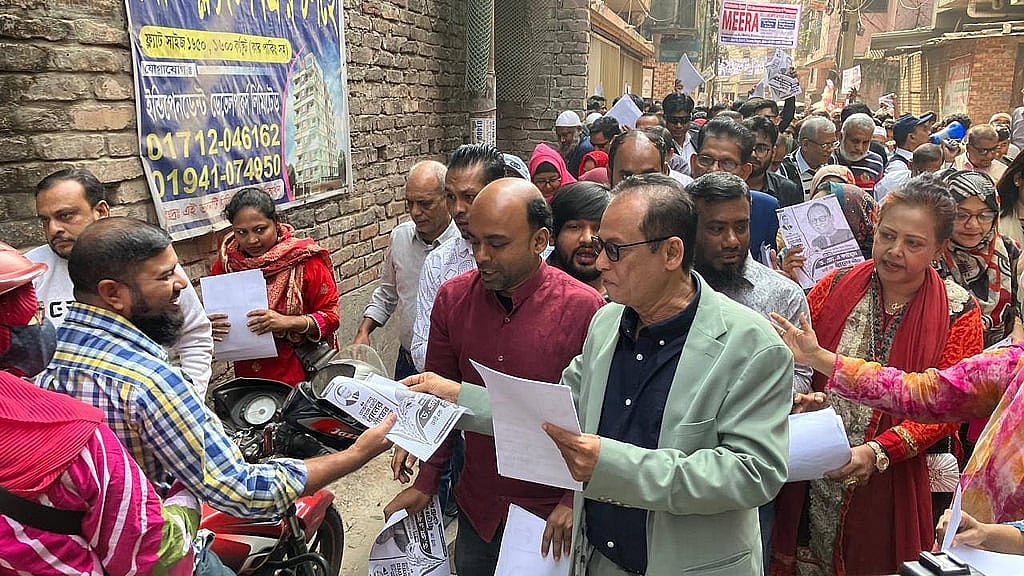
BNP activists counter that the NCP leadership has lost public trust, questioning its conduct and sudden rise after the mass uprising.
They emphasise Quayum’s long local record, having served as a ward councillor in Badda for more than two decades.
Pro-BNP organisers also concede shortcomings.
“Our banners didn’t stand out,” admitted Quayum’s Chief Election Coordinator Mahfuzur Rahman. “In Banasree and Aftabnagar, our visibility is still weak.”
As the campaign enters its final stretch, Dhaka-11 remains caught between uncertainty and fatigue. It is a constituency where fear, mistrust and unresolved civic problems shape the election as much as party loyalty.