Published : 16 Sep 2025, 09:02 PM
Updated : 21 Aug 2026, 01:49 PM


The Bangladesh government has been working to postpone the deadline for the country’s transition from a least developed country (LDC) to a developing nation, according to Commerce Secretary Mahbubur Rahman.
Still, he cautioned that it would “not be appropriate” to be overly optimistic about it.
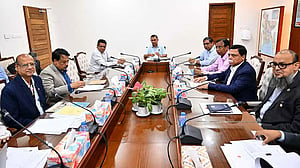
Mahbubur made the remarks at a workshop on LDC graduation organised by Research and Policy Integration for Development (RAPID) in Dhaka on Tuesday.
"I have spoken to a foreign team a few days ago to defer the graduation process. We are doing this quietly,” he said.
He explained that postponing the transition would require bringing a proposal to the United Nations General Assembly for a vote, something Bangladesh has already attempted once.
That, he said, was a major hurdle.
“Among those who compete with Bangladesh, the countries that you apparently consider the friendliest are the first to oppose it. Japan opposes it. Turkey opposes it. India opposes it. America opposes it,” Mahbubur said.
“How will you get it passed in the General Assembly session?”
He added that the government was seeking technical assistance from those very countries in an effort to prevent further opposition. “We are trying to take the side of those who are opposing so that they do not oppose,” he said.
Mahbubur suggested that a three-year deferral would be “very good” for the country’s economy.
“We are working. We are taking the opinion of experts on that… I hope that we will not make any mistakes in our efforts,” he said.
Bangladesh’s transition process began in 2018, with a final preparation period originally scheduled to end in 2024.
The COVID-19 pandemic prompted a two-year extension, setting the country’s official graduation date for Nov 24, 2026.
As an LDC, Bangladesh currently enjoys duty-free and quota-free access to European markets, a benefit that will expire once the country exits the category.
Business leaders have urged the government to delay the transition, citing the potential loss of trade benefits and the risks it poses to industries like pharmaceuticals and ready-made garments.
On Aug 24, leaders of 16 top trade organisations pressed for a three- to five-year extension.
At the RAPID event, Mahbubur also stressed the need for “alternative incentives” to support industry.
“Tk 100 billion has been taken from many of our projects,” he said.
“You give this Tk 100 billion in the form of incentives, see what happens to our industry. We need to make such efforts.”