Published : 21 Jan 2026, 12:29 AM
Updated : 21 Aug 2026, 03:02 PM


Senior BNP leader Amir Khosru Mahmud Chowdhury has said Bangladesh’s economy is “over regulated” and must move towards liberalisation to restore investor confidence.
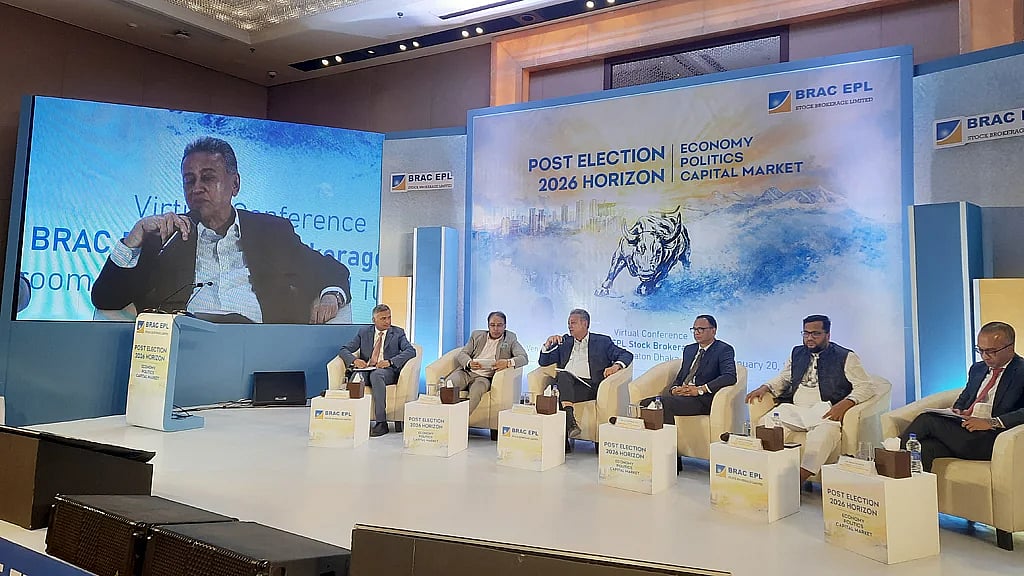
Speaking at a seminar in a Banani hotel on Tuesday, the BNP Standing Committee member argued that excessive control by regulators has distorted policy and weakened the capital market.
“Bangladesh is currently economically over regulated. We must walk the path of deregulation and liberalisation. Too much control cannot continue,” Khosru, a former commerce minister, said.
He noted that citizens are preparing for the Feb 12 election, which he described as a rare chance in nearly two decades for voters to form a government accountable to the people.
Khosru said many global fund managers, including expatriate Bangladeshis, are waiting to invest in the country’s capital market but demand “tough reform programmes”.
Bangladesh’s market capitalisation is less than 10 percent of gross domestic product (GDP), compared with nearly 200 percent in the US, 60 percent in India and 40 percent in Pakistan.
“It is surprising the economy has advanced this far despite an ineffective capital market,” he said.
He blamed reliance on banks for both short term deposits and long term lending, creating liquidity imbalances.
“Banks have lent indiscriminately. Some loans went into business, others were siphoned abroad, destabilising the financial sector,” he said.
Khosru warned that non performing loans, officially at 36 percent, could reach 40 percent once “window dressing” is stripped away.
“We must show investors a clear and credible balance sheet. If the situation is bad, let it be shown as bad. Only then can confidence return,” he said.
He stressed reforms in exchange rates, capital markets and trade policy, insisting that “the market must be allowed to decide”.
Transparency in the capital market, cleaning up “garbage accounts” and ending accounting manipulation were essential, he added.
Khosru argued that municipal and sovereign bonds could finance major projects such as aircraft purchases and railways, reducing dependence on IMF loans.
“Even institutions like JP Morgan could be interested if the right environment is created,” he said.
Foreign investors are waiting for the election outcome, he added.
“Once a government is elected, investment will follow. The biggest challenge for the next administration is to lift the economy from its current low level equilibrium. There is no alternative to reform.”
On listing state owned enterprises, Khosru said both public and private institutions should be brought to the market within the first 100 days of a new government, with tailored packages to ensure transparency and independence.