Published : 15 Jan 2026, 09:14 PM
Updated : 28 Aug 2026, 01:31 AM


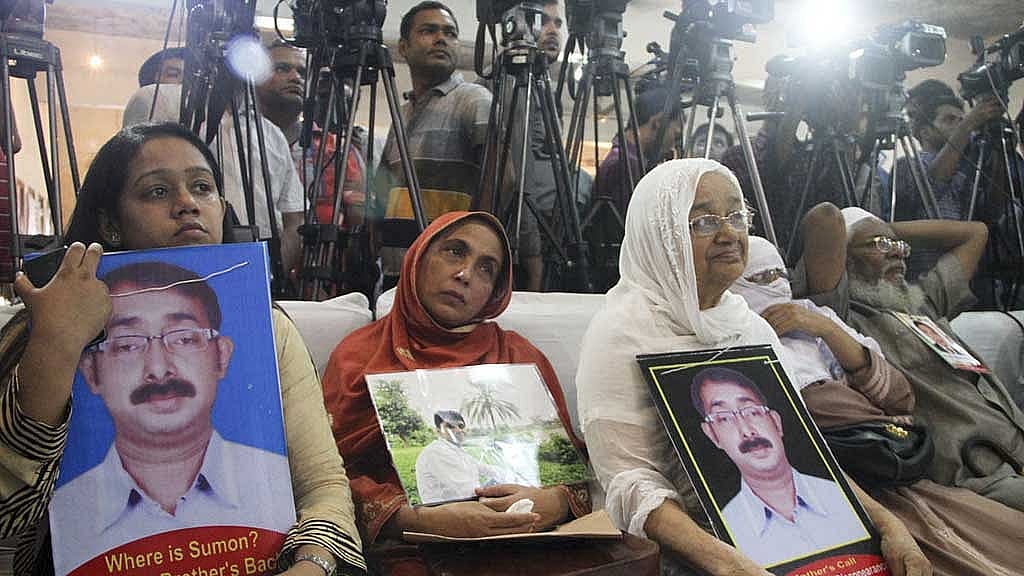
During the 15-year rule of the now-ousted Awami League, the largest share of victims whose political identity the Commission of Inquiry on Enforced Disappearances could verify were linked to Jamaat-e-Islami and Islami Chhatra Shibir.
But among party-linked victims who vanished and never returned, 68 percent were from the Bangladesh Nationalist Party (BNP) and its affiliate organisations, the commission says.
The findings appear in the commission’s final report, a lengthy document titled “Unfolding the Truth”, published on Tuesday. The 228-page report in English also sets out what it describes as the key motives behind these abductions and disappearances.
The commission says it received 1,913 complaints. After removing duplicate submissions and incidents it determined were not “disappearances”, it treated 1,569 as unique complaints.
The report says the political identity of 948 victims of disappearances between 2009 and 2024 could be established. Of them, 712 were Jamaat-Shibir leaders and activists. The commission found information on 205 BNP, Chhatra Dal and Jubo Dal leaders and activists.
Beyond that, the commission says it identified 11 victims linked to the Awami League and four linked to Hifazat-e Islam.
Among the victims, the report says 251 never returned. Of those, it could determine the political identity of 157. Earlier, on Jan 5, when the commission chief, retired High Court judge justice Moyeenul Islam Chowdhury, handed the final report to Chief Advisor Muhammad Yunus, he said 36 bodies had been recovered after disappearances.
The commission says that among the still missing, 68 percent were BNP, Chhatra Dal and Jubo Dal leaders and activists. Jamaat-Shibir accounted for 22 percent. Awami League leaders and activists also appear in the missing list at 7 percent.
Speaking earlier about the identities of those missing, the commission chief said: “Most of them are political persons. The commission has recommended all possible measures to identify them, including DNA testing.”
Pointing to evidence that law-enforcing agencies were deployed for such operations on the basis of political decisions, he said the inquiry identified 40 “detention centres”. Of those, 22 to 23 were linked to RAB, he said.
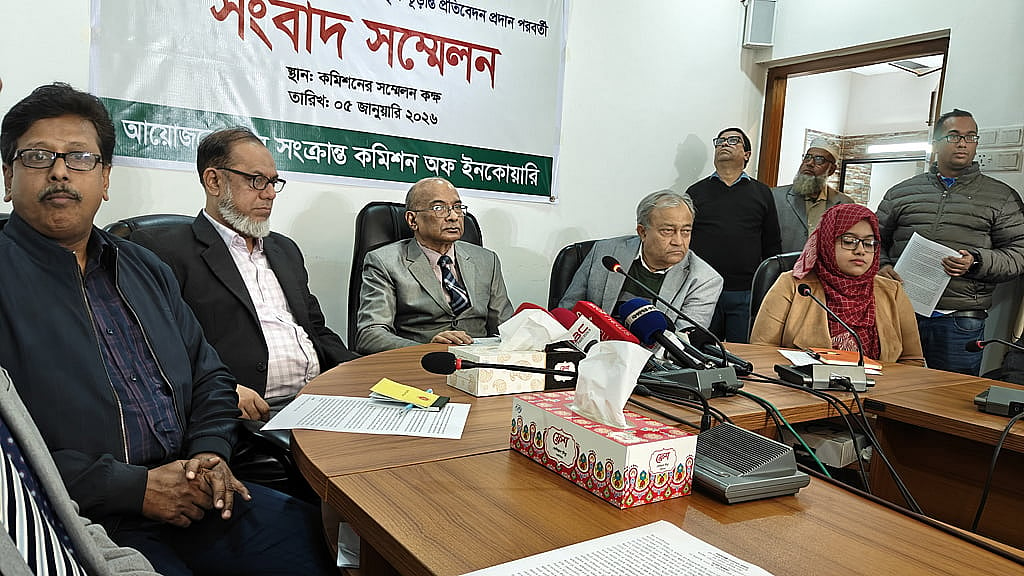
On the day the final report was submitted, the commission said these disappearances were politically motivated crimes.
The commission submitted its first interim report to the chief advisor on Dec 14, 2024. The next day, parts of that report made public claimed evidence of the involvement of former prime minister Sheikh Hasina as a “directive-giver” in disappearances.
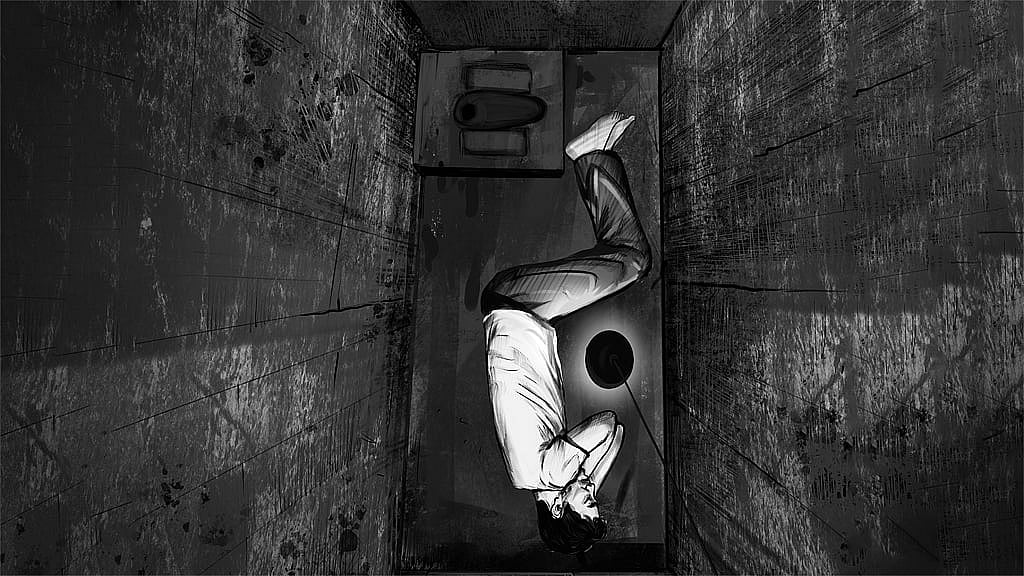
On Jun 4, 2025, the commission handed over its second interim report to Yunus. That report included descriptions with illustrations of torture and enforced confessions, based on accounts from victims and witnesses, including members of law enforcement.
After details and allegations emerged through the commission’s work, formal charges were submitted on Oct 8, 2025, at the International Crimes Tribunal in two cases against the deposed former prime minister Sheikh Hasina. Trials involving several former and serving Army officers are also under way.
Beyond decisions taken at the highest level of the state, the commission says disappearances occurred over the Awami League government’s 15-year rule through the instigation of officials from different forces and intelligence agencies, influential Awami League leaders, and powerful individuals inside government, leading to indiscriminate abuses.
The issue of “disappearances” and the “Aynaghor” secret cells resurfaced after the Awami League government fell in the face of a fierce student-public uprising. After taking office, the interim government formed a five-strong commission on Aug 27, 2024, headed by Justice Moyeenul, to look into the allegations.
The report sets out a range of issues — the reasons behind disappearances, who was involved, who led operations, which agencies carried out more disappearances, the “Aynaghor” facilities that became a focus of public discussion, torture cells, methods of torture, how killings were carried out, and how interrogations were conducted.
In describing interrogations, the commission also cites accounts from victims who were held by different forces and says some detainees reported being questioned by English-speaking foreigners, referred to in the report as "foreign guests".
The said many armed forces officers who served on deputation in agencies such as RAB, NSI and DGFI during the previous government became “involved in enforced disappearances and extortion”.
Saying these agencies had been “misused” in the past, Justice Moyeenul argued that ending such abuse would require “firm political will”.
The report recommends withdrawing armed forces officers from law enforcement and civilian intelligence agencies, citing repeated “misuse” of intelligence bodies over time.
After submitting the report, the commission chief said at a press conference, “Every intelligence agency in this country must be reformed. Our intelligence agencies ‘stick their nose’ into internal politics because they want to be part of power.
“They have been misused. DGFI went and took over Islami Bank on behalf of S Alam. Was that DGFI’s job? Or is seizing a media house the job of any intelligence agency or DGFI? They have been misused in many ways.”
The commission considered the period from Jan 6, 2009, to Aug 5, 2024 as the Awami League’s rule for its inquiry.
After handing over the final report on Jan 5, a briefing said: “Evidence has been found that, in high-profile disappearance cases, the then prime minister Sheikh Hasina, her defence and security advisor retired major general Tarique Ahmed Siddique, and the then home minister Asaduzzaman Khan were directly involved.”
The briefing cited several high-profile victims, including BNP leader M Ilias Ali, Hummam Quader Chowdhury, Salahuddin Ahmed, and Chowdhury Alam, Jamaat leader and former brigadier general Abdullahil Aman Azmi, Ahmad bin Qasem, and former ambassador Maruf Zaman.
Commission members said the former prime minister herself was a direct “directive-giver” in many cases. They added that information indicating victims were “rendered” to India -- transferred secretly without legal process -- points to operations being carried out on instructions from the “highest level” of government.
The commission says its investigation found the highest number of killings and disposal of bodies linked to the Baleshwar River in Barishal. Hundreds of victims of enforced disappearance were killed and dumped in that river, it said.
It also says the investigation found evidence of bodies being disposed of in the Buriganga River and in Munshiganj.
WHEN ENFORCED DISAPPEARANCE ROSE AND FELL
The report said, “It is crucial to understand the timing of these incidents to understand who the victims of enforced disappearance were. When we review the year-on-year trends, it does not appear to be merely sporadic law enforcement. Rather, the fluctuations in numbers emerge against the backdrop of political pressure, elections, security crises, and changes in institutional policy.”
Providing an annual account of enforced disappearances from 2009 to 2024, the disappearance inquiry commission said: “It is evident here that after a gradual increase following 2009, there was a sudden spike in 2012, and the numbers remained high during the middle of that decade.
“The decrease in numbers in 2018 does not mean this practice ceased. Rather, even these smaller figures represent a significant scale.”
From a count of 10 in 2009, the number of disappearances rose gradually to 61 in 2012. After a leap to 128 in 2013, the figure dropped to 95 in 2014. Following 141 incidents in 2015, the number reached 215 in 2016.
Subsequently, the commission recorded 194 cases in 2017, 192 in 2018, and 118 in 2019.
After a combined total of 107 incidents over the following two years, the figure stood at 110 in 2022. Finally, there were 65 disappearances in 2023 and 47 in 2024.
The commission noted it is important not to interpret this as an exact annual record. This data is based on available information.
Individuals who went missing years ago and later returned may not have approached the commission due to trauma or fear, it added.
“There may be silent incidents from the early years that will never surface in the data. For this reason, what we see here – especially the figures before 2012 -- should be read as minimum estimates rather than a full count.”
Highlighting the correlation with political shifts, the report said the spike in 2013 and the instability surrounding the January 2014 election occurred simultaneously, a period marked by widespread protests and the suppression of the opposition.
“A similar trend was observed surrounding the 2018 election, preceded by extensive police activity and preventive detentions. Although not election-centric, the renewed street protests and opposition in 2022 are also reflected in these numbers.”
The report commented that security crises played an additional role: “Counter-terrorism operations intensified following the 2016 Holey Artisan Bakery attack. In the following years, the line between political control and counter-terrorism policing became blurred.
“Because the same institutions and the same officers worked simultaneously in both areas, illegal methods continued with them.”
The report also noted that changes in force leadership influenced the fluctuations.
It said the departure of former Army official Ziaul Ahsan from the RAB additional director general (Operations) position in 2016 coincided with a gradual decline in the number of individuals who went missing entirely.
“This does not mean that the use of force has stopped. Rather, this use of force evolved; fewer people were vanishing completely.
“During the same period, however, individuals were shown as being in custody and subjected to fabricated judicial proceedings.”
According to the inquiry commission’s year-on-year data on 286 missing persons (those who never returned), the highest number of permanent disappearances was 45 in 2013, with 2016 seeing the second-highest total of 41.
After the number of missing persons dropped to 22 in 2017, it remained below nine in the subsequent years. In 2021 and 2022, the number of missing persons was two each year.
The records show eight missing in 2009, 22 in 2010, 34 in 2011, 30 in 2012, 28 in 2014, and 20 in 2015.
The report suggests a different trend emerges when analysing those who never returned: the number of missing persons was highest between 2011 and 2016, then dropped sharply.
While enforced disappearances continued after 2017, the number of those who vanished entirely was much lower, it added.
“This indicates a shift in policy and practice. In the earlier years, death or permanent loss was a common outcome. In later years, there was a higher frequency of detention, intimidation, and eventual appearance through legal processes. The management of coercion remained effective, but the outcomes had changed.”
WHY DISAPPEARANCES, MISSING PERSONS ARE NOT PROPORTIONAL
The commission said the data for enforced disappearances and permanent missing persons among members of Jamaat-e-Islami and Shibir, alongside the BNP (including its affiliates), is not proportional due to changes in timing and law enforcement policy.
The report states, “Two political families were affected, but not in the same way. Two distinct patterns of loss are evident.
“Firstly, the number of Jamaat-e-Islami and Islami Chhatra Shibir members among those undergoing trial after detention, harassment, surveillance, and criminal cases is relatively higher.
“In contrast, BNP activists and affiliate organisations were made to disappear, and in many cases, it appears they were eliminated rather than returned.”
Data indicates that a significant portion, around 70 percent, of the BNP victims killed fall within the period prior to 2016. Conversely, incidents of resurfacing after 2016 suggest a higher number of victims from Jamaat and Shibir.
“This does not mean one group survived exclusively while the other did not. Rather, it reflects a shift in methods and outcomes within the overall system of political repression over time.”
Explaining this difference, the commission stressed two factors: “Firstly, the intensification of the ‘war on terror’ post-2016 changed the incentives. Presenting detainees alive, particularly ‘bearded’ individuals from Jamaat and Shibir, helped portray Bangladesh internationally as a partner in counter-terrorism.
“Mass killings were not required for political control; the necessary international legitimacy was being obtained through detention, trial, and controlled resurfacing. It is important to note that the Counter Terrorism and Transnational Crime (CTTC) unit was established with significant US funding.”
The report also highlighted that institutional leadership changes played a role: “Officers like Ziaul Ahsan, who played a frontline role in the use of lethal methods, were promoted and moved out of RAB in 2016.
“The highly efficient system they created did not vanish; it simply took time to replicate. In the interim, the methods were adapted for different uses rather than being abolished.”
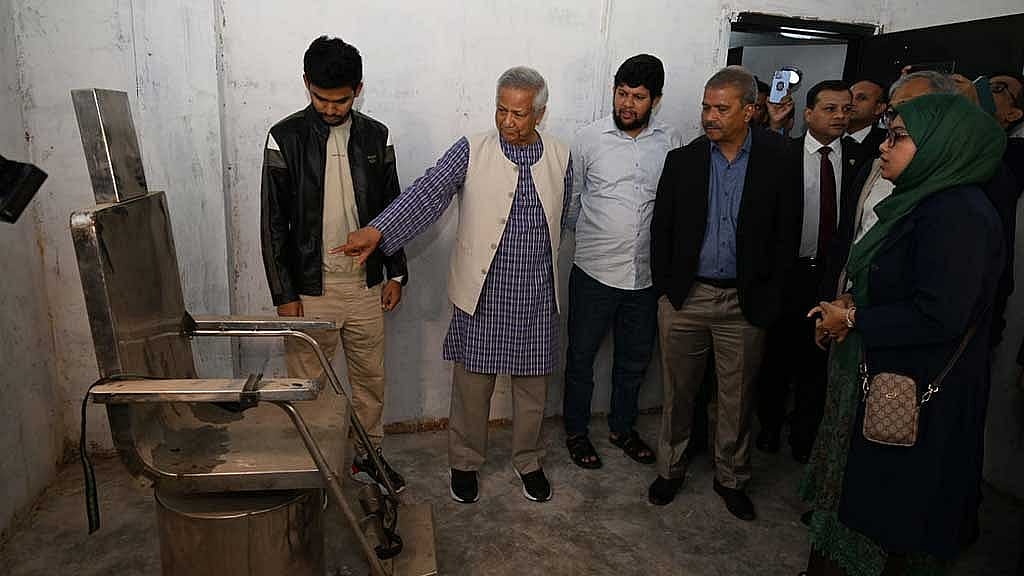
Yunus photo caption: During the tenure of the ousted Awami League government, many individuals were detained in secret chambers used as clandestine prisons. Following the change in government, Chief Advisor Muhammad Yunus visited three such detention centres, which have gained notoriety under the name “Aynaghor”.