Published : 23 Apr 2026, 07:10 AM
Updated : 21 Aug 2026, 03:38 PM


Parabon Plunder: A Forest Unprotected
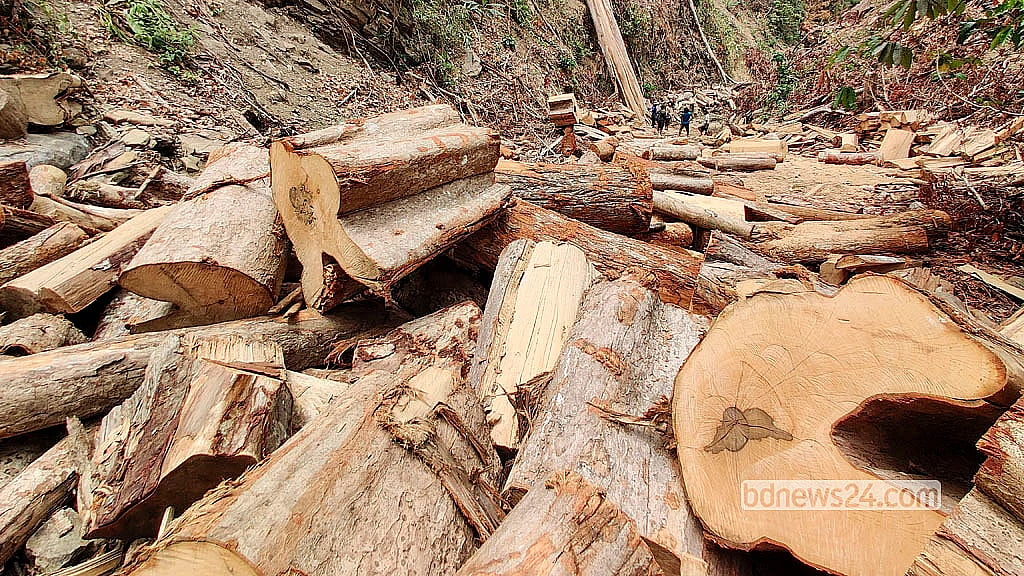
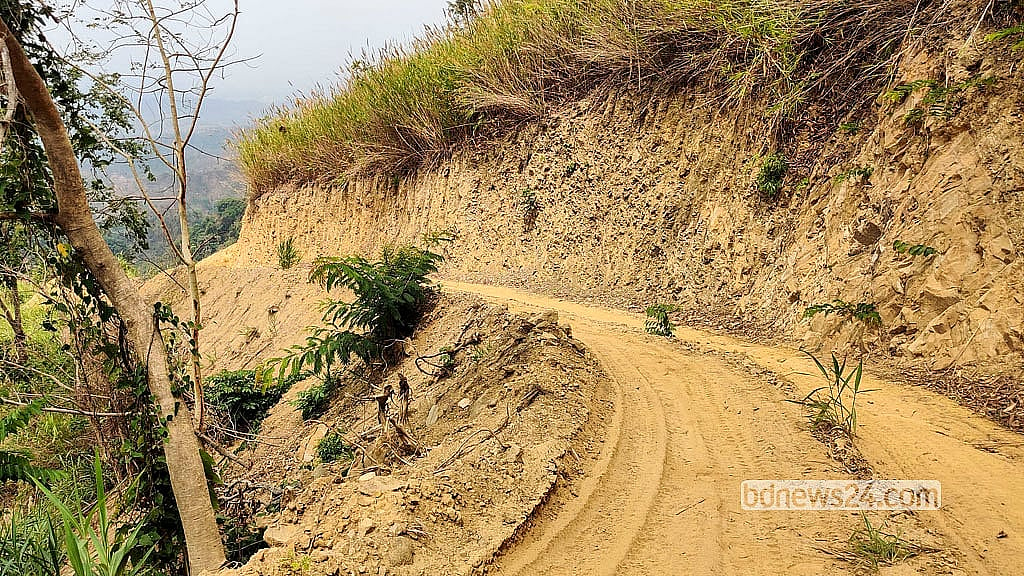
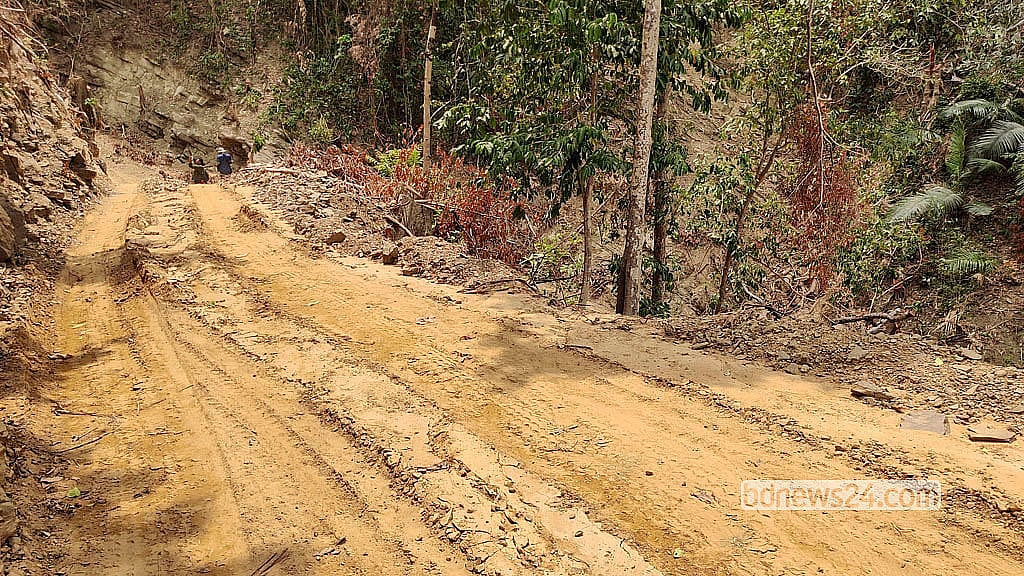
Slicing through the slopes: Illegal trails are being carved into the hills to haul timber from the Parabon forest. Lush ridges are being stripped bare, leaving behind a scarred landscape of fresh stumps and devastated community woodland.
Water source in peril: The vital Byangjhari stream is being choked by logging debris, severing a lifeline for six villages. As the canopy vanishes, the water flow is failing, driving away wildlife and threatening local survival.
Shadow economy of logging: Hidden labour camps use chainsaws and solar power to exploit the hills under cover of night. Despite local protests, bureaucratic inertia has allowed this illegal trade to flourish at the expense of the environment.
At nearly 2,500ft above sea level, the winding Alikadam–Thanchi road cuts through Bandarban’s lush hills, where clouds drift between green ridges and sharp bends dissolve into silence. Beneath that calm, however, a quieter devastation is unfolding.
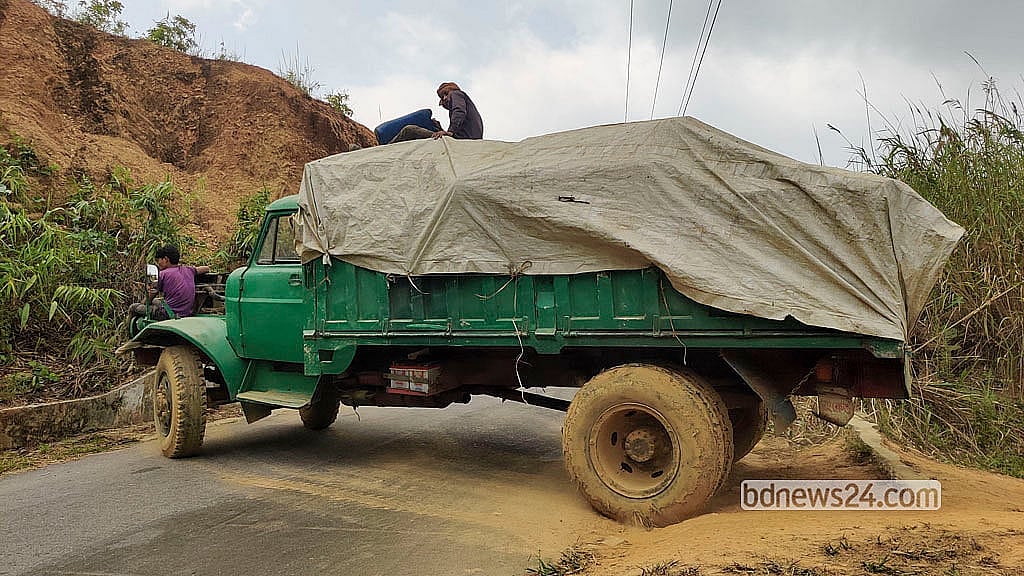
At the 23km point near Dim Pahar, a narrow, vine-covered trail veers off the main road -- barely visible, almost deliberately concealed. Yet at around 10:30am on Monday, a tarpaulin-covered truck emerged from that path, carrying freshly felled timber.
Two workers sat inside. Another fled into the forest upon seeing cameras.
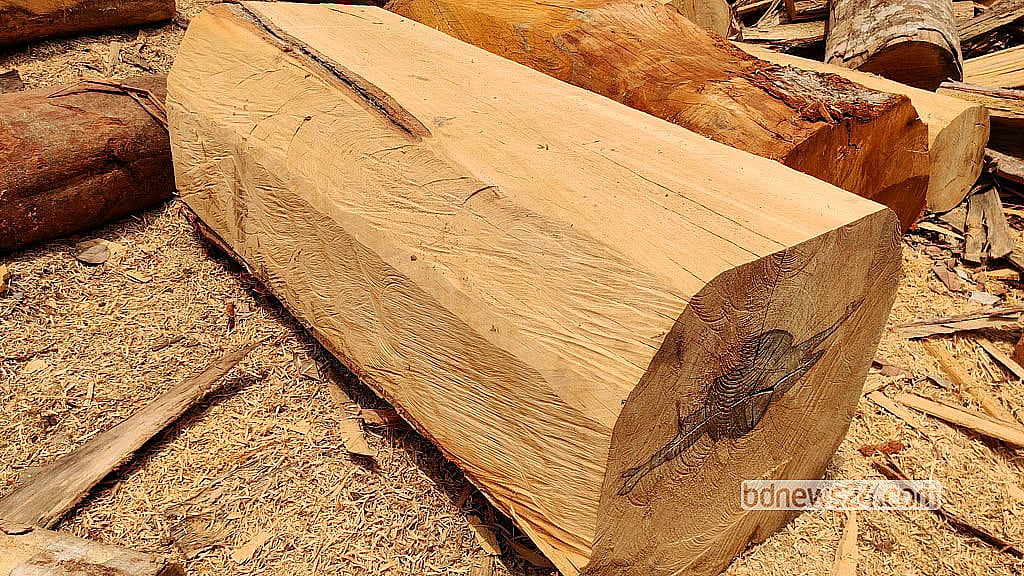
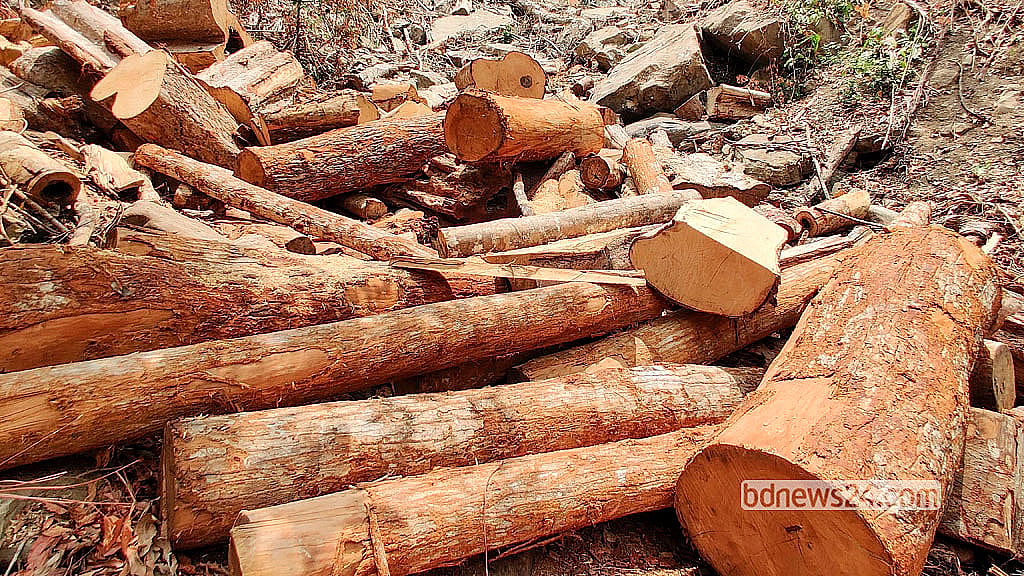
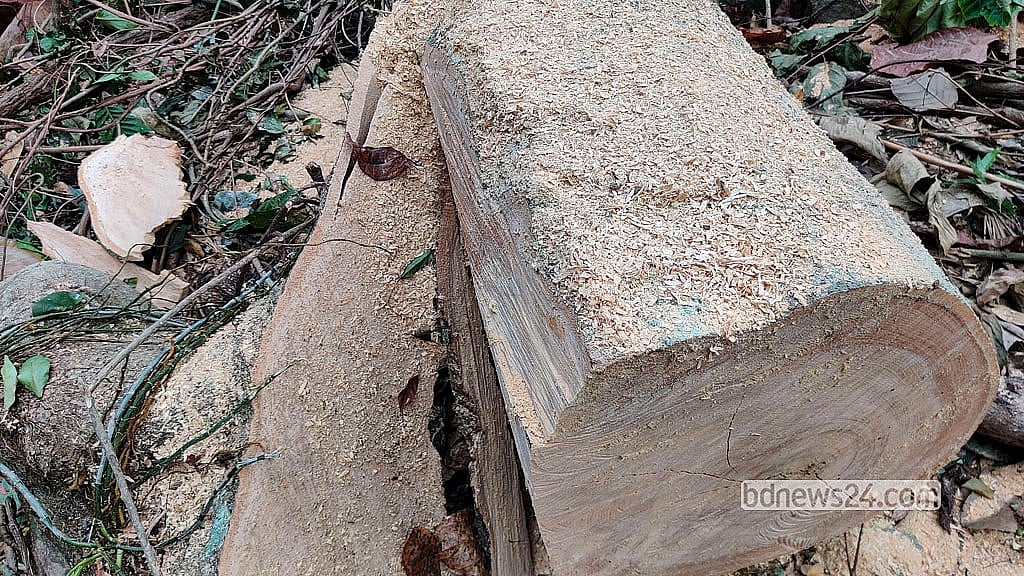
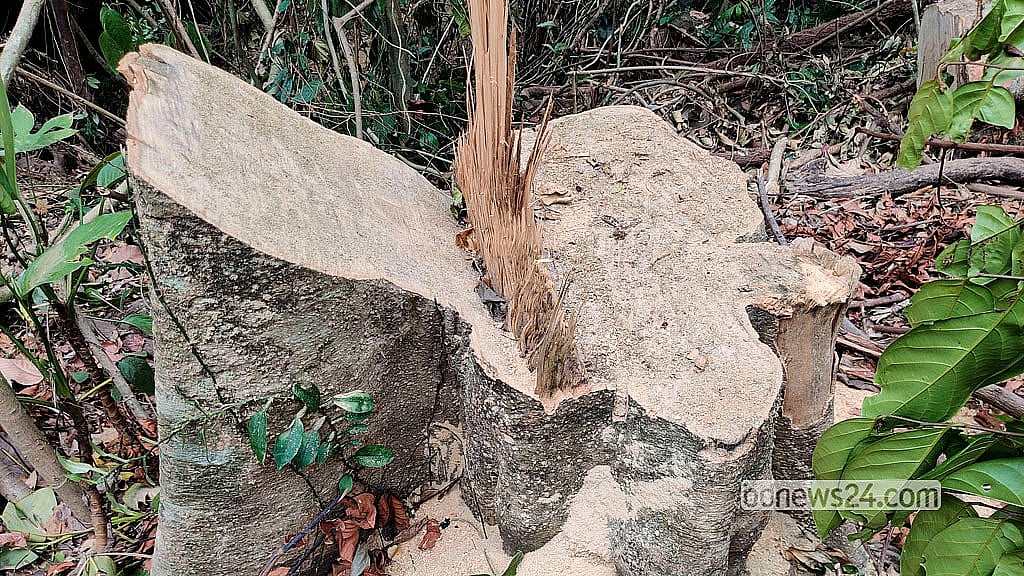
Following the trail downhill for 15 minutes reveals the scale of the damage: stacks of freshly cut logs, some split in half, others squared into timber blocks. Tree stumps dot the slopes. Leaves remain green; the soil is still damp -- signs of very recent felling.
Further down lies “Byangjhari”, a stream now partially buried under piles of logs. Over a roughly 2.5-kilometre stretch, large trees of the “Parabon” forest -- community-managed woodland -- have been systematically cut.
A Forest Without Guardians
Known locally as Parabon or reserve forest, these areas are preserved by indigenous communities for shared use. While community-managed, felling large trees requires approval from the forest department.
Yet here, hills and rocks have been cut to create makeshift roads to haul timber out of the forest.
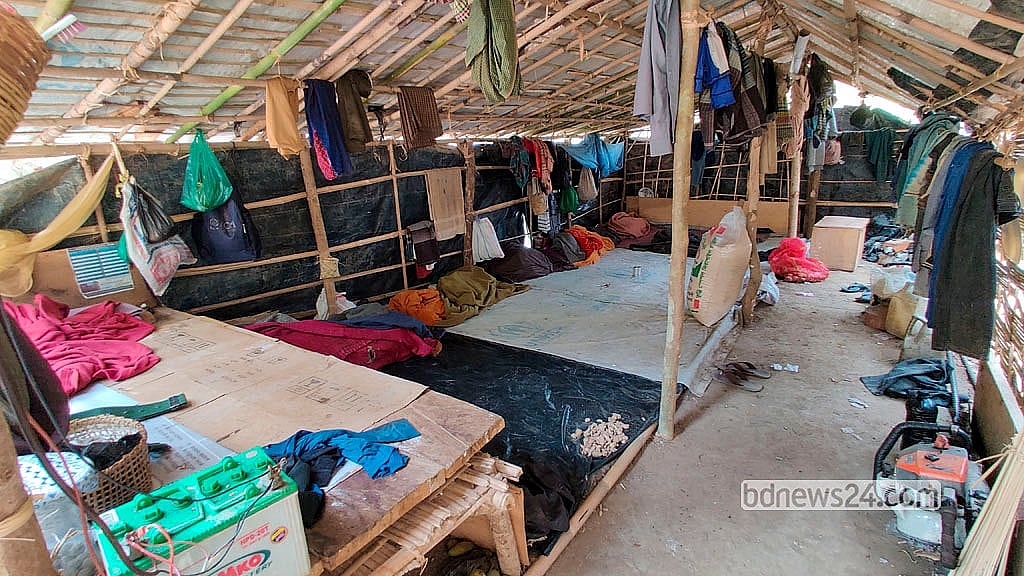
Nearby, two makeshift labour huts stand by the stream. Inside are chainsaws, solar panels powering water pumps, and space for nearly 10 workers. Clothes hang outside; cooking continues.
Md Ismail, a labour supervisor from Chakaria, said he was brought here three to four months ago by timber trader Abu Han Ismail.
“We are people who survive on daily labour,” he said. “Work is uncertain back home. We came here hoping for steady work.”
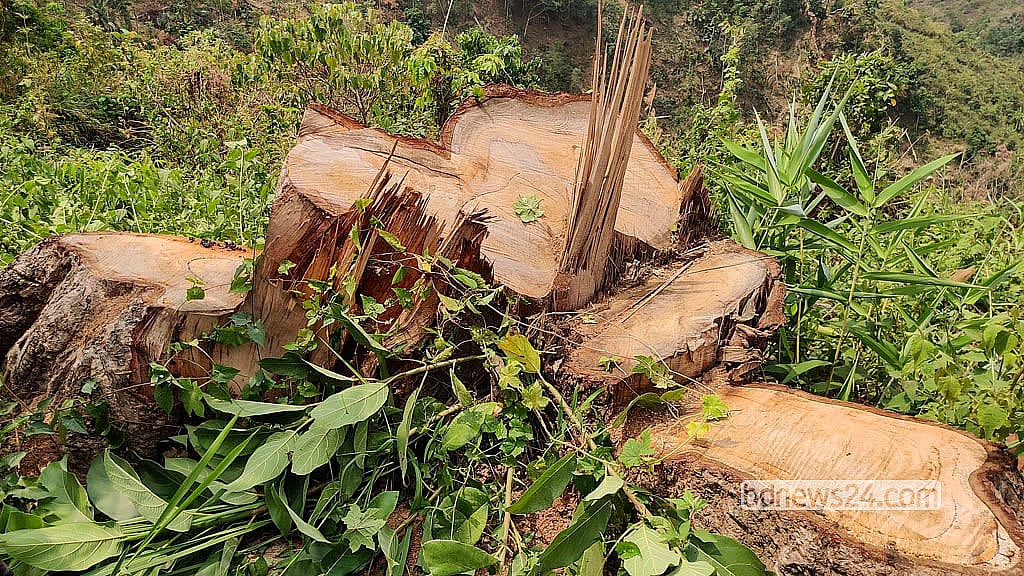
He said seven to eight workers were cutting trees for daily wages of Tk 400–500. Most were lali and tula trees, along with a single valuable boilam (dipterocarp) tree.
“Cutting is done for now,” he claimed. “Now the logs are being transported -- once, sometimes twice a day.”
Another worker, Shamsul Alam, said he arrived 18 days ago, earning Tk 450 daily.
But the forest suggests otherwise -- fresh cuts, damp soil, and recently felled trunks indicate that logging continued until very recently.
Denial and Blame
Contacted by phone, trader Abu Han Ismail denied cutting trees.
“I only bought wood for fuel,” he said. “It was supposed to be leftover after jhum cultivation.”
He blamed another group from Thanchi for felling large trees and building roads. “I got involved by mistake,” he said. “I will leave this business.”
Yet local residents say logging continued even after journalists left, with timber hauled through the night and hidden routes used to avoid detection.\
Water Runs Dry, Voices Ignored
“Byangjhari” -- named for the frogs that once thrived in its waters -- sustains at least six villages. Now, its flow is weakening.
“Before, water flowed well,” said resident Menchong Mro. “Now it doesn’t.”
Residents say logging began in late 2024 and has continued despite repeated attempts to stop it. Written complaints were filed with the army zone and local administration earlier this year -- but no visible action followed.
“They said action would come after elections,” said Lairu Mro. “It never did.”
In some places, logs and debris from hill cutting have obstructed the stream, affecting access to drinking water. Residents say water flow has already declined.
The forest’s wildlife -- wild boar, deer, jungle fowl, even bears once seen in the area -- has also begun to disappear.
Authorities Promise Action
Forest rights activist Juamalian Amlai blamed the forest department: “Such logging cannot happen without their involvement.”
Forest officials, however, cited jurisdictional limits and manpower shortages.
Range officer Khandakar Ariful Islam said the area falls within administrative boundaries but lacks active forest presence. “Still, we will act in coordination with the administration,” he said.
Divisional Forest Officer Mostafizur Rahman said orders have been issued and a drive will begin soon.
Alikadam Upazila Executive Officer Md Monjur Alam said a joint operation with police and forest officials is imminent.
“If not stopped now, it will only grow,” he warned.
For now, trucks continue to slip through hidden trails, hauling timber past a dying stream that once sustained entire villages.