Published : 21 Apr 2026, 07:13 AM
Updated : 28 Aug 2026, 01:33 AM


The Diesel Debt: Plough in Peril
Stagnant queue: Farmers report losing entire workdays waiting at pumps; a recent price hike to Tk 115 per litre has crippled the 2.13 million machines that drive modern cultivation.
Fertiliser gap: Despite official assurances, growers in Kurigram and Dinajpur report receiving only half their required rations, forcing them into the predatory open market to save their yields.
Vanishing margins: With production costs climbing to Tk 1,150 per maund while market prices stagnate at Tk 1,050, farmers are effectively paying to work, facing losses of Tk 100 per maund.
Yields at Risk: The BRRI warns that irrigation delays during the current heatwave could lead to grain sterility (chita), potentially devastating the country’s single most important rice cycle.
Policy vs Reality: While the DAE touts “fuel cards” and systemic stability, economists warn that this “triple squeeze” will permanently shrink the national food production base without urgent intervention.
In the vast rice fields of Bangladesh, the rhythm of the agricultural calendar rarely pauses. But this season, it is strained -- interrupted by queues for diesel, shortages of fertiliser, and rising costs that farmers say are steadily eroding the fragile economics of cultivation.
It is the peak of the Boro season, the country’s single most important rice harvest period. Across regions, farmers are cutting ripe paddy, even as others prepare land for the next aus crop cycle.
Yet behind the visible activity lies a growing unease: whether they will be able to afford the next harvest at all.
Nearly 60 percent of Bangladesh’s total rice production comes from the Boro season. It is a crop cycle increasingly dependent on mechanisation.
From irrigation to harvesting, from ploughing to spraying pesticides, diesel-powered machines now dominate almost every stage of cultivation.
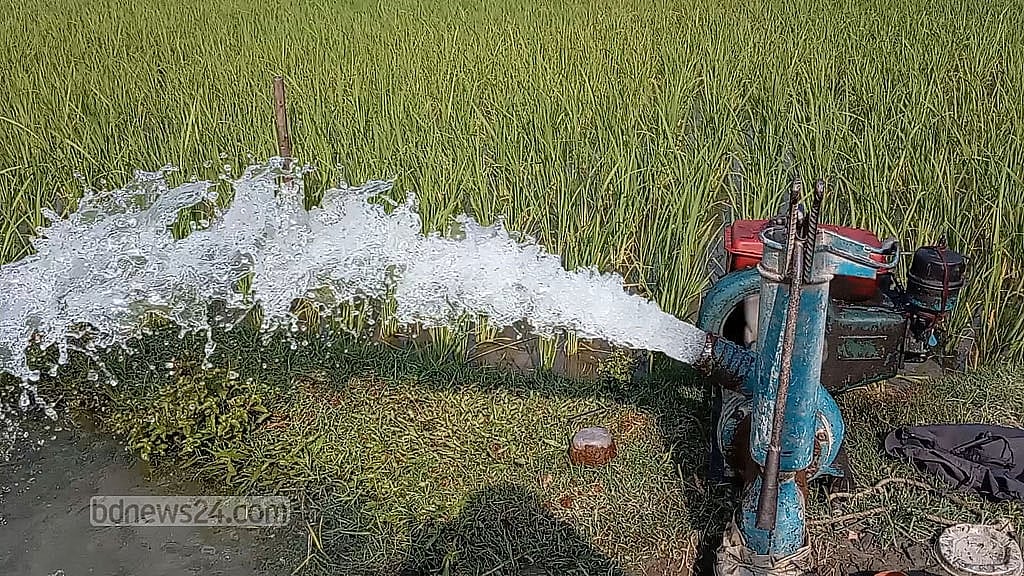
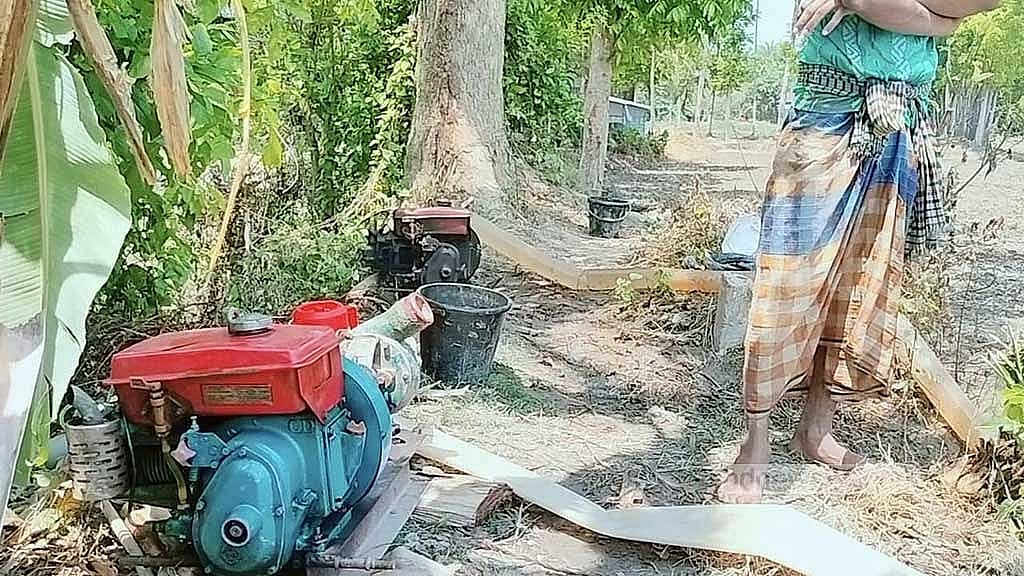
Shallow tube wells pump groundwater into fields. Power tillers prepare soil. Combine harvesters cut and thresh rice. Sprayers run on motorised systems. All of them, farmers say, depend on one critical input -- diesel.
And that input, they say, is becoming harder to secure.
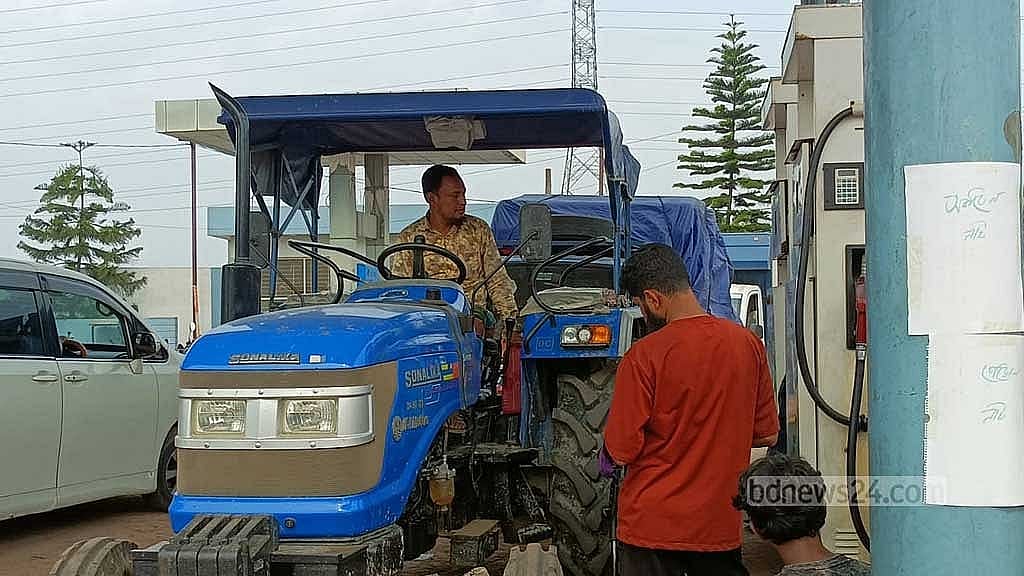
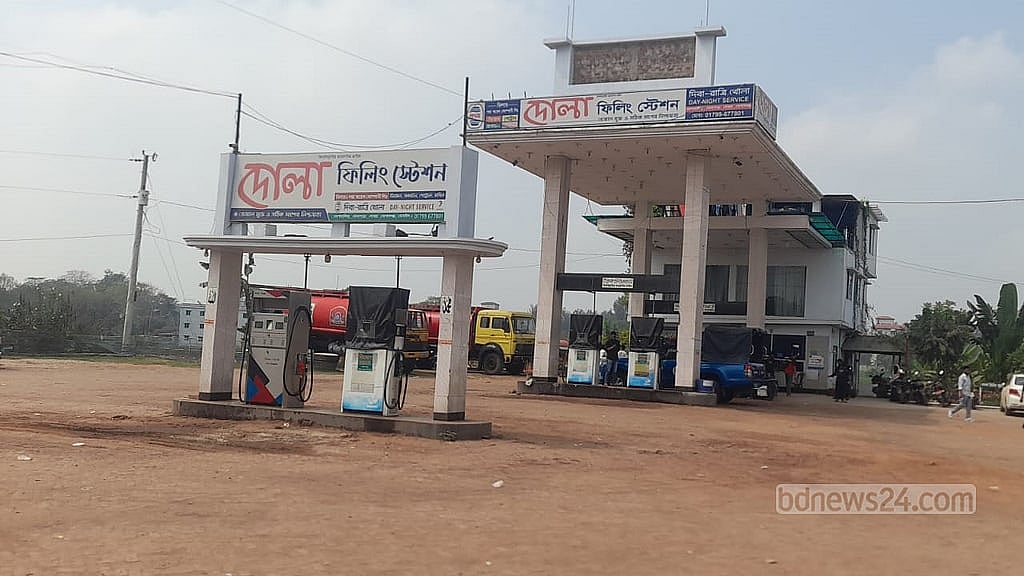
Fuel shortages have forced farmers and machine operators into long queues at filling stations. Even when fuel is available, supplies are limited.
In some cases, farmers report waiting an entire day only to return with minimal quantities. The strain has been compounded by a recent price increase, raising diesel costs by Tk 15 per litre to Tk 115.
In the midst of all this, the Bangladesh Rice Research Institute (BRRI) has warned that during the ongoing heatwave, uninterrupted irrigation is essential.
Any water stress in paddy fields, the institute cautions, risks grain sterility -- commonly known as “chita” -- which can significantly reduce yield.
Agricultural economists now argue that the twin pressures of fuel shortages and rising costs are converging at a dangerous moment.
They say diesel supply must be ensured without disruption if Bangladesh is to protect its food production base. Alongside this, they recommend increased subsidies to shield farmers from escalating input costs.
Days Lost in Queues, Season Lost in Costs
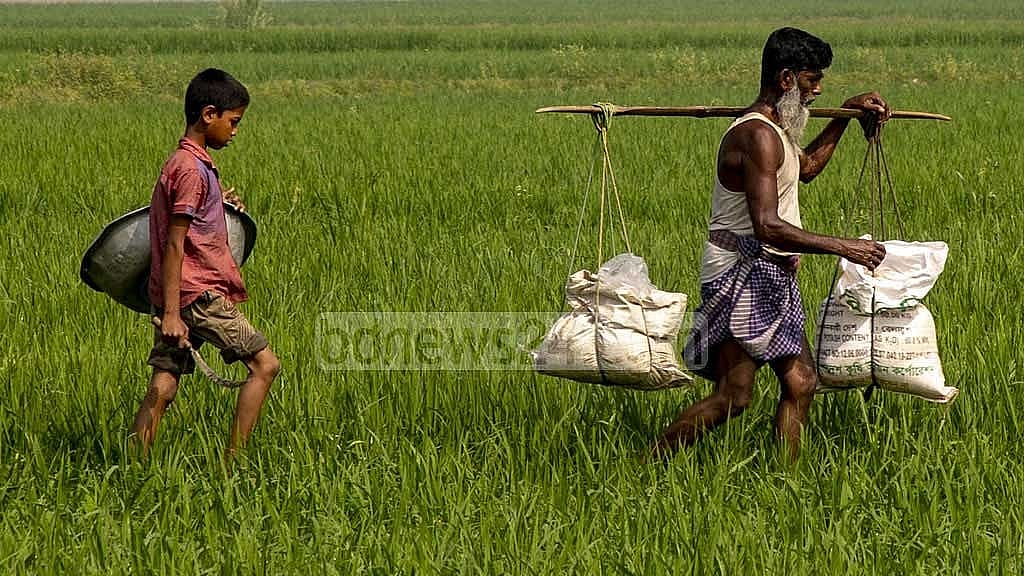
In Kurigram’s Roumari Upazila, farmer Ershadul Haque is managing both rice and maize cultivation across 9 bighas of land, roughly equivalent to about 1.2 hectares. But his description of farming today is not one of fields and harvests -- it is one of waiting.
“I have to leave labour and run for fertiliser at 4am,” he said. “It takes until 2pm just to collect fertiliser. Even after paying, I only get one sack. And even that doesn’t come on time.”
Fuel shortages, he added, have made matters worse.
“I went for diesel at 6am and came back at 10pm. The whole day is gone just in the queue,” he said. “Labourers now demand Tk 700 to Tk 800 a day. Even if I want to work, I cannot manage everything at once.”
Ershadul estimates that production costs have now risen to Tk 1,100–1,150 per maund of rice. But market prices hover around Tk 1,050.
“That means we are losing Tk 50 to Tk 100 per maund,” he said quietly.
For farmers like him, the arithmetic of survival is turning increasingly negative.
Fuel Stress Spreads to the Hills
The crisis is not limited to the plains. In the hill district of Rangamati, farmer Kapru Marma cultivates about 40 percent of a “Kani” of land (around 0.48 hectares). His fields include both high and low terrain, but it is the upland plots that are most affected.
“In low land we can use natural water sources,” he said. “But the real problem is in the high land cultivation.”
Fuel access, he said, is limited to Rakhali market in the locality. Even there, supply is unreliable.
“Sometimes we get 1 litre, sometimes 2 litres. We have to go between 4pm and 5pm, and even then not everyone gets it,” he said. “Now that diesel prices have increased, harvesting costs will also go up.”
A System Under Strain
According to the Department of Agricultural Extension (DAE), Bangladesh’s agriculture sector currently operates more than 2.13 million diesel-powered machines.
These include deep and shallow tube wells, low-lift pumps, power tillers, tractors, combine harvesters, and threshing equipment.
Among them, more than 10,726 are combine harvesters and nearly 496,805 are threshing and related machines.
Officials say the sector has been facing investment constraints. Due to subsidy limitations, no significant new supply of combine harvesters has entered the market in the last two years.
As a result, a portion of existing machinery is now out of operation due to lack of maintenance and repair.
This has forced partial reliance back onto manual labour in some places, compounding the increasing production costs.
Disputed Fertiliser Supply
While farmers across multiple districts report fertiliser shortages, some agricultural officials deny any systemic supply gap.
In Gaibandha, where maize, chilli and other crops are cultivated extensively along the riverine char lands of the Teesta, Jamuna and Brahmaputra, farmers say fertiliser availability has not kept pace with rising cultivation.
Monirul Mia, a farmer from Bhati Kapasia village in Sundarganj, said yields have already begun to decline.
“Good maize needs urea and other fertilisers during this stage,” he said. “But this year production is much lower. We cannot apply enough fertiliser. We have to buy from outside at higher prices.”
Another farmer, Monowar Hossain, who grows both rice and maize, said supply from government channels is insufficient.
“We don’t get enough fertiliser even if we pay,” he said.
However, Gaibandha agriculture officials insist there is no shortage. District Training Officer Mohammad Asaduzzaman said strict action would be taken against hoarding or illegal pricing.
In Dinajpur, farmers report similar constraints. Abdul Latif of Kahorol said dealers often supply only half the required fertiliser.
“I need two sacks, but I get one,” he said.
Another farmer, Rezaul Islam of Ulipur village, said he had to buy fertiliser from open markets at higher prices after being supplied only half his requirement.
Yet district officials maintain that supply is adequate and argue farmers often demand more than recommended quantities at once.
Rising Costs, Falling Confidence
Agriculture economists warn that the combined pressure of fuel, fertiliser and labour costs is pushing farming into a narrow margin of viability.
They note that Bangladesh now operates more than 2.13 million diesel-run machines in agriculture, making fuel pricing a direct determinant of food production cost.
Combine harvesters, irrigation pumps, power tillers and threshers form the backbone of mechanised agriculture, but many are now ageing and under-maintained.
Agriculture Secretary Rafiqul I Mohamed said harvesting would intensify next week if weather conditions remain favourable. He acknowledged that both machinery and manual labour would be required this season.
Economist Saiful Islam of Bangladesh Agricultural University warned that production costs were rising faster than output prices.
“Farmers are already struggling to recover costs,” he said. “Fuel shortages will reduce production further. Crop output will decline.”
He urged the government to expand subsidies, particularly on diesel, calling it the most critical input for agriculture.
Policy Response and Contradictions
Officials at the DAE say there is no major crisis. Director Obaidur Rahman Mondal said irrigation and fertiliser availability are sufficient for the harvesting period.
He also highlighted the introduction of fuel cards to simplify diesel access.
“Farmers can now collect fuel without long queues from designated stations,” he said.
However, another DAE official, Additional Director Mahfuzur Rahman, acknowledged ongoing irrigation needs for both rice and jute cultivation, suggesting uneven pressure across regions.
Between official assurances and farmers’ accounts lies a widening gap.
On one side, government agencies describe stability and managed supply. On the other, farmers describe loss-making harvests, rising input costs, and entire days spent in queues instead of fields.
As Bangladesh moves deeper into its harvest season, that gap may ultimately shape not just production costs, but the stability of Bangladesh’s food system.