Home
+

Published : 29 Jan 2026, 10:36 PM
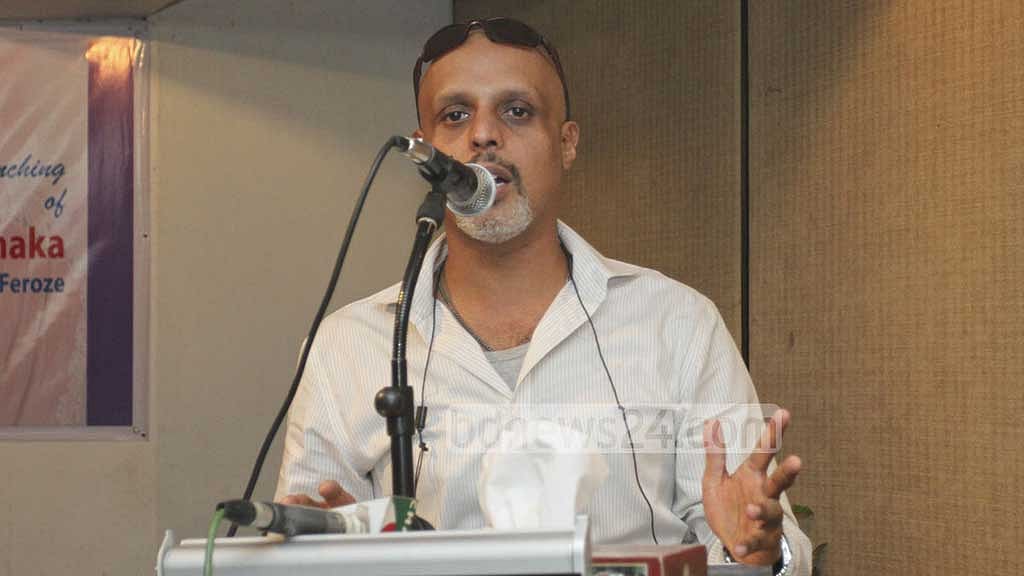
Economist Rehman Sobhan has expressed doubts over whether the government is pursuing a referendum simply to appease former interim minister Mahfuj Alam and his colleagues.
On Thursday evening, Rehman criticised the lack of public awareness regarding the proposed reforms in the July National Charter.
Calling the process “opaque”, Rehman said a “mythical situation” has been created around reforms, which the government is trying to validate through a referendum.
Rehman argued that asking citizens a simple “Yes” or “No” on 38 complex reform proposals, of which the general public knows little, reduces the exercise to a “non-serious proposition”.
He added, “I have not heard of either of the two alliances actually getting up and saying that: ‘here are these 38 important reforms which are essential to the reimagining of your democracy, and that let us then mobilise public consciousness around this. No one has spoken about this.”
Rehman also criticised the government’s claim that it is pursuing reforms, calling it a “false narrative”.
“Now, an interim government in office for 18 months was in no position to carry out reforms. Because reform is a process. You just start a process by writing up a reform, but eventually, it has to be legislated, it has to be debated in a parliament, and it eventually has to be implemented by a particular government which happens to be in office at that time,” he added.
He condemned the government’s campaign promoting a “Yes” vote, pointing to Ali Riaz, bank employees, and a small number of NGO workers mobilised to persuade citizens.
“This is a completely non-serious proposition,” he said.
Rehman suggested the real motive may be political: “My suspicion is that Prof Yunus wants to oblige Mahfuj, because Mahfuj and his colleagues were all anxious that things should not go back to being what they were.”
“So, you have now provided a cosmetic arrangement where you are presumably expected to believe that they have done something.”
He warned, “But the objective reality is, until such time as you have a government sitting in office for the next five years and it is in a position to carry out reforms and you are then able to evaluate the quality and sincerity of the way in which it is implemented -- that is when reforms actually take place.
The referendum will coincide with the parliamentary elections on Feb 12, presenting voters with a summary of four issues, without options for separate decisions -- only a “Yes” or “No” choice.
Former information advisor Mahfuj and University of London professor Naomi Hossain also participated in the conference discussion.