Published : 26 Nov 2025, 06:08 PM
Updated : 28 Aug 2026, 01:30 AM


After a sleepless night, Nazma Begum came to her damaged house in the morning, leaving her daughter with her sister.
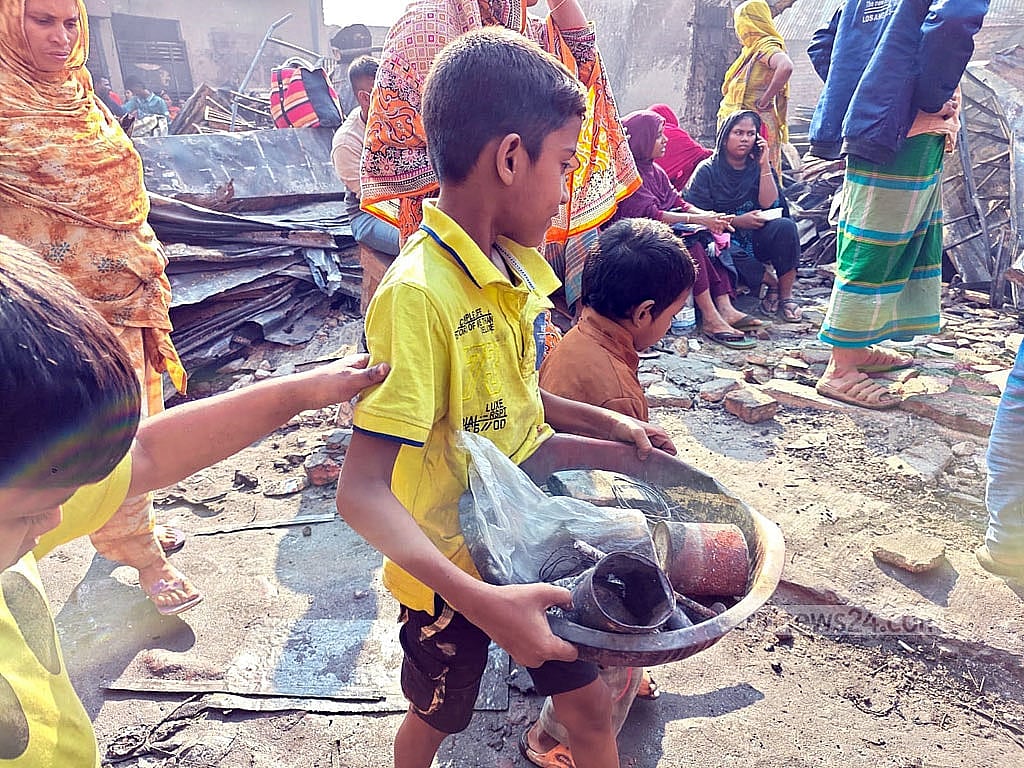
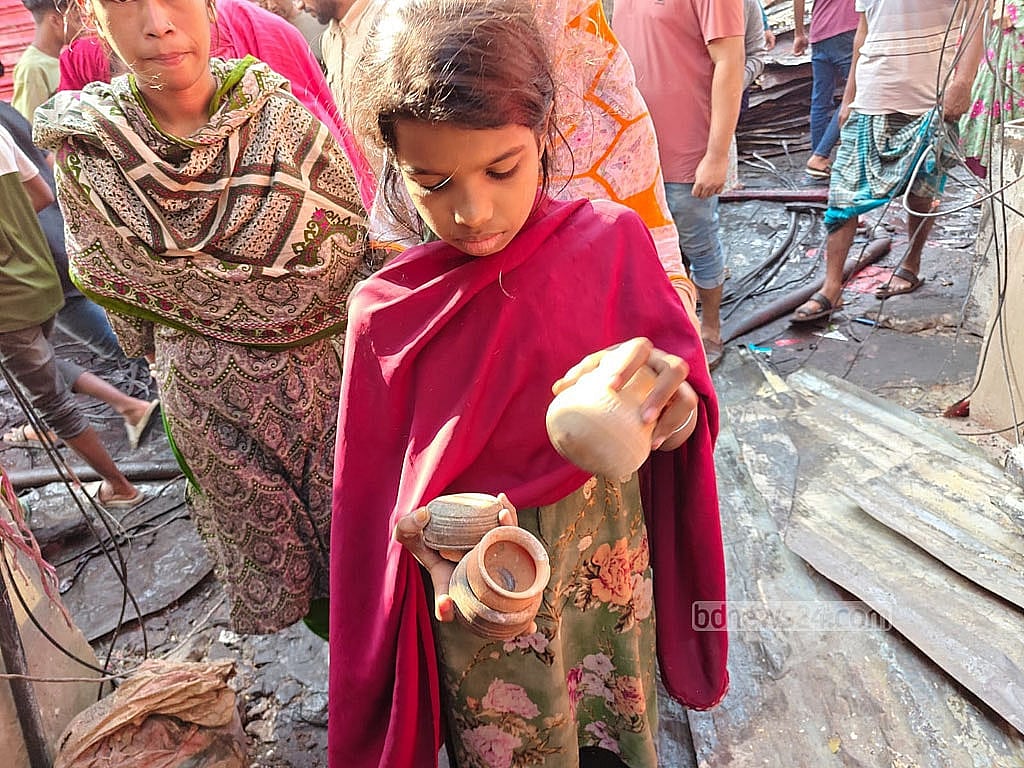
Amidst the piles of burnt and collapsed tin sheets and ash, she tries to scavenge the remnants of 14 years of domestic life. Around 8am on Wednesday, her house was surrounded by a large crowd, mostly curious onlookers.
Nazma, unable to do her chores due to the crowd, scolded them and tried to chase them away. "Everyone has come to see the show. And we can't sleep at night. Our kids haven't eaten anything since morning. And they just come and take videos."
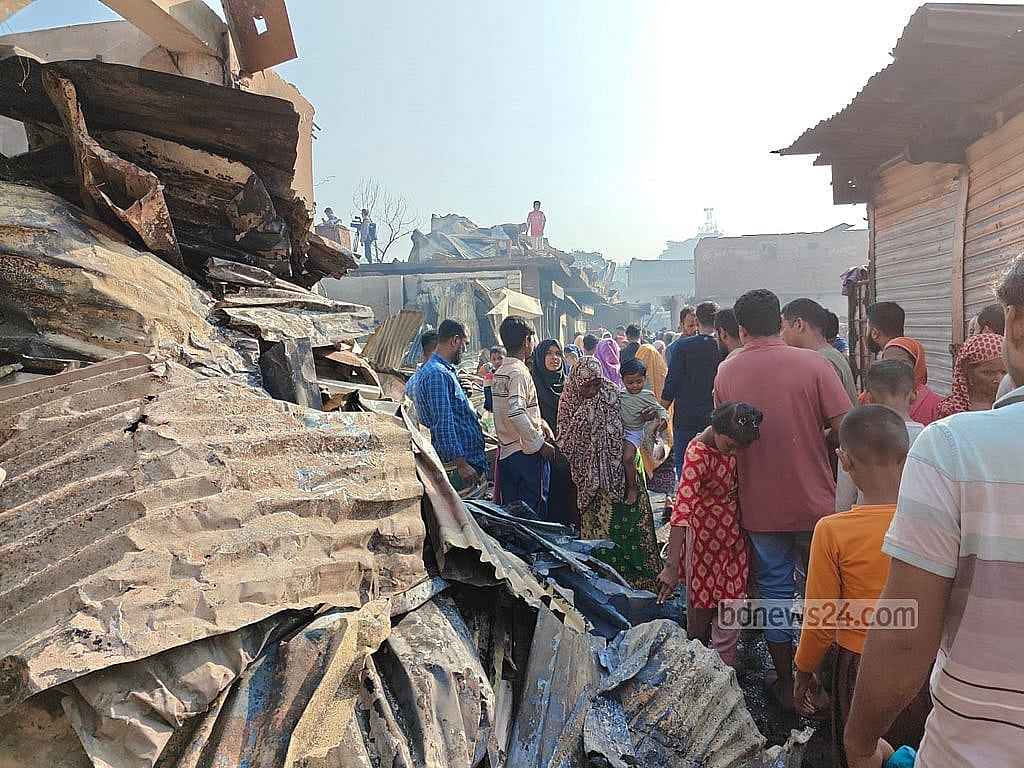
A young man, Ashraf, who introduced himself with a single name, aggressively said: "They set a fire here, why don't you write about this? Check Facebook."
Many slum dwellers suspect that the fire was deliberately set, citing Facebook posts as the source. None of them claimed to have personally witnessed anything suspicious.
Abdul Matin said, "Apparently, they want to build a market here, so they set the fire to evict us. If they had asked us nicely, we would have left anyway."
Almost all the residents of the Korail slum, adjacent to the upscale Dhaka neighbourhoods of Gulshan and Banani, are working people. Since work is relatively easy to find in the surrounding houses, offices, and shops, many chose to reside in Korail despite the difficulties.
Many women in the slum work in nearby homes. They had saved money little by little to buy household items, TVs, and refrigerators. Some also had cash savings and small pieces of jewellery in their homes. Most of the affected residents lost everything aside from the clothes on their backs in the devastating blaze.
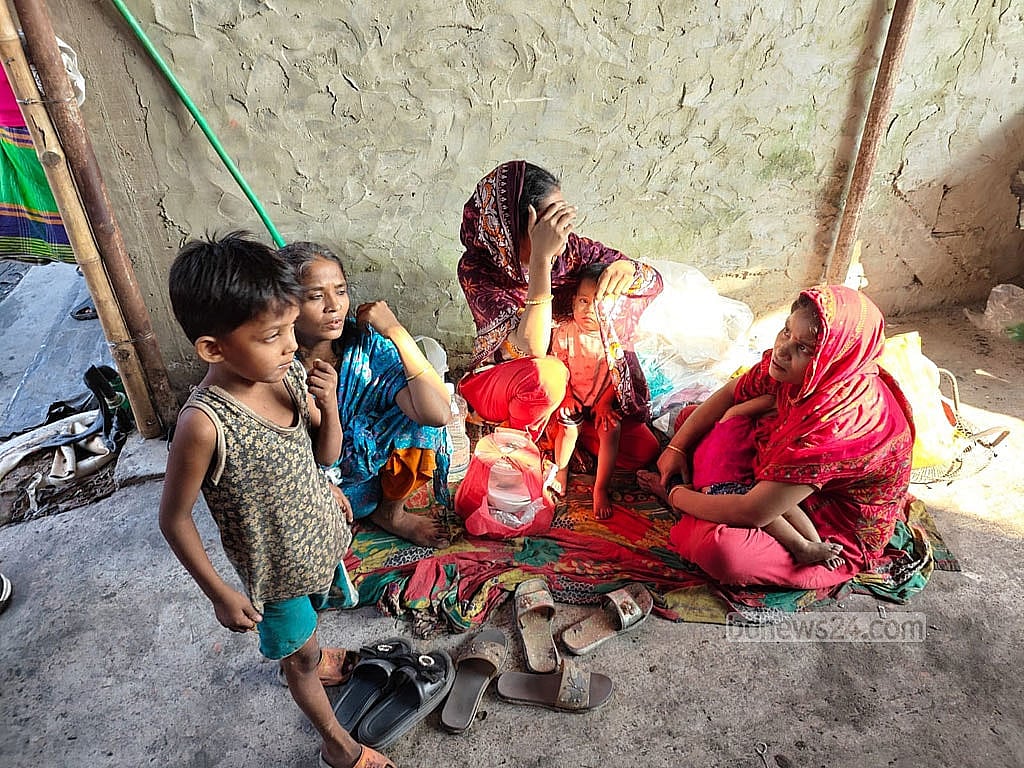
Abdul Malek from Sylhet was sitting outside his house with his wife. The couple’s five-year-old son would alternately come and sit on his father's lap, cling to his neck and hang from his back. Malek's wife's eyes were teary.
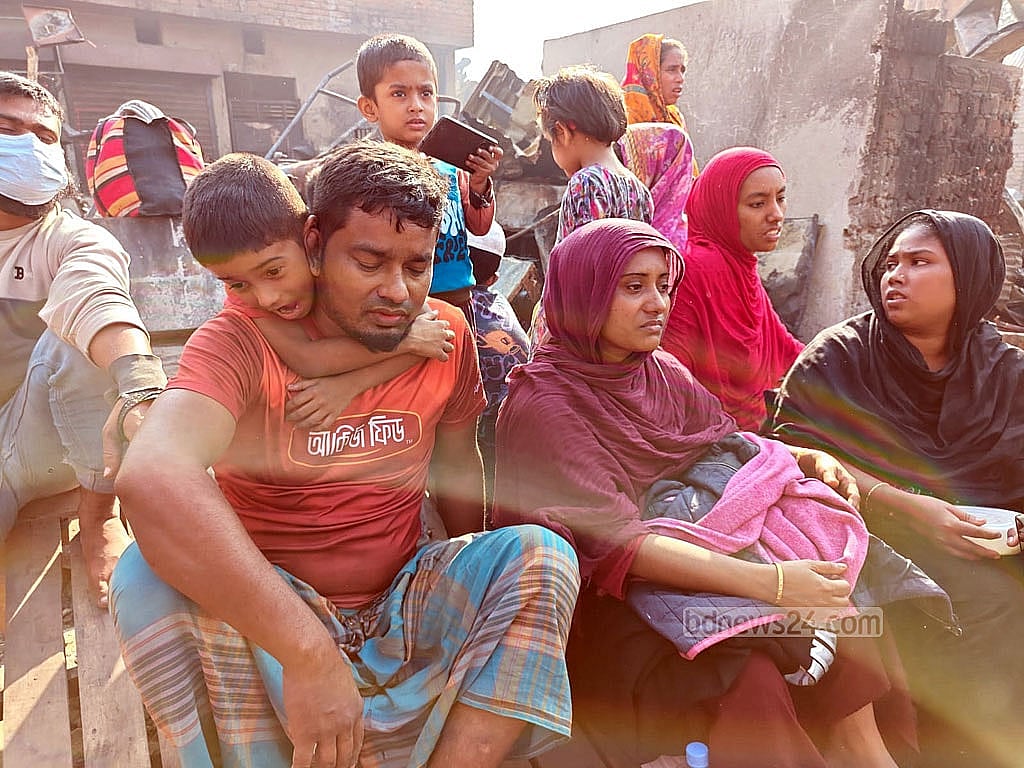
Malek, however, was engaged in playful banter with his son amidst the ruins. The security guard at Banani Club said he was inside the house when the fire erupted. He managed to get his wife out somehow, but got trapped himself. Later, his leg was cut as he climbed out a window. Although they escaped the house, they had trouble finding their son, who studies at a madrasa in the slum. He spent the entire night worrying about him. But the family was eventually reunited in the early morning.
Malek said, "I have one son; my daughter lives in the village. There is the pain of losing our belongings, but after the thought of losing my son, I was frantic. I felt a sigh of relief after finding him. There was no chance to save our things."
Malek had been living in that room for several years at a monthly rent of Tk 4,000. His wife is also employed, working as an office assistant at a nearby institution. While the family is still together, all their belongings have burnt down.
Amidst the ruins of the slum, many children wearing thin undershirts and walking barefoot in the cool air were searching for belongings in the wreckage. Shabana, a mother to one of the children, said: "We couldn't find anything. My children's clothes, books, and notebooks are all gone. They also caught a cold overnight."
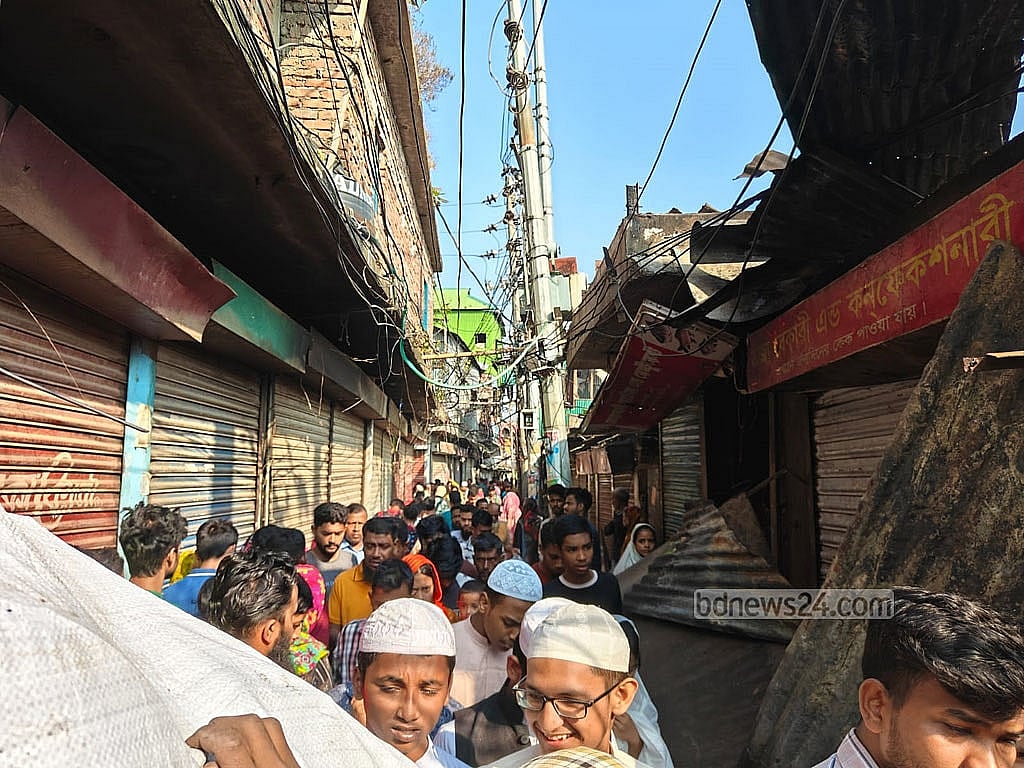
The narrow paths of the slum were flooded with a stream of people, mostly visitors. Asma Begum was walking through the crowd clutching a package of paratha and vegetables, and crying. Just last year, she took a loan from a cooperative society and bought a house here for Tk 250,000. Now, the worry of repaying the loan instalments and the grief of her life's savings burning down have devastated her.
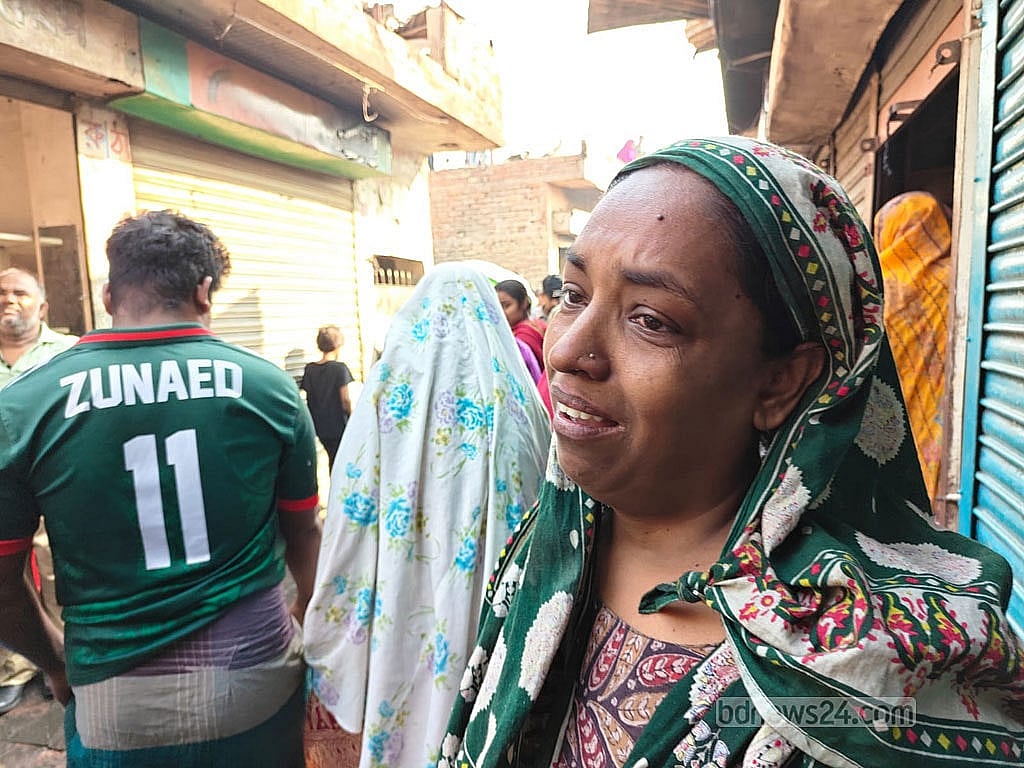
She said, "I work in people's houses. Last year, I took a loan from the cooperative (society) and bought a house. I thought my kids would stay here. My house is gone, there's nothing left. My brother gave me some cash, which I used to buy this breakfast. Now I have to pay the instalment too."
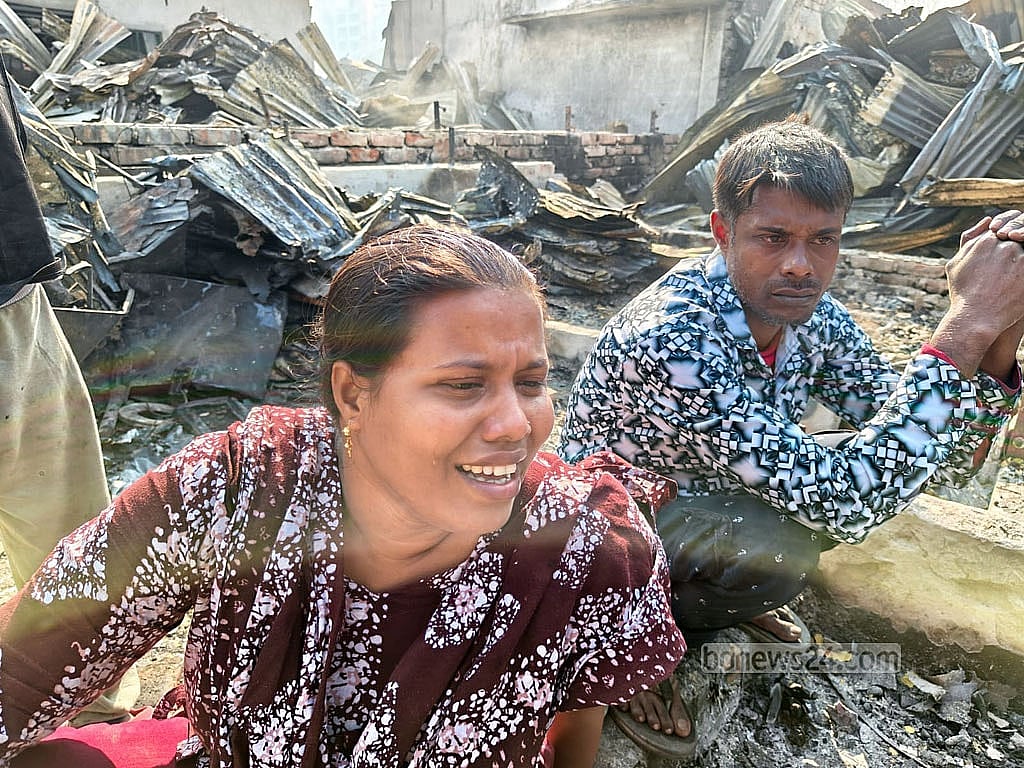
Jhuma Akter, a domestic aide, was wailing as she sat on the rubble with her two sons. She said, "I bought things one by one by working in houses. I bought a refrigerator and a TV for Tk 31,000. Everything is gone. My husband had an auto-rickshaw kept in a garage. That's gone too."
Mohammad Alam and Fatima Akter, a couple, ran a junk shop inside the slum. Both their residence and the shop were turned to ashes in the fire. The couple was sitting in front of their burnt-out shop with their one-year-old son.
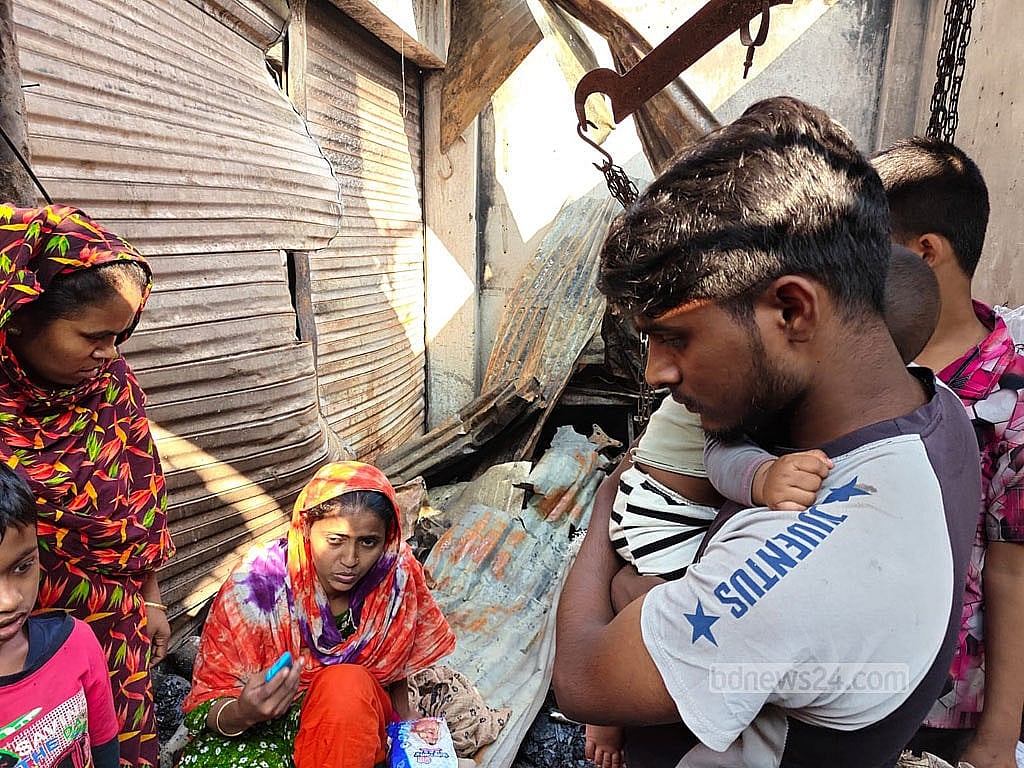
Fatima said, "The shop burnt, and the house is gone. My baby has no clothes. He's a small baby and wets his pants frequently. We don't have any clothes to put on him after he wets himself. That's why I bought diapers at a high price, or else the baby will catch a cold."
The Fire Service reported that around 1,500 houses were gutted by the catastrophic fire that broke out in Mohakhali’s Korail slum on Tuesday evening.
The Fire Service received the news of the fire at 5:22pm, and subsequently, 19 units joined efforts to control the blaze. After more than five hours, the force announced the fire was under control at 10:35pm.
The agency declared the fire completely extinguished at 9:30pm on Wednesday and reported that there were no casualties. The cause of the fire and the extent of the damage will be determined after an investigation.