Published : 15 Nov 2025, 07:16 AM
Updated : 21 Aug 2026, 02:44 PM


With the interim government deciding to hold a referendum on the same day as the parliamentary election, the Election Commission (EC) must rework its plans so referendum preparations are fully integrated into the general election operation.
It will be Bangladesh’s first referendum in about 34 years, and the first time in its history that a referendum and a parliamentary poll will be held together. Also for the first time, expatriate Bangladeshis will vote by postal ballot.
The combined electorate will comprise nearly 127 million domestic voters plus around one million expatriates. That scale brings a new list of operational challenges for the EC.
The EC has already said if a referendum is added, its election plan must be “re-aligned”. The twin vote is planned for the first half of February, with the formal schedule due in the first week of December, according to it.
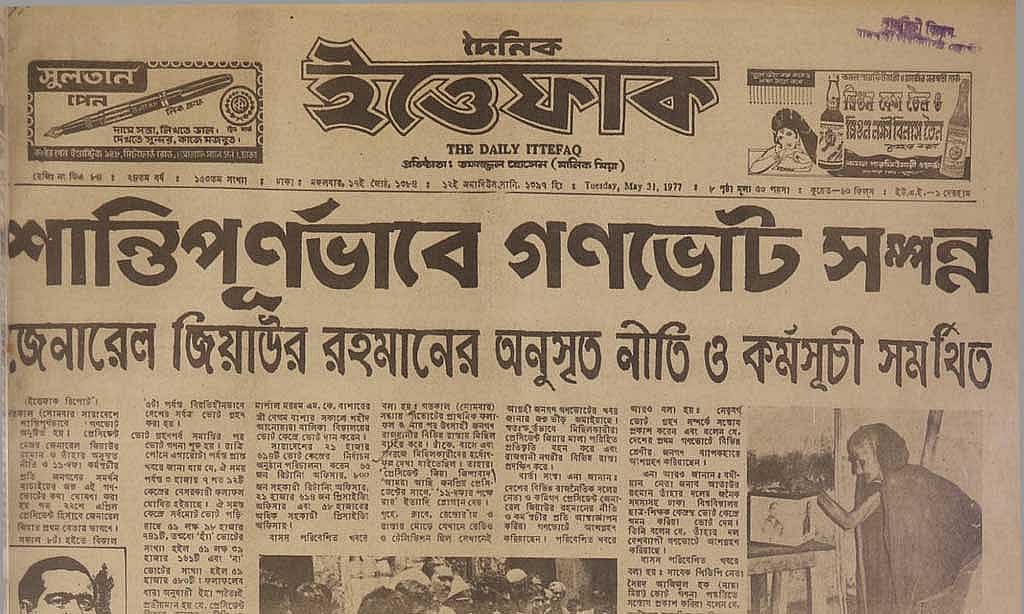
Bangladesh has held three referendums in 1977, 1985 and 1991, but never on the same day as a parliamentary election.
Two former EC officials involved in earlier referendums say, on top of the general election build-out, the commission will have to add polling booths, increase polling staff, expand training, and scale up ballot papers, ballot boxes and other kit to match the combined voter load, while also factoring in the new overseas postal vote.
They estimate that running both votes together could increase costs by more than 20 percent, with precise impacts only clear after the referendum ordinance and rules are issued.
The EC has proposed about Tk 28 billion for the parliamentary election. A standalone referendum would have required additional funds. Holding both on the same day should save money in some areas, officials say, even as logistics still expand.
A key decision still to be taken is which count happens first, and how. Counting the referendum typically takes longer than a constituency tally.
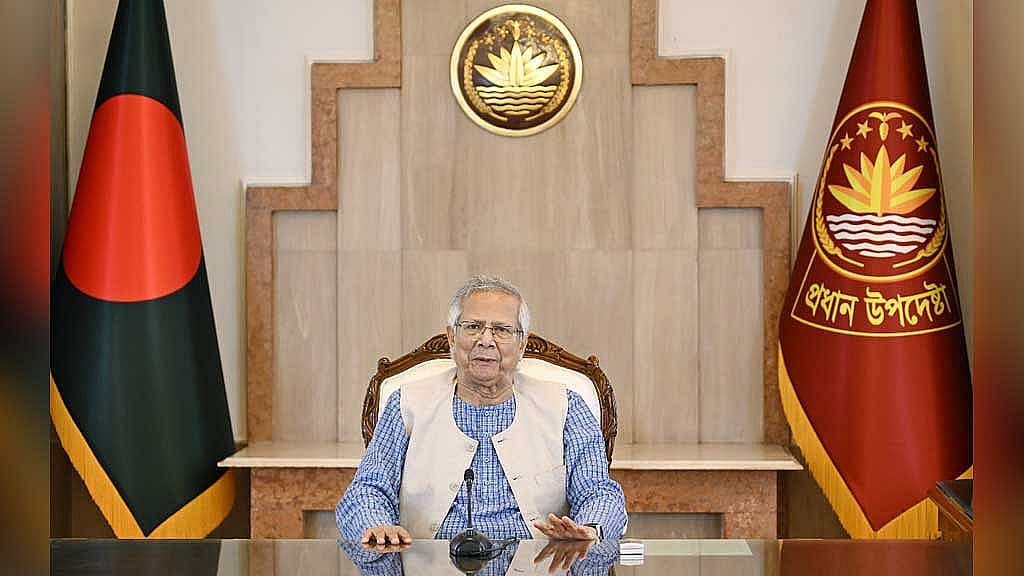
On Thursday, in a televised address, Chief Advisor Muhammad Yunus said: “We have decided, after taking all the factors into consideration, that the referendum will be organised on the day of the next general elections. That is, the referendum will be held on the same day as the national elections, in the first half of February. This will not hinder the goal of reforms in any way.”
He argued that a twin-track vote would be “more festive and economical”, adding that enabling laws would be brought “at the appropriate time”.
The EC will issue a formal view after internal discussions. Briefing reporters following Thursday afternoon’s dialogue with parties, Chief Election Commissioner (CEC) AMM Nasir Uddin said they would study the decision “formally”, deliberate, and then present their opinion.
DOUBLE THE WORKLOAD: EC’S IMMEDIATE CHALLENGES
The electoral watchdog is preparing to announce the schedule in early December. Plans already envisage printing ballots for nearly 127 million domestic voters and about one million expatriate postal voters.
There will be around 43,000 polling centres with approximately 245,000 booths, 900,000-1,000,000 polling officials, and 700,000-800,000 security personnel.
Returning officers will run operations across 300 constituencies. The EC has held inter-ministerial meetings with law-enforcement and other agencies, and is in the final round of talks with political parties.
Parties had long been split, with one camp wanting a pre-election referendum on the implementation of the July National Charter, while the another insisting it takes place on polling day. With no consensus reached, the chief advisor announced a same-day vote.
Hints that the EC was preparing for such a scenario surfaced at an Oct 20 law-and-order meeting, where a commissioner noted that if a referendum under the July Charter were required, plans and preparations would have to change, urging agencies to be mentally prepared to re-coordinate.
While the Chief Advisor’s address was being aired on Thursday, the CEC and Election Commissioners were in dialogue with parties. Asked whether a same-day referendum would burden the election, the CEC replied: “Once we are formally informed, we will exercise, sit together and discuss it in the Commission, and then we can provide an opinion. It would not be appropriate to comment at this moment.”
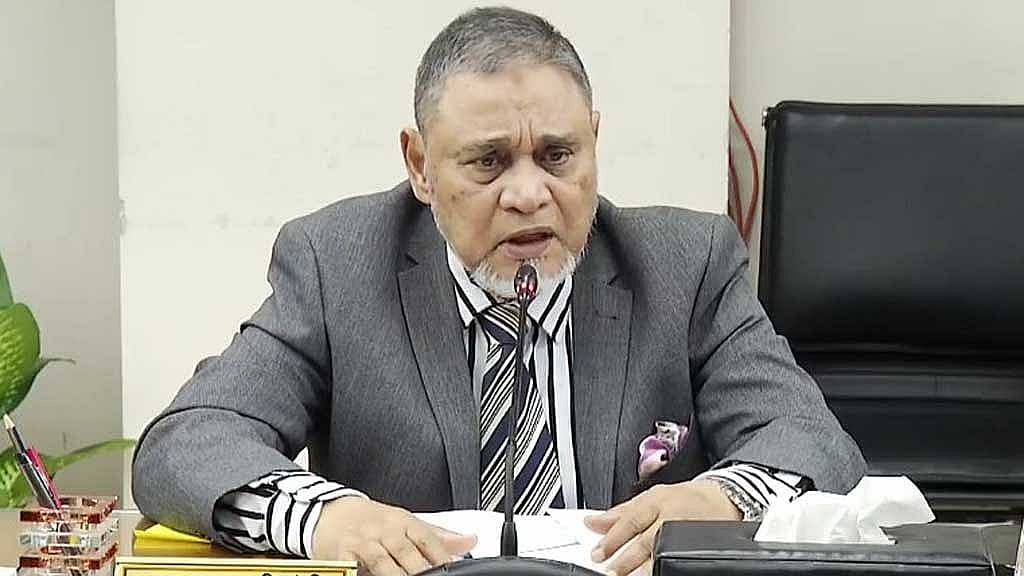
Election Commissioner Md Anwarul Islam Sarker told the dialogue: “A referendum issue has arisen today; we had already started bringing it into our thinking days ago. My first need was to sit with politicians… So far we see no obstacles. If leaders and candidates cooperate, a good election is possible.” On timing queries from parties, he said the EC would carefully review the Chief Advisor’s speech and “then, InshaAllah, we will see”. The Commission met again at Election Bhaban in the evening.
MORE HANDS, TIGHTER TRAINING, LONGER NIGHT
The EC’s former additional secretary Jasmine Tuli, who served in the 1985 and 1991 referendums and now sits on the Electoral Reform Commission, said the EC must both increase staffing and provide targeted training for referendum management.
“With a same-day poll and referendum, you can add booths rather than centres and still do it smoothly,” she said.
“Two counting teams will be needed at each centre, one for the parliamentary ballot, another to count ‘Yes’ and ‘No’.”
Training must cover how referendum ballots are issued and how they are counted, she added.
Expatriates will receive two postal ballots, which also demands clear procedures and training. She estimates referendum-related costs could rise between 10 and 20 percent. In her view, these are “not challenges, so much as tasks that need doing”.
Because February days are short, she sees no scope to extend polling hours. “Post-dusk voting carries risk, many areas have power issues. With more booths, 8am-4pm voting time will work; elderly voters take time, and ballot boxes will be separate.”
If presiding officers and capacity are increased, she said, “there should be no difficulty”.
Public education will be crucial, she said. “Voters must be told the referendum questions in advance, especially elderly and illiterate rural voters will need time. The order will be followed by the necessary law, ordinance and rules.”
In 1977, the first referendum ran for eight hours from 9am to 5pm. The current standard is 8am to 4pm. Officials now see no need to extend hours for a joint vote, which would require legal changes.

It took 30 hours to announce results in the first referendum.
Former EC official Mihir Sarwar Morshed said a same-day exercise should lift turnout. “Referendums don’t, by themselves, pull voters. Candidates don’t send voter slips. If both happen together, parliamentary voters will come and cast for the referendum as well.”
He noted that in local government elections, a voter often casts three ballots (chair, general member, reserved member), so two ballots are manageable.
“But more ballot boxes will be needed. Even if hours don’t change, everything inside the perimeter has to run efficiently.”
Counting, Mihir Sarwar warned, “will take much longer”, requiring strong count management, well-trained staff, and ideally a model test of the end-to-end process.
The commission must also decide which to count first, parliamentary or referendum, and set a detailed work plan for this first-ever same-day exercise.