Published : 31 Aug 2025, 07:38 AM
Updated : 21 Aug 2026, 01:44 PM


Bangladesh holds hundreds of thousands of tonnes in reserve, but hoarding, slow unloading, and weak oversight are pushing prices beyond government caps and squeezing growers before the Rabi crop season.
Farmers are incurring heavy losses as fertiliser costs surge, with many unable to obtain government-subsidised rates. Despite the expectation that prices remain affordable, widespread mismanagement and illicit hoarding have driven costs sharply higher, jeopardising farmers’ livelihoods.
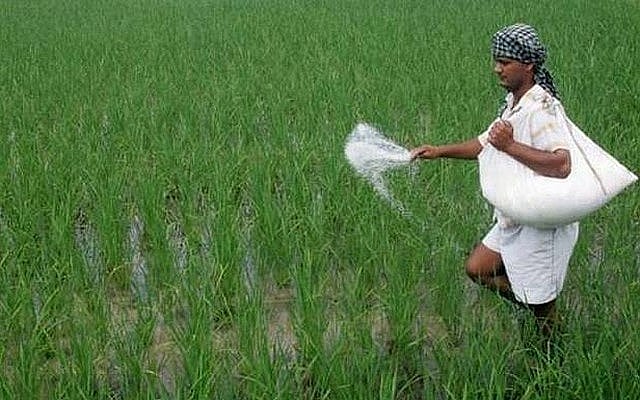
Shiblur Rahman, a farmer from Chandpur’s Shahrasti explained his frustration, saying: “We don’t get fertiliser from dealers. We buy it from retail shops, which means we never get it at government-set prices. When we add irrigation costs to the inflated fertiliser prices, there is hardly any profit left.”
Shiblur, who grows paddy on over an acre of land, added: “Even when the yield is good, high fertiliser costs wipe out any gains.”
A similar sentiment was echoed by farmer Dulal Hossain, who expressed concern over the escalating costs of inputs.
“A major portion of the cost of farming goes into purchasing fertiliser. If the prices were controlled, we could earn a little more. But this time, we’re forced to buy fertiliser at much higher prices,” he said.
SYNDICATION
Despite significant government subsidies, reports say, fertiliser prices are being artificially inflated by a syndicate of dealers and transport contractors. According to an intelligence report from a government agency, unscrupulous traders and middlemen are hoarding stocks to create a fabricated shortage in the market.
The report, reviewed by bdnews24.com, highlights the situation in several regions, including Nilphamari and Jhenaidah.
In these areas, fertiliser dealers have been selling 50kg bags of DAP (diammonium phosphate) fertiliser -- officially priced at Tk 1,050 -- at inflated prices ranging from Tk 1,400 to 1,700.
The report also details an incident where fertiliser meant for Rangpur was diverted to another district, and local farmers were prevented from accessing it.
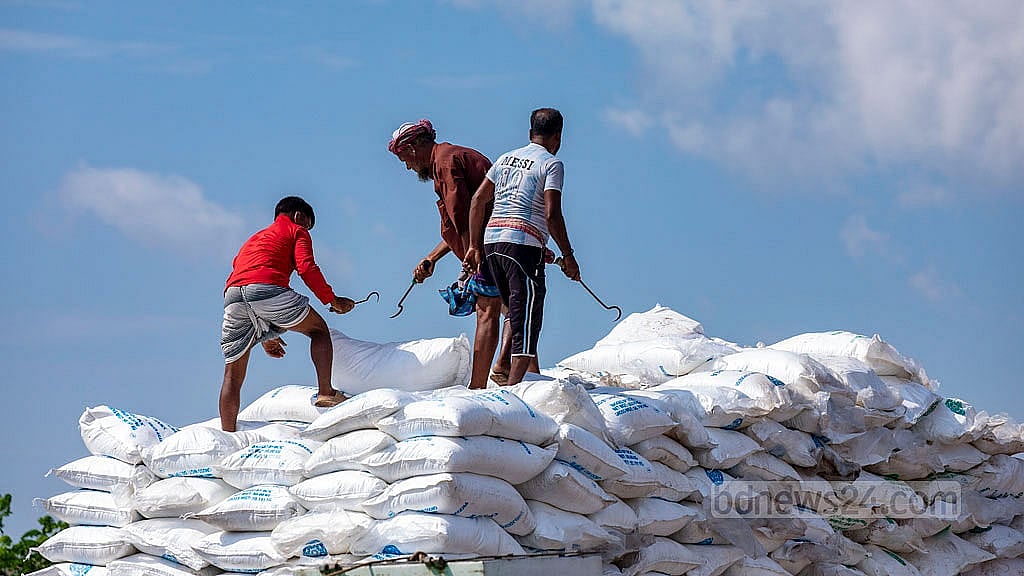
The intelligence agency’s findings show that despite the government’s efforts to distribute fertiliser to meet seasonal demand, the supply chain remains vulnerable to exploitation. Dealers and transport contractors form a syndicate to create an artificial shortfall, thereby increasing prices.
This situation has left farmers angry and struggling to make ends meet.
The crisis also threatens to worsen in the upcoming agricultural season (November-March), with fears of a fertiliser shortage growing.
The report also highlights inefficiencies in the distribution network, including irregularities in the appointment of dealers and delays in unloading fertiliser at depots.
SUPPLY AND DEMAND
As the demand for fertiliser increases during the Rabi crop season (November-March), the need for proper stock management becomes critical.
Bangladesh imports approximately 80 percent of its fertiliser, with the rest produced domestically. Despite having adequate stocks for the upcoming season, the inefficiency in distribution and hoarding activities are expected to create challenges.
This year, the national demand for chemical fertilisers is around 5.78 million tonnes, with imports fulfilling around 80 percent of this requirement. Local production accounts for the rest, managed by the Bangladesh Chemical Industries Corporation (BCIC) and Bangladesh Agricultural Development Corporation (BADC).
Reports indicate that significant stocks are available, including 630,000 tonnes of urea, 217,000 tonnes of TSP (triple super phosphate), and 273,000 tonnes of DAP, sufficient to meet the nation’s fertiliser needs for at least three months.
Yet, a shortage of adequate storage facilities has led to difficulties in managing these stocks, with emergency reserves of urea reduced to 400,000 tonnes instead of the required 700,000 tonnes.
The government’s ongoing efforts to improve storage facilities, including plans for 34 new buffer warehouses, have yet to be fully realised, exacerbating the crisis.
WHY PRICE HIKE?
The intelligence report suggests while BADC and BCIC have sufficient stock, prices have been artificially inflated due to the actions of dishonest dealers and transport syndicates.
It notes that fertiliser imports take six to eight months to process, with most fertilisers arriving via sea routes. The unloading process is slow, and in some cases, traders deliberately delay it to create a shortage, driving up prices.
Furthermore, delays in delivering fertiliser to warehouses also contribute to supply disruptions.
Many dealers are not regularly picking up fertiliser from storage, exacerbating the crisis.
The report attributes the fertiliser shortage to several factors. The country’s eight fertiliser plants are struggling to meet demand due to ongoing shortages of oil and gas, resulting in greater reliance on imports.
Other challenges, including political instability, a shortage of dollars, and a sluggish global market, have disrupted the timely import of fertilisers. These factors combine to push prices higher, especially at the grassroots level.
There are currently 7,150 authorised fertiliser dealers across the country -- 5,022 under BADC and 2,128 under BCIC. Reports, however, suggest that many of these dealers have multiple dealerships under different names, contributing to the artificial shortage. Furthermore, the report points to improper dealer appointments as another factor fueling the price hike.
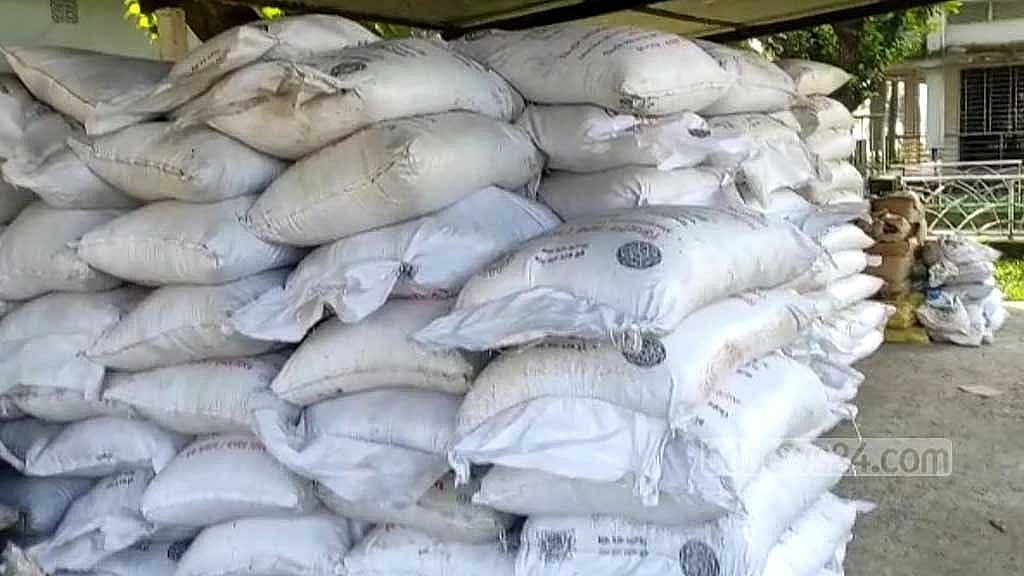
BCIC manages the overall distribution of urea fertiliser, with 35 warehouses across the country, including buffer, factory, and transit depots, with a total capacity of 351,500 tonnes. However, contractors store excess fertiliser outside these facilities in open-air conditions, which degrades the quality and creates opportunities for theft.
In several regions, such as Panchagarh, Rangpur, Jhenaidah, Kushtia, and Jashore, tobacco cultivation has surged. The report notes that fertiliser subsidised for agriculture is being diverted to tobacco farming in these areas, adding to the scarcity.
One BCIC dealer, speaking to bdnews24.com, said many dealers use illicit tactics to create a fertiliser shortage, which then drives up prices for farmers.
“This usually happens in areas where monitoring is lax,” the dealer explained. “Stronger monitoring could curb this issue, and if the unloading process were faster, it would help too.”
He also mentioned hearing about irregularities in dealer appointments, where some individuals use political affiliations to secure multiple dealership licences. “I’ve heard the government is compiling a list to address this,” he added.

RECOMMENDATIONS
The report outlined several recommendations to maintain normal fertiliser supply in the market and control prices, including:
• Ensuring fertiliser supply in line with government allocation
• Strengthening government monitoring of dealers and transport syndicates, with legal action where needed
• Preventing individuals from holding multiple dealership licences under different names
• Tightening oversight to stop fertilisers meant for agriculture from being diverted to industrial use
• Stopping dealers from selling above the government-fixed prices
• Preventing deliberate delays in unloading fertiliser from mother vessels by syndicates
• Fast-tracking construction of fertiliser storage warehouses under BADC and BCIC
• Keeping dealership and transport appointments free from political influence
• Promoting organic fertiliser use among farmers as an alternative
• Allocating additional fertiliser to districts with higher seasonal demand
• Establishing government-run, modern storage facilities in every district
• Ensuring uninterrupted gas supply to local fertiliser plants to boost domestic production
PATH TO RESOLUTION
When asked about the fertiliser market crisis and manipulations, Ahmed Faisal Imam, additional secretary of the Fertiliser Management and Materials Wing at the Ministry of Agriculture, told bdnews24.com: “What happens in our country is that everyone tries to take advantage. There is no shortage of fertiliser in stock or supplied by the government, no crisis exists.
He added, “The government has set official fertiliser prices and provides massive subsidies every year. Subsidies apply to all four types of fertilisers and amount to nearly Tk 300 billion annually.”
According to him, the government sells urea and TSP at Tk 27 per kg, DAP at Tk 21, and MOP at Tk 20. The actual import cost, however, fluctuates sharply in the international market, reaching as high as Tk 80 to Tk 100 per kg in some cases.
“This subsidy is intended to keep farmers’ production costs low. When production costs are low, food remains affordable for the public,” Faisal explained.
“But the government doesn’t operate retail outlets. It handles imports and appoints dealers across Upazilas and unions to handle distribution.”
Faisal said a portion of dishonest dealers exploit the system.
“Fertiliser sold to farmers at Tk 27 per kg is given to dealers at Tk 25, allowing for a Tk 2 profit each kg. But some unethical dealers claim a shortage and sell at higher prices than the government-fixed rate.”
The official responsible for fertiliser management said, “We monitor daily, from newspapers to field visits. Whenever we receive reports of irregularities by a dealer, we immediately instruct deputy commissioners and UNO offices to take action through mobile courts. Regular supervision is ongoing.”
Faisal also said a unified policy for dealer appointments is in development. “Currently, two separate policies exist for appointing dealers. We are working to consolidate these into a single, unified policy.
“We've asked dealer data from across the country and are cancelling the licences of those found to have secured appointments through irregular means. We’re moving towards a transparent and practical system,” he added.
COMPREHENSIVE STRATEGY
Agricultural economist AHM Saiful Islam stressed the need for a broader strategy in fertiliser management.
He said, “Just as fertiliser is vital for paddy production, timely delivery during the paddy season is crucial. Oversight by the agriculture ministry, industries ministries, and all stakeholders in the supply chain is very important.”
The professor from the agricultural economics at Bangladesh Agricultural University said the government must have advance planning in place to prevent artificial shortages.
“Over the past year, overall inflation has eased slightly. Non-food inflation has dropped more significantly, but food inflation remains high.
“Around 51 percent of food inflation is driven by rice. Since rice production depends heavily on fertiliser, any disruption in supply could force the country to import rice, which would affect the economy.”
Prof Saiful said, “If the government knows in advance how much urea, TSP, and MOP is needed and what’s currently in stock, then shortages won’t occur.
“And with proper monitoring, artificial crises can be avoided. What’s really needed is a comprehensive plan for fertiliser management,” he added.
[Writing in English by Syed Mahmud Onindo and Shiekh Fariha Bristy]