Home
+
Published : 10 Nov 2024, 02:11 AM
Failing to get an answer to the question of when the election will be, BNP leader Amir Khosru Mahmud Chowdhury has heavily criticised the interim government.
On the matter of 'reforms' mentioned by the government, he remarked that BNP had already provided them.
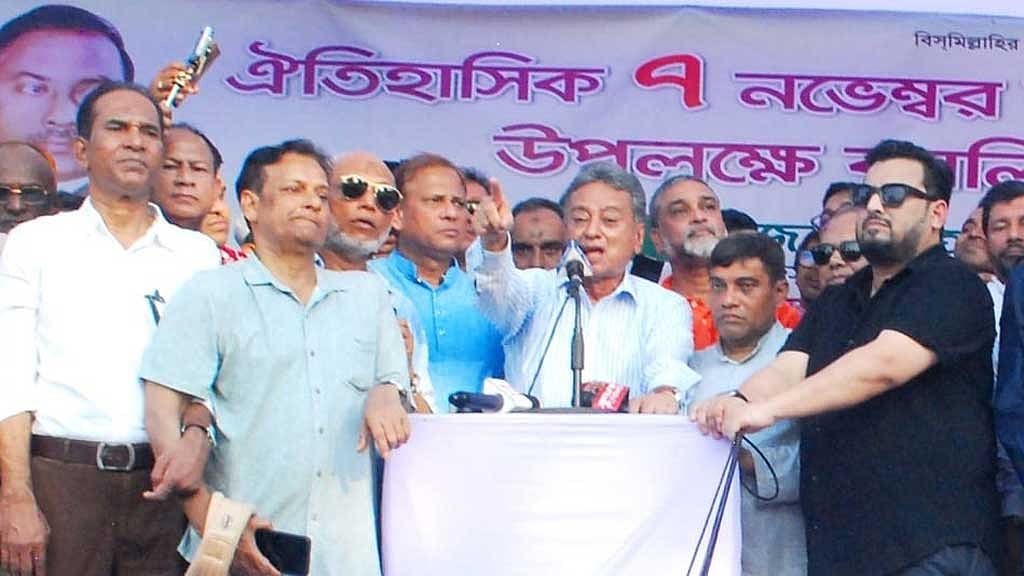
"Everything is there in those reforms, nothing is left out. Whatever you (the government) have mentioned is there, and even more than what you have, we have provided more,” the member of the BNP's highest policymaking standing committee said at a gathering in Chittagong's Almas Cinema intersection on Saturday.
The event was held in Chittagong North, South, and City BNP to commemorate the rise to state power of BNP founder Ziaur Rahman on Nov 7, 1975.
A procession followed later.
The BNP commemorates the day as 'National Revolution and Solidarity Day'.
Commenting on various governments running the country with "various narratives," Amir Khosru said: "Now there is another narrative. The narrative does not include when the elections in Bangladesh will be, when the people of Bangladesh will vote to elect a government, or when the people of Bangladesh will regain their democratic rights to become a democratic country."
The interim government, sworn in under the leadership of Muhammad Yunus and committed to following and preserving the constitution, is not specifying a timeline for elections.
According to the constitution, elections must be held within 90 days of dissolving parliament, and if that's not feasible due to unforeseen circumstances, it can be delayed for another 90 days.
More than 90 days have already passed. In this situation, the advisory council of the interim government has finalised a draft ordinance which mentions keeping the tenure of the government indefinite.
The draft ordinance states that the government's tenure will continue until the day a new prime minister takes office after the formation of the 13th parliament.
It also states in the draft ordinance that all decisions and orders of the government are 'valid' and cannot be challenged in court, nor can the Supreme Court declare any order illegal.
The draft mentions that if the president wants to declare a state of emergency, he must take written advice from the chief advisor.