Published : 09 Dec 2025, 08:46 PM
Updated : 21 Aug 2026, 02:51 PM


As international aid is dwindling to Rohingya refugee camps, a generation of Rohingya youth are growing up with their opportunities shrinking, say a group of Canadian lawmakers.
“Without education, what are they returning home to?” asked MP Salma Zahid, who serves on the Canadian Parliament’s Citizenship and Immigration Committee. “If repatriation is the long-term goal, we must prepare them for it. Right now, we are failing to do that.”
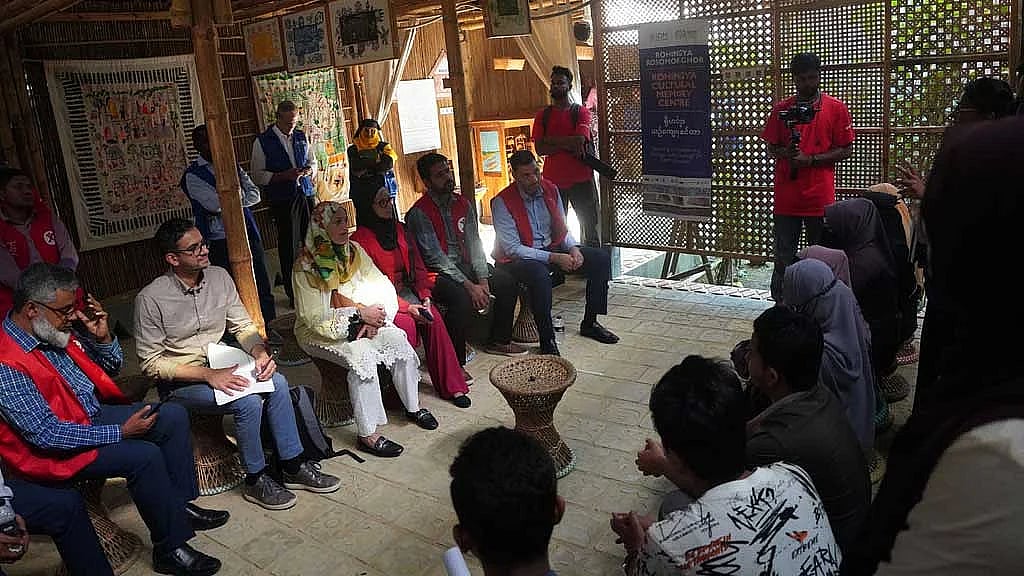
She was one of a delegation that also included Senator Salma Ataullahjan, and MP Sameer Zuberi who visited the camps in southern Bangladesh under the leadership of Human Concern International (HCI) and Human Concern USA, according to a press release.
The release says that the consistent message over two days in Cox’s Bazar was “we need education and we want a future.”
“A generation of Rohingya youth is growing up without access to meaningful education. With international aid shrinking, learning centres shut down, and opportunities dwindling, the world’s largest refugee camp risks becoming a place where futures quietly vanish,” the statement said.
Bangladesh is bearing a heavy burden in providing safety, shelter, and basic humanitarian support to the 1 million Rohingya who have fled persecution in Myanmar since 2017, it added.
“The government, already managing vast development challenges, continues to carry a heavy burden in hosting the world’s largest stateless population.”
“But that burden is now compounded by global donor fatigue. Major funding cuts, including from USAID, have left over 300,000 Rohingya children with no access to formal education, and virtually none can pursue secondary or higher education.”
HCI calls the delegation more than a diplomatic visit, dubbing it a call to reimagine how humanitarian aid is delivered – from short-term relief to long-term dignity.
The absence of education is already fuelling a deeper crisis, said Masum Mahbub, CEO of Human Concern USA.
“When young people see no path forward, the consequences are devastating from mental health struggles to trafficking and exploitation. Girls are especially vulnerable. Education is a protection and for the Rohingya people it is survival.”
The delegation heard directly from Rohingya families about the dangers their daughters face.
“Trafficking, early marriage, and desperation are all symptoms of hopelessness,” said MP Sameer. “But we also saw glimpses of hope. We met teenagers who still dream of becoming doctors, teachers, and leaders. We have a responsibility to give life to this hope.”
Senator Salma Ataullahjan called on the international community to recognize its moral obligation. “Bangladesh has done what few countries would and it opened its borders, its land, and its heart. But it cannot do this alone. We owe it to both the host country and the Rohingya people to step up.”
The delegation’s visited is part of a broader strategy to refocus global attention on the Rohingya crisis, HCI says.
“If the world wants to keep the Rohingya issue alive, it needs to keep the Rohingya youth alive in spirit, in dignity, and in mind,” said Khan. “And that means funding education, not as charity, but as a right.”
The lawmakers vowed to raise the issue back in Ottawa. HCI will host a Rohingya Day in the Canadian Parliament to brief more legislators and press for renewed engagement later in the month.
“We were told very clearly by young people in the camps,” said Zahid. “Don’t forget us. Don’t let our future disappear.”